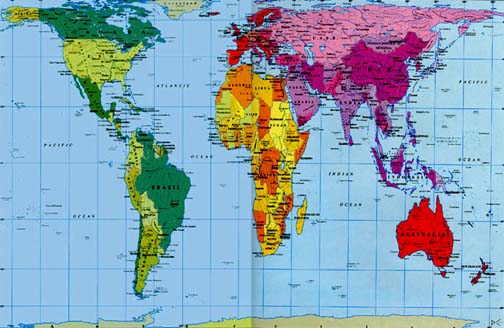
The Global Status of Genetically Engineered (GE) Crops: 10 years of continuing rejection
'INSULTED' ANDEAN FARMERS PICK GM POTATO FIGHT WITH MULTINATIONAL SYNGENTA
GE Crops Slow to Gain Global Acceptance
Bt cotton crop fails in Tamil Nadu
PROTECTION FROM TRANSGENIC POTATOES IN THE ANDES
MONSANTO PATENTS ASSERTED AGAINST AMERICAN FARMERS REJECTED BY PATENT OFFICE: PUBPAT Initiated Review Leads PTO to Find All Claims of All Four Patents Invalid
http://www.pubpat.org/monsantorejections.htm
NEW YORK - July 24, 2007 -- The Public Patent Foundation (PUBPAT) announced today that the United States Patent and Trademark Office has rejected four key Monsanto patents related to genetically modified crops that PUBPAT challenged last year because the agricultural giant is using them to harass, intimidate, sue - and in some cases literally bankrupt - American farmers. In its Office Actions rejecting each of the patents, the USPTO held that evidence submitted by PUBPAT, in addition to other prior art located by the Patent Office's Examiners, showed that Monsanto was not entitled to any of the patents.
Monsanto has filed dozens of patent infringement lawsuits asserting the four challenged patents against American farmers, many of whom are unable to hire adequate representation to defend themselves in court. The crime these farmers are accused of is nothing more than saving seed from one year's crop to replant the following year, something farmers have done since the beginning of time.
One study of the matter found that, "Monsanto has used heavy-handed investigations and ruthless prosecutions that have fundamentally changed the way many American farmers farm. The result has been nothing less than an assault on the foundations of farming practices and traditions that have endured for centuries in this country and millennia around the world, including one of the oldest, the right to save and replant crop seed." The lawsuits filed by Monsanto against American farmers include Monsanto Company v. Mitchell Scruggs, et al, 459 F.3d 1328 (Fed. Cir. 2006), Monsanto Company v. Kem Ralph individually, et al, 382 F.3d 1374 (Fed. Cir. 2004) and Monsanto Company v. Homan McFarling, 363 F.3d 1336 (Fed. Cir. 2004).
Although Monsanto has the opportunity to respond to the Patent Office's rejections of the patents (U.S. Patents Nos. 5,164,316, 5,196,525, 5,322,938 and 5,352,605), third party requests for re-examination, like the ones filed by PUBPAT against the four Monsanto patents, are successful in having the reviewed patents either changed or completely revoked more than two-thirds of the time.
"We are extremely pleased that the Patent Office has agreed with us that Monsanto does not deserve these patents that it has used to unfairly bully American farmers," said Dan Ravicher, PUBPAT's Executive Director. "Hopefully, this is the beginning of the end of the harm being caused to the public by Monsanto's aggressive assertion of these patents, which threatens family farms and a diverse American food supply."
Monsanto loses claims for Roundup Ready genes - By Jane Roberts - Commercial Appeal, July 25 2007
http://www.commercialappeal.com/mca/business/article/0,1426,MCA_440_5643245,00.html
For the second time in five months, the U.S. Patent and Trademark Office has rejected patents key to Monsanto's dominance in bioengineered seed, casting suspicion on its science and weakening the argument that helped the company prevail in dozens of lawsuits against farmers. Tuesday, the Public Patent Foundation said that the U.S. patent office sided with it in its case against Monsanto, saying at least four patents should not have been granted because the gene technology was either not new or so obvious it wouldn't require patenting. "This is a significant decision," said Daniel Ravicher, executive director of the Washington nonprofit that is focused on rooting out undeserved patents and unsound patent policy. "Monsanto would be much more pleased if the patent office had found the patents were valid. "Instead, it found that every single claim is undeserved and invalid," he said. "It couldn't be going better for our challenge."
Monsanto dismissed the findings, saying rejection is a standard part of any patent re-examination process and that it plans to ask for a reconsideration. "Our commercial products are covered by multiple patents that are not the subject of this re-examination," said Lee Quarles, spokesman. "This poses no threat to our business or our ability to deliver innovative technologies to farmers." Opponents disagree, saying Monsanto has profited handsomely because the patents allow it to charge inflated prices for seed. They also say Monsanto has used its dominance to bully farmers into submission through a series of high-profile lawsuits that made examples of people who saved the patented seed for replanting. "Monsanto is the only company I know of that is suing individual farmers and putting them out of business," Ravicher said.
Monsanto has 60 days to ask for a reconsideration or reduce the breadth of the patents. The patents in question are part of its Roundup Ready arsenal, a series of genes it patented to make crops immune to the herbicide. With the modified seed, farmers can spray Roundup over their crops and kill the weeds but not the crop. The American Seed Trade Association says companies have every right to defend intellectual property. In this case, it's the brainpower that helps farmers produce better yields or provides solutions to reduce the impact of factors they cannot control, including drought. Monsanto says hundreds of thousands of farmers across the globe rely on the company for breakthroughs that help reduce the cost of raising a crop and the deleterious affects of chemicals on the environment. "Intellectual property is important because it encourages continuous innovation in an industry, regardless if you're on the farm or reading the newspaper or sitting at your computer," Quarles said.
Monsanto introduced the trait first in cotton in 1997. By 2000, a majority of cotton farmers in the Mid-South were using its genetically altered seed because it vastly reduced fuel and the use of other chemicals. It also saved them time and reduced soil compaction, making the choice hardly a choice at all. The lawsuits followed shortly later, including cases against Mitchell Scruggs, a farmer in Saltillo, Miss., and Homan McFarling, who farms near Pontotoc, Miss. Both were charged with saving the patented seed for resale or use on their own farms. In other cases, Monsanto sued farmers after wind blew the genetically altered seed into their fields.
With the patents now in question, attorney Jim Waide of Waide & Associates in Tupelo, Miss., expects the outcomes could be very different. "Logically, I would think the judgment is void if the patent is void," he said after talking with his clients. In the midst of the Scruggs case, Monsanto withdrew patent No. 435 because it was generating public scrutiny, he said, and began relying more on No. 605. That patent is now among the four rejected patents, although Monsanto did alter No. 435 enough to get reapproved.
The Public Patent Foundation mounted its campaign against the company last fall, it said, after watching farmers across the country lose suits. In early March, it celebrated its first victory when the U.S. patent office rejected the first patent. Other rejections followed May 31, June 4 and July 17. "This poses a real serious challenge to Monsanto's intellectual property position on Roundup Ready crops," said Bill Freese, science policy analyst at the Center for Food Safety in Washington. He says the standards for issuing patents need stricter scrutiny, especially in molecular biology where the rush to capitalize on genetic breakthroughs leaves companies rushing to patent whole gene sequences before they know how useful they are. The problem, he said, is that it takes a lot of resources to mount a credible challenge because the patents are extremely technical. "We need folks to become aware that patents are being granted that are illegitimate," Freese said. "And how many more does Monsanto hold?"
Monsanto facts
Address: 800 North Lindbergh Blvd., St. Louis. Employees: 17,000 Maker of Roundup, the world's best-selling herbicide. Bought Delta and Pine Land cotton breeders this spring for $1.5 billion
Peruvian region says no to GM potato - July 18, 2007
http://www.checkbiotech.org/green_News_Genetics.aspx?Name=genetics&infoId=15154
A major region of Peru has banned genetically modified (GM) varieties of a crop that has been grown there for thousands of years and which helped to fuel the ancient Inca empire. The Cusco regional government's Order 010 is intended to protect the genetic diversity of thousands of native potato varieties. It forbids the sale, cultivation, use and transport of GM potatoes as well as other native
food crops.
The potato originated in the highlands of South America. Peru and its Andean neighbours are the crop's centre of diversity - with more than 4,000 distinct varieties that farmers have developed over generations. Local farmers' organisations fear that genes from GM potatoes could transfer into local varieties and alter their unique properties.
The head of the regional government's environmental office, Abel Caballero, proposed the ban "in recognition of the historical, cultural, social and economic importance of the potato and other native crops to the Cusco Region." The Order was passed in response to proposals submitted by a network of local potato-farming communities and Asociacion ANDES, an indigenous nongovernmental organisation based in Cusco, in collaboration with the sustainable agriculture, biodiversity and livelihoods program at the International Institute for Environment and Development (IIED).
"This is unprecedented for Peru and a great victory for the communities of Cusco," says Alejandro Argumedo, director of Asociacion ANDES. "It will protect the region from contamination with GM varieties that can threaten the diversity of the potatoes and other important native food crops that are critical for food security and the economy."
Dr Michel Pimbert, director of the sustainable agriculture, biodiversity and livelihoods program at IIED says: "With this decision to keep GM crops out of one of the world's most diverse centres of potato and other Andean crops, the regional government of Cusco has acted wisely and with courage. " "Responding to citizens' concerns, it has put issues of food security, human well-being and the environment first and foremost at a time when most national governments persist in their failure to implement international agreements to protect the environment and human rights." "This, and a growing number of other examples throughout the world, suggests that much can de done by working with local governments that are not captive to national elites and transnational corporations," says Pimbert.
More than 1.2 million people live in the Cusco region. Many are small-scale farmers for whom the potato is the most important crop. The region's capital Cusco is the oldest, continuously inhabited city in the Americas and, along with nearby Machu Picchu (the 'Lost City' of the Incas which was recently named as one of the new seven wonders of the world), is a UNESCO World Heritage Site.
Duma Drafts Tough GM Food Bill - Kommersant (Russia's Daily Online), June 20 2007
http://www.kommersant.com/p775721/Duma_GM_Food/
The Russian Duma's Security Committee has drafted a bill banning production and sale of genetically modified food. Moscow authorities threw their support behind the legislation. Moscow Duma deputies were among the drafters while Mayor Yuri Luzhkov called on President Vladimir Putin to address the GM food issue head-on.
Kommersant has got hold of a draft federal law on biological safety and circulation of genetically modified food. The Russian Academy of Science currently permits the use of 13 sorts of genetically modified sources - three sorts of soy, five sorts of corn, two sorts of sugar-beet, two sorts of potato and one of rice. A possible harmful influence of transgenic products has not been scientifically proved as yet.
The draft bill bans the production of GM plants used for food, sale of GM food to children under 16 and at hospitals. The army and navy are also banned from purchasing GM food. The legislation binds producers to indicate the amount of genetically modified components on the packaging irrespective of the GM share in the product while currently products with the GM share less than 0.9 percent are not to be labeled as GM.
Moscow Mayor Yuri Luzhkov, an ardent supporter of the move, has sent a letter to Russian President Vladimir Putin, suggesting setting up a governmental commission to research the GM issue. "We will do all it takes to ban the uncontrolled circulation of GM food in the country and transgenic imports to Russia," says Lyudmila Stebenkova, head of the Moscow Duma's health care committee and drafter of the federal bill.
www.kommersant.com - All the Article in Russian as of June 20, 2007
How much Bt toxin do genetically engineered MON810 maize plants actually produce? - Antje Lorch and Christoph Then - via Genet, 11 May 2007
Executive Summary - http://www.gene.ch/genet/2007/May/msg00060.html
Original as a pdf file: http://www.greenpeace.de/fileadmin/gpd/user_upload/themen/gentechnik/greenpeace_bt_maize_engl.pdf
Executive Summary
In the growing season 2006, Greenpeace took leaf samples of commercially cultivated MON810 maize plants in Germany and Spain to determine the Bt toxin (Cry1Ab) concentration. A total of 619 samples from 12 fields were analysed using ELISA tests. MON810 maize is genetically engineered to produce a modified insecticide (Cry1Ab) that naturally occurs in the soil bacterium Bacillus thuringiensis (Bt). The production of this toxin is supposed to protect the maize plants from European corn borer larvae (ECB, Ostrinia nubilalis).
This Greenpeace study shows a surprising pattern of plants that contained only very low Bt toxin levels. However, high levels could be observed in some plants. The variation found on the same field on the same day was considerable, and could differ by a factor of as much as 100. This is in agreement with the results of a new study published in April 2007 that concludes that "the monitoring of Cry1Ab expression [of MON810 plants] showed that the Cry1Ab concentrations varied strongly between different plant individuals."
In total, the Bt concentrations were much lower than those available from Monsanto for cultivation approval in the US and the EU, with a arithmetic mean of 9.35g Bt/ g fresh weight (fw; standard deviation 1.03; range 7.93-10.34g Bt/g fw). Here, our data also corroborate the results of Nguyen and Jehle (2007), who also found lower Bt concentrations (with means between 2.4 and 6.4g Bt/g fw) than those known from the literature. The data recorded by Greenpeace, however, deviate even more from the data published so far. The means ranged from 0.5 to 2.2g Bt/g fw, while Bt concentrations ranged from a minimum of no or 0.1g Bt/g fw to concentrations of about 14.8g Bt/g fw.
The results presented here raise far-reaching questions about the safety and the technical quality of the MON810 plants as well as some fundamental methodological questions.
1. The variation of Bt concentrations
Since the Bt concentration on the field can vary greatly even between neighbouring plants, the MON810 plants do not appear to be sufficiently stable in their biological traits. The reasons for the high variation in Bt contents could be related to genetic or environmental factors (e.g. weather or soil conditions), or both. Nguyen & Jehle (2007) not only found high variation between plants on a field, but also statistically significant differences between different locations in Germany. Since the reasons for such differences and the range of variation cannot be identified, the commercial cultivation of the crops should be stopped to avoid interactions with the environment that could lead to adverse and
unpredictable effects.
To investigate these questions further, studies should be conducted under contained conditions (such as glasshouse experiments) to study the environmental effects (e.g. drought, moisture, temperature, soil, nutrients) on the plants. Next to no studies of this type have yet been published.
2. The risk assessment of the plants
Risk assessment studies with non-target organisms or feeding studies in which the actual Bt concentration has not been determined appear to be of little use. Studies in which the toxin concentration is unknown cannot be used to give approval for the commercial growing of these plants.
3. The actual Bt toxin concentrations
If the Bt toxin in GE Bt plants were more effective in considerably lower concentrations than previously described, this would not be identical with the naturally occurring Bt toxin. This would annul a central aspect of the EU cultivation approval, which is based on the assumption that the Bt toxin in plants could in general be equated with the natural Bt protein from soil bacteria.
However, if the toxin is not effective in such low concentrations as we have recorded, then serious concerns about the effectiveness of the plants in controlling ECB larvae need to be raised.
Additional problems would then also concern insect resistance management, as resistance development could be accelerated by sub-lethal toxin doses.
4. The methods for determining Bt concentrations
The methods used by Monsanto to determine the Bt concentration of their original MON810 plants are not available from the publicly available documents. In order to make a reliable comparison of new data with Monsanto's data, it is essential that the test protocols as well as the original data are published. All interested laboratories need unrestricted access to relevant sample material. The authorities need to define standardised and sufficiently reliable methods for determining Bt concentrations in plants for risk assessment studies and for post-market monitoring.
Until the open questions regarding risk assessment, monitoring and product quality have been satisfactorily answered, the commercial cultivation of MON810 needs to be stopped, because the legal basis for approving MON810 for cultivation has not been fulfilled.
Rice exports could hit 8.8 mln tonnes - Bangkok Post, 12 May 2007
http://www.bangkokpost.com/breaking_news/breakingnews.php?id=118698
DPA - Natural calamities elsewhere in Asia and a GMO scandal rice in the US and Australia could push Thailand's rice exports up to 8.8 million tons this year, up from 7.4 million tons in 2006, industry sources said Saturday. Vietnam, Indonesia and the Philippines are not expected to reach their rice production targets this year because of natural disasters, said Chookiat Ophaswongse, president of the Rice Exporters Association. Meanwhile rice production in the US and Australia is decreasing this year due to reports of discovereries of GMO-strains of the grain there, resulting in import bans in some markets such as Europe. That's all good news for Thailand, the world's largest rice exporter, that is expected to ship between 8.5. to 8.8 tons this year, Chookiat told a seminar on the world outlook for the rice trade.
While China is now the biggest importer of Thai rice, Chookiat expects Indonesia to become a major market in 2007 because of declining production in the archipelago nation. The world's top five rice exporters are Thailand, Vietnem, India, US, and Pakistan, in that order. Vietnam's rice exports during the first four months of 2007 reached 1.3 million tons, worth 400 million dollars, a 18.8 per cent decrease in volume and 7.0 per cent decrease in value, said Huynh Minh Hue, Deputy Secretary General of Vietnam Food Association. Hue blamed the declines on limited supply, delays in the winter- spring crop harvest and difficulty in contracting vessels.
GM foods must be labelled: Malaysia to US - April 17, 2007
http://www.checkbiotech.org/green_News_Genetics.aspx?Name=genetics&infoId=14460
Malaysia has insisted in free trade talks with the United States that imports of genetically-modified food must be labelled, reports said Tuesday. Natural Resources and Environment Minister Azmi Khalid said Malaysia was demanding mandatory labelling even though the United States had suggested American companies only make voluntary declarations. "Without the label, we will not know the contents of the food," Azmi was quoted as saying by the Sun newspaper. "We will not allow our population to consume without being able to assess what they can or cannot take as food and medicine," he said.
Malaysia is a majority Muslim nation where there is strong awareness about consuming only foods that are considered halal, or permissible under Islam. Under the concept of halal, pork and its by-products, alcohol and animals not slaughtered according to Koranic procedures are all "haram" or forbidden, as are any products derived from the animals.
Azmi said Malaysia had decided on compulsory labelling despite US opposition during trade negotiations on the basis it would hamper access to US imports, the state Bernama news agency reported "In this aspect, our stand is consistent with that of Australia and the European Union," Azmi was quoted as saying. The minister said proposed legislation on biosafety was expected to be passed by parliament and come into force by year's end, and that compulsory labelling would start after that.
Malaysia and the US embarked on negotiations for a free trade agreement in June last year, but talks became bogged down in February. The two countries failed to work out a deal by a crucial March 31 deadline which would have allowed the agreement to be fast-tracked through the US Congress.
Copyright 2007 FRANCE 24
CIC orders govt to divulge toxicity of GM foods - Manoj Mitta - The Times of India, 14 April 2007
http://timesofindia.indiatimes.com/NEWS/India/CIC_orders_govt_to_divulge_toxicity_of_GM_foods/articleshow/1907423.cms
NEW DELHI: If a genetically modified (GM) food causes allergies or contains toxins, can the government refuse to disclose such bio-safety information on the grounds that it involves "commercial confidence" or "trade secrets" and that it will compromise the "competitive position" of the bio-tech company concerned? Central Information Commission (CIC) said no on Thursday and ordered the department of biotechnology to disclose toxicity and allergenicity data on transgenic food crops that are being field-tested across the country. In a far-reaching interface between RTI and environmental protection, the head of CIC, Wajahat Habibullah, directed the government to make public within 10 working days all the relevant data on genetically engineered brinjal, okra, mustard and rice which have been approved for multi-location trials.
The order came on an appeal filed by a Greenpeace activist, Divya Raghunandan, against government's refusal to disclose the data saying it was covered by Section 8 (1)(d) of RTI Act which exempts from disclosure "information, including commercial confidence, trade secrets or intellectual property, the disclosure of which would harm the competitive position of a third party". While arguing for the disclosure of the toxicity and allergenicity data, Raghunandan cited a recent rat-feeding study in Europe by three French scientists who, despite the efforts of bio-tech major Monsanto to keep the matter under wraps, established that a genetically modified maize brought out by that company was not a safe food. Raghunandan also drew attention to an alarming admission made by the government in response to her RTI application. Although it has approved their multi-location field trials, the government said that the data on rice, okra and mustard was "under development" and "yet to be evaluated" by it. Such laxity in regulation, she said, could lead to genetic contamination in the areas where field trials were being held even before the toxicity and allergenicity data had been analysed.
Given the obvious public interest in the health risk assessment of genetically modified foods, CIC observed that the government should be, under Section 4 of the RTI Act, proactively putting out all the relevant data without waiting for applications for their disclosure. But CIC declined Raghunandan's plea for making public the minutes of the meetings of the Review Committee on Genetic Modification (RCGM), which approved the various proposals of multi-location field trials of genetically modified food crops. Since RCGM's minutes mention details of the proposals made by each of the bio-tech companies, Habibullah chose to leave it to the government to take a call on whether those confidential documents could be made public.
manoj.mitta@timesgroup.com
Info body gives bio-tech dept a RTI power-punch - ASHOK B SHARMA - Financial Express, April 14 2007
http://www.financialexpress.com/fe_full_story.php?content_id=161059
NEW DELHI, APR 13: In a verdict which may have a far-reaching consequence in the future, the Central Information Commission (CIC) on Friday directed the department of bio-technology (DBT) to make public the data generated from the tests carried out on transgenic crops by agro-biotech companies. Chief commissioner Wajahat Habibullah delivered this right to information (RTI) power-punch, in response to an petition filed by Greenpeace India, after the review committee on genetic modification (RCGM) under DBT consistently refused to part with this closely guarded secret for over a year.
Striking down the DBT's contention that the data falls under Section 8.1.(d), Habibullah pointed out that the request of the applicant for toxicity and allergenicity tests on genetically modified (GM) rice, mustard, okra and brinjal cannot be refused under the RTI Act. Any further grounds for non-disclosure are invalid even if the data in reference are in the process of development. The information was also directed to be disclosed under section 4. (1). (d) of the RTI Act, which states "provide reasons for its administrative or quasi judicial decisions to affected persons.
Supreme Court advocate Prashant Bhushan who pleaded before the CIC on behalf of Greenpeace India said, "The Commission's order is significant as past experience shows that RCGM has not used the right kind of protocols for bio-safety testing". In February, last year, Greenpeace India had requested the RCGM to make public the toxicity and allergenicity data for four GM crops alongwith the minutes of the meeting. "Our victory today is in keeping with the spirit of the RTI, and has only strengthened the RTI as a tool to building a participatory democracy, " Divya Raghunandan of Greenpeace India.
Zambia takes steps towards biosafety law - Michael Malakata - SciDev.Net, 12 April 2007
http://www.scidev.net/gateways/index.cfm?fuseaction=readitem&rgwid=4&item=News&itemid=3549&language=1
[LUSAKA] Zambian policymakers have adopted a biosafety bill that paves the way for legislation to deal with issues surrounding genetically modified organisms (GMOs). The bill was drafted by the Parliamentary Committee on Education, Science and Technology, and submitted to parliament on 3 April for scrutiny and adoption. Minister of Science and Technology Brian Chituwo said the bill was needed because GMOs were bound to find their way into Zambia.
Currently, Zambia does not have a regulatory framework to regulate biotechnology issues, including the research, development, application, import, export, transit and use of genetically modified products. If enacted into law, the bill will establish a National Biosafety Authority (NBA) and Scientific Advisory Committee. The NBA will ensure the bill is adhered to and provide guidelines on its implementation. The Scientific Advisory Committee will oversee the operations of the NBA. The bill will promote public awareness of biosafety with information and consultation services. It also seeks to provide a mechanism for liability and redress for any harm or damage caused to human and animal health, non-GMO crops, socio-economic conditions, and biological diversity by any GMO or product.
Minister of Justice, George Kunda, said the Zambian government was eager to have the bill passed and made into law to allow for the domestication of the Cartagena Protocol on Biosafety, to which Zambia is a signatory. The international agreement aims to provide protection in the transfer, handling and use of living modified organisms resulting from biotechnology. Kunda said Zambia needs the legislation to avoid becoming a 'dumping ground' for such products, as it currently does not have the technology to test imported material for GMOs. Saviour Chishimba, chairperson of the Education, Science and Technology Committee said, "The bill is aimed at ensuring that Zambia remains a GMO free country." Zambia is one of several countries in southern Africa that prohibit the growing or consumption of GMO foods. Lesotho, Malawi, Mozambique and Swaziland have taken a similar stance.
Vigilance Still Needed on GM Rice Contamination
GM Freeze is calling on the Food Standards Agency, as well as food retailers and manufacturers, to be on maximum alert to prevent further imports of GM contaminated US long grain rice after Swedish authorities announced yesterday finding Bayer’s unauthorised GM LL601 in pre-packed US rice.
Sweden imported the rice in January 2007, five months after the US authorities informed the EU of the contamination they had first discovered in January 2006. Earlier this year another important variety of long grain rice in the US, BASF's non-GM Clearfield, was found to be contaminated with 4 GM traits developed by Bayer.[1] GM contaminated rice was available for purchase in UK shops as late as January 2007, more than two months after the FSA claimed no contaminated rice remained on the market.
Commenting Pete Riley of GM Freeze said: “It is pretty clear that the GM contamination of US rice has not yet run its course. The whole of the UK's food industry, from supermarkets to catering establishments, needs to be very vigilant to prevent further contamination of our supply chains. The Food Standards Agency must ensure that the food chain is being adequately monitored to ensure that no contaminated lots get through and contaminated stocks are removed from the market.”
Calls to Pete Riley 07903 341065
[1] See http://www.aphis.usda.gov/newsroom/content/2007/03/CL131update3-9-07.shtml
Eve Mitchell, Co-ordinator, GM FREEZE CAMPAIGN, 94 White Lion Street, London, N1 9PF - Tel: 020 7837 0642 - Fax: 020 7837 1141
eve@gmfreeze.org - www.gmfreeze.org
Asian peasants and scientists: NO to Genetically-engineered Rice; YES to Genuine Land Reform! - By Ilang-Ilang D. Quijano
Manila, Philippines - Peasants and scientists celebrated Asia?s most treasured rice culture by issuing a strong statement that they hoped would reverberate among peoples for the challenging years to come: NO to genetic engineering; YES to genuine land reform. In culmination of the Week of Rice Action (WORA) led by Pesticide Action Network Asia and the Pacific (PAN AP), more than 300 participants attended a forum on genetic engineering (GE) and rice in Balay Kalinaw, University of the Philippines last April 3. The event also became a local highlight when a prominent Filipino activist and lawmaker, newly released from political detention, visited to extend solidarity to WORA participants.
Scientist-peasant partnership
In her welcoming remarks, Dr. Angelina Briones, board member of Magsasaka at Siyentipiko Para sa Pag-unlad ng Agrikultura (MASIPAG) or Farmer-Scientist Partnership for Development, Inc. said that scientists are one with farmers in celebrating the rice culture of Asia, one "that preserves traditional rice varieties, knowledge and practices." She recounts that as a chemist, she used to conduct scientific researches that were estranged from the real plight of Filipino farmers, until the NGO community made her aware of the destructive effects of the Green Revolution. "In my barrio, the farmers used to have decent living, they had seed granaries and plenty of food for the people. After I finished my studies, I came back and saw little huts and farmers no longer have plenty of food," she said.
Dr. Giovanni Tapang, chairperson of AGHAM or Advocates of Science and Technology for the People, gave participants an overview of the threats of GE rice, the movement against it, and the objectives of the WORA. "This is not only about protesting GE and transnational corporations (TNCs), but also about celebrating the commonalities of the people in Asia," he said.
GE threats and TNC control
Sarojeni Rengam, executive director of PAN AP, made a presentation on "GE and TNC control in agriculture". She explained the consolidation of power of seeds and agro-chemical TNCs, only three of which will control the market in 5 years. These TNCs, led by Monsanto, DuPont, and Syngenta, reap around $21 billion in profits per year. She warned that because of collusion between U.S. and other governments in the world, GE seeds are gaining market share, even wit the lack of public acceptance. Rengam told of how Monsanto controls most of GE soybeans, maize, cotton, and canola, and how these seeds are linked with particular herbicides that Monsanto also produces. She told of the recent contamination of U.S. rice stocks with Liberty Link 601 GE rice, the way the U.S. Department of Agriculture rushed to help Bayer by deregulating it, and how Bayer refuses to pay compensation for affected farmers. She also said that health and safety questions have not been addressed by Bt rice and Golden Rice. She cited a study by Charles M. Benbrook that shows that GE crops did not lessen but instead increased the use of pesticides, contrary to the claims of TNCs. According to the study of GM crops in U.S. from 1993 to 2004, pesticide use has increased by 4.1%. Rengam also talked about the International Rice Genome Sequencing Project, which is a TNC endeavour to own the rice genome that rightfully belongs to everybody. "To stop the destruction of our rice culture, the spirit of WORA has to continue throughout the years," she said.
Meanwhile, Dr. Michael Hansen of the Consumer Policy Institute in the U.S. talked of the potential problems associated with each step of the GE process, the possible health and environmental issues associated with GE rice, and the economic impact caused by GE contamination. Dr. Hansen cited a household survey of 481 farming families in 5 provinces in China, which showed that farmers of Bt cotton spent 40% more on pesticides for secondary pest outbreaks. "GE is acting like a classic pesticide-a silver bullet that fails in the long term," he said. He presented studies which show that GE crops non-target organisms like pollinators and earthworms. Studies that prove GE's high allergenicity potentials on consumers and adverse health among farmworkers was also shown. He told Filipino farmers that the Philippine government will be a fool to approve Bayer's 2006 application to import LL 62, because no other country has accepted the GE product. He said that there are already 41 major rice-producing countries in the world which has declared a "no-GE rice" policy.
Resounding resistance
Afterwards, WORA participants from Cambodia, Japan, South Korea, Pakistan, U.S., Indonesia, and Thailand gave solidarity messages and an account of highly successful WORA activities in their own countries. "We will go home with hope and confidence that we are doing the right and good thing," said Montawadee Krutmechai of the Foundation of Reclaiming Rural Agriculture and Food Sovereignty Action (RRAFA). Yi Kim Than of the Cambodian Center for Study and Development in Agriculture (CEDAC) said that 1,700 farmers joined in their WORA activities. Aside from strengthening the network against GE rice, Cambodian farmers also shared their experiences in seed collection and seed preservation, he said. Haekyung Woo of Consumers Korea said that the WORA campaign in South Korea, mainly of symposia and petition campaigns, were a triumph. Keisuke Amagasa of the NO! GMO Campaign in Japan said that they were able to stop the field tests of GE crops. He acknowledged that the Japanese government is one of the leading supporters of the International Rice Research Institute and had to be stopped. Muhammad Asim Lasin of the Lok Sanjh Foundation in Pakistan denounced their government's approval of Bt cotton and said that their farmers do not have the capacity to implement "biosafety measures" put into place. "I congratulate all the farmers who participated in the WORA, especially Filipino farmers-you have made the leap and for that I salute you!" he also said. Frederick Fajardo of Gita Pertiwi in Indonesia told of the promising sustainable agriculture efforts in their country and said that the WORA activities raised public awareness on GE rice.
Afterwards, Dr. Gene Nisperos, chairperson of the Health Alliance for Democracy, presented on basic issues and concerns on health and GE rice. He said that while GE rice has mainly been promoted as a solution to hunger, illness, and malnutrition, it will achieve the opposite. Dr. Nisperos stressed the unmonitored consequences of GE rice such as diseases, and cited several studies to prove his point. He scored the lax government regulation on GE rice. "We are eating it without computing how much of those fortifications stay in our body and how it will exit," he said of the so-called Vitamin A rice. He also said that GE rice for oral rehydration is an "unnecessary distraction" from existing solutions such as providing access to safe water and improved sanitation.
Finally, Danilo Ramos, secretary general of Kilusang Magbubukid ng Pilipinas (KMP) or Peasant Movement of the Philippines, said that imperialist globalization, through the World Trade Organization, is the driving force behind the promotion of pesticides and GE. Yet he said that the campaign against GE and TNCs is getting stronger in the grassroots level, with the farmers protecting their community through various means, such as direct uprooting of Bt crops, mass protests, lobbying and policy advocacy, and adopting sustainable agriculture. According to Ramos, the primary solution to ending hunger and exploitation of rice farmers in Asia is genuine land reform, especially in a semi-feudal and semi-colonial country like the Philippines where the vast majority of land is controlled by local landlords and foreign agri-businesses. "The struggle for land reform can only be won by strengthening the mass movement in Asia," he said.
Peasant leader and congressman Rafael Mariano of Anakpawis (Toiling Masses) party-list delivered the closing remarks, saying that the "resounding voice of resistance" heard throughout the WORA gave much hope to millions of rice farmers and other rural peoples. Afterwards, a solidarity dinner of various Philippine rice cakes and vegetables were served. An invigorating cultural performance was also held, wherein participants sang, danced, and recited poetry to celebrate rice culture and the people?s struggle.
From Jail to WORA
In an unexpected but much welcome visit, newly released congressman Satur Ocampo of Bayan Muna (People First) party-list took time out to express support of the WORA campaign. Ocampo, only that morning, was granted bail by the Supreme Court after finding a murder suit filed against him by the Arroyo government highly dubious and ill-motivated. Bayan Muna, Anakpawis, and other progressive party-lists have consistently upheld the struggle against feudal and imperialist domination of Third World agriculture. With a membership deeply rooted in the Philippine mass movement, they have been victims of intense political repression, even extra-judicial killings. "We are one with your campaign to liberate farmers from all forms of exploitation. Long live international solidarity!" said Ocampo. With everyone in high spirits, a toast of local rice wine served in bamboo cups formally ended the event.
The Week of Rice Action (WORA) 2007 brings together farmers, rural communities, and other sectors of society to celebrate and protect rice culture. To be officially launched on March 13 in Bangladesh, the main WORA events will take place in 13 countries across Asia from March 29 to April 4. Culminating in India and the Philippines, WORA will be an unprecedented mobilization of Asians "Celebrating and Protecting Rice Culture"! A key feature of WORA will be its one-million signature campaign calling on policy-makers to take immediate steps to save the rice of Asia. WORA is organised by Pesticide Action Network Asia and the Pacific (PAN AP) and its partner organisations in thirteen countries in the region. Anyone interested in being a part of WORA 2007 can log on to the WORA page at www.panap.net
Contact at PAN AP: Ms Anne Haslam, PAN AP at wora2007@panap.net
PESTICIDE ACTION NETWORK ASIA AND THE PACIFIC (PAN AP), P.O. Box 1170, 10850 Penang, Malaysia. Tel: 604-6570271 or 604-6560381 Fax: 604-6583960
E-mail: panap@panap.net Home Page: www.panap.net
Pesticide Action Network (PAN) is a global network working to eliminate the human and environmental harm caused by pesticides and to promote biodiversity based ecological agriculture. PAN Asia and the Pacific is committed to the empowerment of people especially women, agricultural workers, peasant and indigenous farmers. We are dedicated to protect the safety and health of people, and the environment from pesticide use and genetic engineering. We believe in a people-centered, pro-women development through food sovereignty, ecological agriculture and sustainable lifestyles.
Indigenous Communities Pledge to Protect Rice in Sabah! - By Jennifer Mourin
They are the four last known remaining 'Bobohizan' or Rice Priestesses actually practicing rice rituals and rice related spiritual activities in the Penampang District in Sabah. Dressed in the traditional black of the Kadazan Dusun people, the Priestesses perform the sacred 'Monogit' ceremony of thanksgiving for the previous rice harvest and put forward prayers for good harvest for the coming year. Besides being the last guardians of the rice rituals, these women-Inai Livani, Inai Gusiti, Inai Luvining and Inai Silip-are truly precious treasures because they also have the distinction of being the only people left in the community with the ability to speak the special and distinct language related to the Rice Rituals. Once they are gone, it is not only the rituals that will die with them, the language of the 'Bobohizan' rice rituals and traditions will be gone forever. Participants and curious visitors to the WORA event in Penampang State Library, last 31st March, got a rare glimpse at the Bobohizans performing the Monogit in the 'Celebrating and Protecting Rice Culture' photo exhibition that greeted one and all as they made their way into the WORA Meeting Hall.
The threats facing the 'Bobohizan' epitomize the threats facing rice farming in the Penampang district, and Sabah as a whole, as massive land development projects for housing, industrial sites, tourism and plantations (namely palm oil) have literally eaten up acres and acres of rice lands. "To us, Indigenous Peoples, rice is very important. A lot of our culture and beliefs are centred around rice tradition", states Anne Lasimbang, Executive Director of PACOS (Partners of Community Organisations), host for the WORA event in East Malaysia. "Issues on land are also related to rice, because land is needed to plant rice for survival and if land is taken away the question of survival is at stake. So at many times when communities fight for their land, it is because they need it for their survival, for planting rice and other food crops".
The impacts of urbanization and influences of globalisation which have drastically affected the social and cultural lives of indigenous peoples has meant that many young people are no longer interested in the adat (traditions) and culture of their communities, least of all in rice culture and cultivation. "Our mother tongue is also very much tied up with rice cultivation and rice culture, therefore if we give up the rice culture many of our words in our language will be lost with it. One of PACOS main work is environment and biodiversity, this is one reason why we wanted to take part in WORA. These issues need to be highlighted and addressed!" asserts Anne.
Participants to the 'One Day Farmers' Seminar in conjunction with WORA', in Penampang, consisted of over 100 local farmers, representatives from the Agriculture Department, the Fisheries Department, Consumers and Environmental NGOs, and the general public. The event was organised to promote biodiversity-based ecological agriculture, as a basis for people centred economic development and independence of farming communities; and to educate the public and create a broad awareness of pesticides problems; as well as GE crops in general and GE Rice in particular-targeting farmers, women, consumers and other relevant sectors.
While presenting an overview on the regional WORA events, Jennifer Mourin of the Pesticide Action Network (PAN) Asia and the Pacific, highlighted concerns of how the Malaysian government aimed to remedy its 13 billion Ringgit Malaysia food import expenditure by re-focusing attention on agriculture and food production, and aimed to overturn the food deficit by 2010 to make Malaysia a net exporter of food. She also noted how, fuelled with this new focus, the government's 9th Malaysian Plan aimed to develop 'New Agriculture' programmes by "giving focus on enhancing the value chain, cultivating high value added agricultural activities and large-scale commercial farming, utilising ICT as well as exploiting the full potential of biotechnology".
She questioned such a development that prioritised so-called "high-value" cash crops, such as palm oil, for export markets instead of prioritising local food self sufficiency. She also pointed out that promotion of large scale commercial agriculture would mean taking over large areas of land for the intensive cultivation of such commercial and export crops. Finally she asserted that such commercial oriented agriculture would require large amounts of chemical pesticides and fertilizers; mechanization, and valuable resources such as water-the kind of agriculture known to badly affect human health, pollute the environment, and deplete valuable natural resources. Following this session, Jennifer was invited to provide an orientation on pesticides and their hazards. During the question and answer session she strongly challenged the government officials present to promote organic agriculture and alternatives to chemical pesticides.
Providing the participants with an in dept orientation of Genetic Engineering (GE), Wilhemina 'Didit' Peregrina the Executive Director of SEARICE (Southeast Asia Regional Initiatives for Community Empowerment) debunked the myths and propaganda of the so called benefits of GE being promoted [by] the GE industry and pro-GE scientists. She pointed that they have claimed that GE will ensure food security and will save the world from hunger; and GE will improve the nutrient quality of crops. "In reality GE crops have been in the market since 1996 but hunger and malnutrition persist" she noted. About 35 per cent of GE crops in the market are soyabeans, 20 per cent corn), 10 per cent cotton and 5 per cent canola-all key export crops of industrialized countries, not food crops. "Most of the soya and corn traded worldwide are not meant as food, but as animal feeds," she pointed out ironically. Furthermore, 50 per cent of genetically modified organisms (GMOs) had been developed for herbicide tolerance. Didit also ran through the gamut of known evidence of health and environmental hazards of GE, as well as the consumer and ethical concerns over GE food products.
She really shocked participants with the section on GE rice development, in which she shared on 'Biopharmaceutical Rice', where she noted that "rice is being developed as a drug factory, to produce human lactoferin and lysozyme (bacteria fighting compounds in breastmilk and saliva) for commercialisation in the U.S." She explained how this, "GE rice or 'mothers' milk rice is being developed for children with diarhhoea (extracted for oral rehydration and other uses), and Ventria Bioscience application to USDA has gotten the preliminary green light for commercial release in Kansas, even though USFDA refused approval of recombinant pharmaceutical!"
Other disturbing GE rice development noted by Didit included: transgenic hay fever rice due to be commercialised by 2007 in Japan; and rice with human insulin like growth factor (hIGF) which researchers claim will be useful to treat growth deficiencies for children, osteoporosis and even AIDS, while significantly not discussing the cancer promoting qualities of hIGF. She also noted the controversial Liberty Link Rice which faced huge resistance in the European Union but was only, "one signature away for approved importation in the Philippines". Produced by Bayer Cropsience, LL62 is genetically-modified to resist the herbicide glufosinate, which is meant to be used in conjunction with the genetically modified crop. "There are fears that with LL62, glufosinate use by farmers will increase", she noted. Glufosinate has been observed to cause adverse health effects in animals, causing nervous system and numerous birth defects.
She concluded by citing yet more worrying GE developments, including GURTS (Genetic Use Restriction Technologies) namely the now infamous 'terminator seeds' (sterile) and trait restriction; and the spectre of 'Nano rice' using nanotechnology in rice breeding being developed at Chiang Mai University); and a slew of other examples that included tungro resistant transgenic rice, Bt rice (for yellow stem borer, striped stem borer, and rice leafhoppers), rice with E. coli for starch biosynthesis; nitrogen fixing rice, Beta carotene rice (for indica) or 'Golden Rice' and saline tolerant rice.
The WORA event ended with a workshop session to discuss follow up activities. Participants came up with a range of activities to protect rice, including requests for more information and workshops to share on the issues highlighted at the WORA event and to take these to a wider audience in the villages; village level rice seed conservation projects; community campaigns to resist GE rice; promotion of alternatives to pesticides and ecological/organic agricultural practices.
The Week of Rice Action (WORA) is organised by Pesticide Action Network Asia and the Pacific (PAN AP) and its partner organisations in thirteen countries in the region. Anyone interested in being a part of WORA 2007 can log on to the WORA page at www.panap.net
Contact at PAN AP: Ms Anne Haslam, PAN AP at wora2007@panap.net - Pesticide Action Network Asia and the Pacific (PAN AP), P.O. Box 1170, 10850 Penang, Malaysia. Tel: 604-6570271 or 604-6560381 Fax: 604-6583960 E-mail: panap@panap.net Home Page: www.panap.net
Pesticide Action Network (PAN) is a global network working to eliminate the human and environmental harm caused by pesticides and to promote biodiversity based ecological agriculture. PAN Asia and the Pacific is committed to the empowerment of people especially women, agricultural workers, peasant and indigenous farmers. We are dedicated to protect the safety and health of people, and the environment from pesticide use and genetic engineering. We believe in a people-centered, pro-women development through food sovereignty, ecological agriculture and sustainable lifestyles.
JAPANESE FARMERS FIGHT TO PROTECT THEIR LOCAL VARIETIES OF RICE FROM GE RICE - By Sarojeni Rengam
Niigata Organic farmer, Tsuru Maki and his group has launched a protracted campaign and a legal suit to protect the rice variety Koshi-Hikari from contamination from GE rice. Speaking at the Forum on WORA in Tokyo, Japan on 29th March 2007, Mr Tsuru Maki said, "We had to stop the open field experiments of GE rice in Niigata before it contaminates our local rice varieties and destroys our livelihood." He continued, "Two years ago we undertook a legal suit to stop The National Hokuriku Research Center from undertaking open field testing of GE rice." The legal suit empowered the farmers and they were able to get the support of many groups and academicians, scientists, farmers all over the country and even musicians who joined their campaign. Tsuru emphasised, "We did not realise that much of the information that was being put out by the Hokuriku Research Center was really biased. It was a shock to us that a government research centre would get this so wrong".
They had one victory when the local Judge presiding over their case ordered that the open field experiments be stopped. The Hokuriku Research Center now continues the experiments but it has ensured that the experiments are undertaken in a closed system. But another case is still pending in the courts on the question of the impact of these GE rice experiments on soil bacteria that surfaced as a result of the first legal case. The campaign has also spearheaded the support from many Local Governments (the Town Assemblies) to vote against the open field testing of GE crops. According to Mr Tsuru the campaign has also raised many pertinent issues and farmers, consumers and scientists are questioning the meaning of these experiments. He also added that the public disclosure of information was another major issue and has raised concerns about the credibility of the information on GE rice from a government research center.
Koshi-Hikari is a local variety that Niigata is famous for and an important variety for organic farmers since it does well with little use of fertilisers. "The taste of this variety is special, it is wonderful", said Prof Koa Tasaka of PAN Japan when asked the reasons for the popularity of this variety. Finally Mr Tsuru ended with a strong message of unity to farmers, he said, "Farmers must stand up together and be independent! We have to look for the information and make our own conclusions and take action. We cannot just depend on the information from the government." The network of organic farmers, consumer cooperatives and a Niigata environmental group together formed the "Niigata No Kome to Shizen wo Moamoru Renraku-Kai" or the "Protect Niigata's Rice and Natural Environment Network" and together with Consumers Union of Japan launched a campaign to stop GE field testing. In the process they were able to involve many farmers all over the country, academicians, scientists and musicians in their campaign.
Also speaking at the Forum was Sarojeni V. Rengam who called on the participants to sign on to the statement of WORA and to join the thousands who are saying NO to GE! She also emphasised the campaign against International Rice Research Institute (IRRI) which is now having partnerships with transnational corporations, such as Syngenta to develop GE rice for Asia. She stressed that, "These partnerships are motivated by profits and not for humanitarian purposes". Rengam also said "IRRI has still to acknowledge the failures of the Green Revolution technologies which it promoted from the 1960s and compensate and provide health care to its poisoned workers particularly the workers who applied hazardous pesticides in its field sites. It has abandoned any responsibility to these workers who are suffering the impacts of pesticides until today".
Mr. Amagasa of the NO! GMO Campaign in Japan shared information on the Japanese situation focusing on GE rice experiments while Ms Ryuku also from the Campaign outlined the WORA in Japan. The Week of Rice Action (WORA) 2007 brings together farmers, rural communities, and other sectors of society to celebrate and protect rice culture. To be officially launched on March 13 in Bangladesh, the main WORA events will take place in 13 countries across Asia from March 29 to April 4. Culminating in India and the Philippines, WORA will be an unprecedented mobilization of Asians "Celebrating and Protecting Rice Culture"! A key feature of WORA will be its one-million signature campaign calling on policy-makers to take immediate steps to save the rice of Asia. WORA is organised by Pesticide Action Network Asia and the Pacific (PAN AP) and its partner organisations in thirteen countries in the region. Anyone interested in being a part of WORA 2007 can log on to the WORA page at www.panap.net
Cambodian farmers Say No to GE Rice - By Gilbert M. Sape
Phnom Penh, 30 March 2007 - More than a hundred Cambodian farmer leaders have added their voices to the growing opposition against genetically engineered (GE) rice in Asia. In a workshop in Cambodia's capital Phnom Penh, farmers from 11 provinces were joined by supporting NGOs, government officials from the Department of Agriculture and students from agricultural colleges in celebrating the Week of Action Rice (WORA) that is taking place in 13 countries in Asia. Organised by the Cambodian Center for Study and Development in Agriculture (CEDAC) together with 25 more NGOs, the two-day workshop kicked off on March 30 with discussions on the threats of GE rice to the Cambodian paddy farmers and ways to strengthen their ecological agriculture practices.
Keam Makarady of CEDAC said WORA provided the farmers an opportunity to reaffirm their commitment to protect their traditional rice seeds. He added that the involvement of the government officials from the department of agriculture in the WORA in Cambodia could help in strengthening the existing agricultural laws on GE and pesticides. While by law, GE crops and seeds are supposedly not allowed to be grown in Cambodia, the reality says otherwise. CEDAC reported that despite the ban, GE cotton and corn are commercially grown in Kampongcham province. Farmers in the area suspect that these GE crops came from neighbouring China and the harvests, at least for cotton, are brought back to China to feed the hungry textile companies in the mainland. As with most countries in Asia, rice means life for Cambodian farmers. Rice is part of their culture and identity. According to CEDAC, 2004 data shows 75% of Cambodian farmers depend on rice farming for their survival; there are 1.8 million families involved in rice production and 90% of the rice crop in the country is planted with farmer-saved seeds.
The alarming news on the farmers' suicide in Andhra Pradesh in India has reached the Cambodian farmers. Indian farmers who planted Monsanto's GE cotton went bankrupt after a series of poor yield and being caught in the cycle of indebtedness to finance the great promises of bollgard (Bt cotton). "We don't want GE rice as it will affect our livelihood just like what happened to the cotton farmers in India," said rice farmer Ngin Sokha from Takeo province. Ngin has been growing rice in her small farm using the ecological agriculture system. She has been championing seed-saving in her community. Seed saving has been practiced by Cambodian farmers for centuries. As custodians of these precious seeds, they have improved their traditional rice varieties through cross-breeding. With the possible commercialisation of GE rice in Asia, Cambodian farmers are afraid that once GE rice finds its way into the country, seed-saving would be gone and they would have to buy seeds every planting season and eventually depend on agrochemical TNCs which own the patents to GE rice.
In the two-day workshop on WORA, farmers have showed and shared their skills with other farmers on how to be the best custodians of seeds using ecological agriculture practices. From paddy field preparation to seed selection, from maintenance to harvesting, these farmers shared their first-hand knowledge with other farmers, government officials from the department of agriculture and students from agricultural colleges. "Farmers should organise themselves to protect local varieties against GE," adds Ngin. "Farmers have to reject GE rice!" she concluded.
The Cambodia WORA is part of the regional WORA that is being organised by the Pesticide Action Network Asia and the Pacific (PAN AP) with the aim of celebrating and protecting rice culture in Asia. The Week of Rice Action (WORA) 2007 brings together farmers, rural communities, and other sectors of society to celebrate and protect rice culture. To be officially launched on March 13 in Bangladesh, the main WORA events will take place in 13 countries across Asia from March 29 to April 4. Culminating in India and the Philippines, WORA will be an unprecedented mobilization of Asians "Celebrating and Protecting Rice Culture"! A key feature of WORA will be its one-million signature campaign calling on policy-makers to take immediate steps to save the rice of Asia.
WORA is organised by Pesticide Action Network Asia and the Pacific (PAN AP) and its partner organisations in thirteen countries in the region. Anyone interested in being a part of WORA 2007 can log on to the WORA page at www.panap.net
Contact at PAN AP: Ms Anne Haslam, PAN AP at wora2007@panap.net
PESTICIDE ACTION NETWORK ASIA AND THE PACIFIC (PAN AP), P.O. Box 1170, 10850 Penang, Malaysia. Tel: 604-6570271 or 604-6560381 Fax: 604-6583960
E-mail: panap@panap.net - Home Page: www.panap.net
Pesticide Action Network (PAN) is a global network working to eliminate the human and environmental harm caused by pesticides and to promote biodiversity based ecological agriculture. PAN Asia and the Pacific is committed to the empowerment of people especially women, agricultural workers, peasant and indigenous farmers. We are dedicated to protect the safety and health of people, and the environment from pesticide use and genetic engineering. We believe in a people-centered, pro-women development through food sovereignty, ecological agriculture and sustainable lifestyles.
GM Potato Controversy - A case with disturbing implications for present day science - By Dr. Arpad J. Pusztai - FoodConsumer.Org, Mar 28 2007
http://foodconsumer.org/7777/8888/L_aws_amp_P_olitics_42/032810282007_GM_Potato_Controversy_-_A_case_with_disturbing_implications_for_present_day_science.shtml
Two years after the release of the first GM plant, the FLAVR - SAVR tomato in the USA in 1995, there was still not a single publication in peer-reviewed journals probing into the safety of GM foods. As this was of public and scientific concerns..the Scottish Office Agriculture, Environment and Fisheries Department (SOAEFD, as it was called then) called for research proposals to investigate the safety of GM foodcrops; their possible effects on the environment, soil, microorganisms, animals, and whether they presented any risks for human consumers.
Of the original 28 proposals received by SOAEFD, ours was accepted as scientifically the most sound after peer-review by the BBSRC (Biological and Biotechnological Sciences Research Council). In our research plan we specified in detail what we wanted to do and how, with the design of all the experiments, and what we were going to deliver and when, etc.. The tasks of the project were divided between the three research units involved: The Scottish Crop Research Institute (SCRI), University of Durham, Department of Biology and the Rowett Institute in Aberdeen. At the request of the scientists participating in the programme, I co-ordinated it.
In our research to find suitable methods for the risk assessment of GM crops we used GM potatoes as a model for GM crops. These have been developed in Durham by scientists of Axis Genetics, a Cambridge biotechnology company and field-grown at Rothamstead Experimental Station for two years. The Rowett had a profit-sharing agreement with Axis Genetics should the GM potatoes be commercially released.
Artificial feeding trials with aphids at Durham and SCRI have established that the gene product, GNA (snowdrop bulb lectin) expressed in the potatoes did interfere with both the development and mortality of one of the main potato pests, the potato aphid. It was also revealed from previous nutritional-physiological studies that GNA would not pose major health problems for the animals.even at 800-fold concentration of that expected to be expressed in the potatoes. So we started off with a gene coding for a lectin that appeared to control insect damage but wouldn't harm the rat..
Nevertheless problems soon appeared. First, no correlation between the expression level of GNA in the potato plant and the protection against the aphids was found. This was worrying and difficult to understand. There were also disturbing indications that GM potatoes not only harmed the aphids but also non-target and beneficial insects, such as the two-spotted ladybirds which, in nature, control the aphid population.
At the same time the results of the feeding studies at the Rowett did not fit the ideas on which genetic engineering was based. Thus, although the gene product was safe when it was sprinkled on to the diet, it was not when expressed in the GM potatoes. The GM potato-based diets retarded the growth of the rats, particularly on long-term feeding, interfered with the normal development of vital internal organs and depressed the humoral immune system All.these suggested that there must be something wrong with this supposedly precise technology, for which it has been claimed that one can change the phenotype by inserting one gene by a 'neutral' technology. We had two successful lines of GM potatoes coming from the same transformation event, done at the same time and in the same vessel; yet they were different. We were beginning to suspect that the problems were likely to originate from our inability to direct the transgene to sites where it would not interfere with the potato's own gene expression.
These were controlversial ideas at the time. However, after my 150 sec TV interview in August 1998 the Rowett was first happy with the publicity and the Director congratulated me. The Rowett Press Releases on 10 and 11 August and by the Institute Governing Body Chairman to M. Jacques Santer and Frank Dobson were full of praise for our work "of strategic importance to our country and European Union consumers". "A range of carefully controlled studies underlie the basis of Dr Pusztai's concerns". "The testing of modified products with implanted genes needs to be thoroughly carried out in the gut of animals and humans if unknown disasters are to be avoided".
Unfortunately, the Director did not keep to our agreement of not releasing scientific details to the media and disastrously never checked with me about the accuracy of the press releases. He dealt with all enquiries and gave all the interviews resulting in major mistakes. Apparently, when the government instructed him on the afternoon of 11 August that as our results were against the government's pro-GM policy they should be suppressed and I must be silenced, he tried to extricate himself from the responsibility of telling the world about experiments which in fact had never been done. He claimed that I got "muddled" or that I "took" data from an absent colleague. In a further twist he hinted that we have never done any GM-potato experiments but just supplemented our ordinary potato diets with the poisonous Concanavalin A. The Director suspended me on 12 August, gagged me and instituted an illegal Audit even though I was not accused of scientific fraud. All our data were confiscated. My phone was re-directed to his office and my e-mails were intercepted. The Director then wrote a series of letters in which he explicitly threatened me with legal action if I spoke to anyone in or outside the Rowett about our work. Not only the Audit was illegal but also without a nutritionist on the board the composition of the Audit Committee was inappropriate to assess a mainly nutritional work on GM potatoes. The audit was over in less than 10 hours and I was not given a chance to explain our work to them, or the Governing Body or my scientific colleagues at the Rowett. None of the data in the Audit Report was primary and no statistical analyses were carried out by the Committee to validate the data. All this was so upsetting for some members of the international scientific community that 24 of them published a signed Memorandum (without giving away confidential data) and asked for my re-instatement to carry out further work into the safety of GM-foodstuffs. This publication in February 1999 dramatically re-kindled the GM debate.
After my TV interview I was violently criticised by the scientific establishment, including the Royal Society even though I gave no experimental details in the 14 sentences of the interview. However, I made a strong plea for proper scienific risk assessment to be done before the GM crops are released, so we should not need to use our own unwilling citizens as guinea pigs. Despite this, the Royal Society's main attack line was that our results were unreliable, obtained by a flawed experimental design and execution and as they were not peer reviewed they could only be 'publiished' on TV. Incidentally, the Royal Society never had the design of our experiments or the methods used by us. They only had an edited internal Rowett Report which, against my wishes, had been passed on to them by the Director. In any case, the Royal Society has never before peer-reviewed scientific results. Moreover, against natural justice, the Royal Society did not publish our data but only their criticism of it, that The Lancet Editorial called a 'breathtaking impertinence' against a senior scientist. As there was no work done on GM potatoes by the Royal Society or anyone else, their report must be regarded as a collection of opinions. However, in science opinions that are not based experimentation and published after peer-review have no scientific validity even if they come from the President of the Royal Society.
Our paper was accepted on both scientific merit and public interest, as explained by The Lancet Editor after having been refereed by six referees, instead of the usual two, and published in The Lancet (Ewen and Pusztai, 1999). As the Rowett still had the right to scrutinise our papers, the publication was a little delayed, that gave an opportunity for pro-GM people to try to stop it. The scientific establishment had to find some reason for rubbishing the paper to justify their rejection of our work. So that was probably the reason why the President of the Royal Society said, 'We still cannot accept this publication because Dr Pusztai did not use the right low protein controls'. But surely the six referees could not have missed something as important as this? You needn't be a Nobel Prize winner to read our paper and see that all diets contained the same amount of protein and energy. According to The Guardian, a senior fellow of the Royal Society who was involved with the biotech industry phoned Richard Horton and threatened him if he dared to publish our paper. Interestingly, when this became public the Royal Society washed their hands of the whole affair. Another Royal Society fellow told the Independent that the Lancet editor must have had political motives for publishing the paper, because 'the referees' did not accept it. Although not a nutritionist he claimed that the design of our experiment was so terrible that if it was presented by one of his students, he would fail him/her 'because what we did was wrong, by changing horses in midstream' i.e. started the feeding with the control diet and then we switched to GM and vice versa. It is difficult to judge whether he was scientifically incompetent or did he knowingly misrepresent our experiment? It appears that peoples' attitude profoundly changes when their interests are jeopardised or threatened by some scientific findings.
Unfortunately, ethics have low priority in science nowadays. Powerful scientific committees, such as the Nuffield Council on Bioethics take the side of the establishment most of the time, regardless the merit of the case. Additionally, most of the important decisions are taken by the wrong people who have long retired from active scientific work and these people on the committees have little time to properly read anything. Many of them also either directly or indirectly receive funding from the industry and/or the allied scientific establishment. It is thus not surprising that the whole industrial and political complex came down so heavily on me and on our findings. However, it may have become obvious by now even to those who condemned our work at the time because it was against their interest that suppression of 'unpleasant' but true facts uncovered by independent scientists is not only against the interest of society but in the long run also of their own. Hopefully, it is now generally realized that when academic freedom is denied to professional scientists progress in science becomes impossible .
References
1. Ewen SWB, Pusztai A. Effects of diets containing genetically modified potatoes expressing Galanthus nivalis lectin on rat small intestine. Lancet 1999; 354: 1353-1354.
2. Flynn L, Gillard MS. Pro-GM food scientist 'threatened editor'. Guardian 1999; Nov 1: 1-2.
Editor's note: We thank Dr. Arpad J. Pusztai very much for his article. Dr. Pusztai has been directly involved as a principal investigator in the researching of GM potatoes and what he told here is absolutely an insider story.
Importers Question Purity of U.S. Crops - The Wall Street Journal, 26 March 2006
http://online.wsj.com/article/SB117486230219448287.html?mod=googlenews_wsj
Recent breakdowns in the system meant to keep experimental genetically engineered plants from contaminating the hundreds of millions of acres of crops grown in the U.S. has farmers and import markets questioning the purity of U.S. goods. Mexico, the largest foreign market for U.S. rice, sent tremors through the U.S. sector midmonth when it stopped shipments on the border out of concern the U.S. can't keep its experimental transgenic long-grain rice out of commercial crops. California's medium-grain rice growers have demanded a statewide moratorium on any biotech field trials to avoid the contamination recently plaguing long-grain growers in the south. Those contaminations, California Rice Commission spokeswoman Beth Horan said, prompted farmers and millers to say, "Whoa, this isn't as isolated as we thought and really the system isn't working the way that we thought."
California relies on countries such as Japan and South Korea to buy as much as 30% of the state's harvest each year, and producers want to keep the experimental crops as far away from their fields as possible. That's getting harder, if not impossible, to do with so many field trials going on, said biotechnology experts at nonprofit consumer groups.
The U.S. is the largest producer of biotech crops in the world, with 135 million acres planted last year, according to the International Service for the Acquisition of Agri-biotech Applications. European Union countries, which were big long-grain buyers, stopped importing when they realized the U.S. couldn't keep biotech rice out of exports.
Thirty Thousand People in Nepal Raise Their Voices for Rice! - WORA News - 26 March 2007 - By Sarojeni Rengam, PAN AP
The All Nepal Peasant's Association (ANPA) announced that to date 30,000 people have signed the WORA (Week of Rice action) statement, Save OUR RICE. Balram Banskota of ANPA declared that out of the 30,000 signatures, 80 members of the Nepali Parliament including the Speaker of the house have signed on to the demands of WORA and the statement. He added, "This will send a strong statement to the Asian countries and particularly SAARC countries that we need to protect our rice culture and biodiversity from the onslaught of corporate control of rice production."
ANPA launched the WORA programme in Nepal at the inaugural event of South Asian Association for Regional Cooperation (SAARC) People's Forum on 23 March and called on the 1000 delegates from different parts of the region to sign on to the WORA statement. Immediately after the announcement, the Chief Guest of the function, the Speaker of Parliament, signed the WORA statement.
Banskota stressed, "We, peasants are strongly asserting food sovereignty in Nepal. We do not want nor need genetically engineered (GE) rice and we do not want any technologies that deplete our rice diversity and culture". He spoke at the WORA seminar at the People's SAARC Forum to explain the 13 country campaign that is taking place throughout Asia to protect and celebrate rice diversity and culture. Banskota stressed that rice is important for the culture of Nepal, and related how when a child is born the mother will celebrate her child's birth with the consumption of rice and when someone dies, rice is placed on the chest of the dead person and cremated.
At the culmination of the People's SAARC Forum three thousand people marched for justice, peace, and democracy on 25 th March 2007. At this rally, PAN AP Executive Director, Sarojeni V. Rengam, brought the strong message of WORA and called on the crowd to "Resist imperialist globalisation" that is driving peasants off their lands and reminded them of the struggles of rice peasants defending their land rights in Singur and Nandigram in West Bengal, India. She also called for South Asians to "Say no to GE rice" and "to assert our food sovereignty". She emphasised, "All SAARC countries and their governments must uphold the rights of food sovereignty and the right of peasants to land and productive resources". The People's SAARC Forum was a gathering of South Asian people's movements, NGOs and civil society organisations raising their voices against the policies of the governments pursuing neoliberal policies. The forum took place from 23-25 March in Kathmandu, Nepal. On the evening of 23 March, the participants were entertained by cultural dances and songs celebrating rice: the Chandinath dance, the harvest dance of the Rai, an indigenous community from the highlands of Eastern Nepal. Dynamic dancers also performed The Dhan dance related with the Newr community. During the Forum, the indigenous and local varieties of rice from across Nepal were displayed.
WORA 2007 will bring together farmers, rural communities, and other sectors of society to celebrate and protect rice culture. The main WORA events will take place in 13 countries across Asia from March 29 to April 4. From art competitions to seminars, food festivals to rallies, a myriad of activities will take place to showcase rice culture, farmers' wisdom and ecological agriculture, as well as the threats of landlessness and GE Rice. WORA will make a concerted stand against corporate control of rice and rice lands, unfair trade and laws, and genetically engineered (GE) Rice in Asia. Culminating in India and the Philippines, WORA will be an unprecedented mobilisation of Asians "Celebrating and Protecting Rice Culture"!
WORA is organised by Pesticide Action Network Asia and the Pacific (PAN AP) and its partner organisations in thirteen countries in the region. Anyone interested in being a part of WORA 2007 can log on to the WORA page at www.panap.net. For more on the 1-million Signature Campaign - "People's Statement on Saving the Rice of Asia", see: http://www.panap.net/221.0.html
Contact at PAN AP: Ms Anne Haslam, PAN AP at wora2007@panap.net
PESTICIDE ACTION NETWORK ASIA AND THE PACIFIC (PAN AP), P.O. Box 1170, 10850 Penang, Malaysia.
Tel: 604-6570271 or 604-6560381 Fax: 604-6583960 - E-mail: panap@panap.net - Home Page: www.panap.net
Pesticide Action Network (PAN) is a global network working to eliminate the human and environmental harm caused by pesticides and to promote biodiversity based ecological agriculture. PAN Asia and the Pacific is committed to the empowerment of people especially women, agricultural workers, peasant and indigenous farmers. We are dedicated to protect the safety and health of people, and the environment from pesticide use and genetic engineering. We believe in a people-centered, pro-women development through food sovereignty, ecological agriculture and sustainable lifestyles.
GM crops cause 'breakdown' in Indian farming systems - By Geoffrey Lean, Environment Editor - The Independent on Sunday (London), 25 March 2007
http://news.independent.co.uk/world/asia/article2390920.ece
Genetically modified crops have helped cause a "complete breakdown" in farming systems in India, an authoritative new study suggests. The study threatens to deal a fatal blow to probably the most powerful argument left in the biotech industry's armoury, that it can help to bring prosperity to the Third World. Professor Glenn Davis Stone, professor of anthropology and environmental studies at Washington University in St Louis, Missouri, has spent more than 40 weeks on the ground in the biotech industry's prime Developing World showcase, the Warangal district of the Indian state of Andhra Pradesh.
The industry claims that local farmers have adopted GM cotton faster than any other agriculture technology in history. It argued at the prestigious Biovision conference in Lyon this month that the rapid spread proves that the technology is working for farmers. Professor Stone's study, published in the February issue of the journal Current Anthropology, demolishes this argument. Extensive interviews with the farmers proved that they are plumping for the GM seeds because they are new, hyped and locally fashionable, without having time to see if they produce better crops. "There is a rapidity of change that farmers just can't keep up with," he says. "They aren't able to digest new technologies as they come along." He adds that the rapid uptake "reflects the complete breakdown in the cotton cultivation system".
Is Monsanto Going to Seed? - By Alyce Lomax - The Motley Fool, March 23 2007
http://www.fool.com/investing/general/2007/03/23/is-monsanto-going-to-seed.aspx
Many people like to consider Monsanto part of the brave new world of biotech. However, the company has long been shrouded in controversy, and there could be more in store. Several recent news headlines referring to its genetically modified products should give investors some reason to contemplate the risks that face this company. Consumer sentiment against Monsanto's artificial-growth hormone, Posilac, seems to be increasing. Not only have many dairy co-ops notified their farmers that they want an increasing supply of rBST-free milk, but Starbucks (Nasdaq: SBUX) recently said it was also bowing to consumer pressure and discontinuing the use of dairy produced with the substance.
Monsanto's latest 10-K disclosed: "We believe low milk prices and some processor requests for 'r-BST-free' milk are limiting our future sales" of Posilac. While Posilac doesn't represent a significant chunk of Monsanto's overall business, it's an interesting change in tune for the company. Also, a federal judge has blocked Monsanto's genetically modified alfalfa, ordering that sales of the seed be halted and banning planting of the crop after March 30. The judge stated that the manner in which such crops have been approved by regulators has been a "cavalier" approach. Yep, the lack of an environmental impact statement before approval does sound pretty cavalier. (In fact, it's more than cavalier -- this actually violated the law, according to the judge.) And, of course, environmental activist organization Greenpeace said recently that data shows that a strain of Monsanto's genetically modified corn has shown toxicity in rats, and some researchers have said GM potatoes are linked to cancer in the rodents. These are the kernels of a controversy with no easy answers - but I've got one that is simple enough for the way I feel about it: Monsanto's too risky for my money.
Critical masses
Fans of genetically modified crops contend that there is no scientific evidence that the practice yields crops that are any different from conventionally grown ones. And of course, the blessing of regulatory agencies like the FDA and USDA gives more credence for their standpoint. Critics aren't so sure about the safety of genetic modification. They contend that not enough time has elapsed for them to truly know what the ultimate implications might be in terms of the environment or human health. Some believe that the influx of GM corn and soybeans has contributed to increased allergies in our population. (Soybeans and corn are in a lot of processed foods - for example, high-fructose corn syrup is an extremely prevalent sweetener and preservative because of its low cost.) Some contend that perhaps these foods may contribute to cancer. Last but not least, the ease with which genetically modified crops can cross-pollinate into conventionally grown crops could endanger genetic diversity. And many fear that since Monsanto has patents on its technology, it could force unwitting farmers to pay up if its strains show up in their crops even by accident. Meanwhile, Europe has historically been very averse to genetically modified organisms (GMOs) in its food supply. There's also the organic movement, which is gaining increased interest in the U.S., too - and certified organic foods, by definition, do not include GMOs.
When consumers don't comply
Monsanto and its fans seem to sniff at the lack of scientific discrimination in some consumers' distaste for some of these products, calling it the effect of deceptive marketing. However, I find that an ironic stance in the grand scheme of things. First of all, Monsanto may be dismayed, but it probably shouldn't be surprised that consumers react to its products with distrust. (Monsanto's already a poster child for left-wing scrutiny of big corporations, although companies like Halliburton share the spotlight.) The manner in which genetically modified crops have been introduced into the American food supply doesn't exactly elicit confidence. I get frustrated when I see references to the U.S. as a market that's open to genetically modified foods - if by "open," one means "greeted with open arms by corporations and regulators," then sure. Surveys last year revealed that many American consumers didn't even know GM foods were already on grocery shelves, and I can only imagine that many still don't.
Corporations haven't been amenable to labeling their products as containing GM ingredients; if there was every reason to believe that these crops are safe, the right thing to do would be to label them as such and launch public education campaigns, perhaps. Given the stealthy way these crops have been introduced here in the States, is consumer distrust that surprising?
As for the regulatory argument, history shows that sometimes time will tell. Merck's Vioxx was approved by the FDA, and it was a common medication until deadly side effects came to light. Evidence that the company went out of its way to hide the risk of cardiovascular problems associated with the drug gave lawsuits credibility. And of course, how long did the tobacco companies insist there was no proof there was anything risky about their products?
Even if the only reason for a consumer backlash against a technology like genetic modification or cloning is that consumers deem it distasteful, unnatural, or suspicious, that's just part of the risk of the marketplace, isn't it? It's unreasonable to force consumers to choose a product that doesn't appeal to them. Whole Foods Market is a good example of a company that has capitalized on many consumers' decisions to switch to organics (it has advocated for labeling of GM ingredients, too). Obviously, there's plenty of demand for such choices. Companies that sniff about consumers' unscientific approach risk sounding like they're all about sour grapes.
Corporate culture shock
Last year, I wrote a commentary about Monsanto, wondering if maybe there's something unsavory in its corporate culture, given its history of controversies - not to mention what appear to be cozy relationships with high-ranking government officials and regulators. I doubt consumers can be blamed for wondering if this is a company where the unspoken motto is the Machiavellian "the end always justifies the means." Perhaps critics' fears about GMOs will prove unfounded, but given the big risks pertaining to possible regulatory changes and stepped-up oversight - not to mention signs of increasing consumer backlash - Monsanto strikes me as a risky investment.
Of course, regardless of any of these news headlines, investors remain excited about Monsanto's possibilities and seemingly unfazed by negative headlines or criticism of some of its business practices. It's not like any negativity has made it a beaten-up value - Monsanto shares are up 26% this year alone, and its P/E is 42; over the past five years, its shares have appreciated 235%. And of course, it would be remiss not to mention that there are ancillary trends at work here, such as the interest in corn-based ethanol. Also, Monsanto just announced a partnership with BASF to develop more genetically modified crops, notably for the hot biofuel area, which CEO Hugh Grant described as akin to connecting a "fire hose" to the company's pipeline.
Fire hoses sure can come in handy - sometimes, of course, to put out fires. Do what you will, but this Fool prefers investments with less bad mojo than Monsanto.
For related Foolishness, see some commentary from last year:
There's a genetically modified conundrum at hand. http://www.fool.com/investing/general/2006/04/24/the-genetically-modified-conundrum.aspx
Catching up with Monsanto's interesting history. http://www.fool.com/investing/general/2006/03/23/monsanto-monster-stock-or-just-plain-monster.aspx
Whole Foods Market and Starbucks are Motley Fool Stock Advisor recommendations. To find out what other companies David and Tom Gardner have recommended to subscribers, take a free 30-day test drive. Alyce Lomax owns shares of Whole Foods Market and Starbucks. Merck is a former Income Investor pick. The Fool has nothing to hide - it's got a disclosure policy. http://www.fool.com/help/index.htm?display=about02
COLLAPSING COLONIES - Are GM Crops Killing Bees? - By Gunther Latsch - Der Spiegel (edited)
http://www.spiegel.de/international/spiegel/0,1518,473166,00.html
A mysterious decimation of bee populations has German beekeepers worried, while a similar phenomenon in the United States is gradually assuming catastrophic proportions. The consequences for agriculture and the economy could be enormous. Is the mysterous decimation of bee populations in the US and Germany a result of GM crops? Walter Haefeker is a man who is used to painting grim scenarios. He sits on the board of directors of the German Beekeepers Association (DBIB) and is vice president of the European Professional Beekeepers Association. And because griping is part of a lobbyist's trade, it is practically his professional duty to warn that "the very existence of beekeeping is at stake." The problem, says Haefeker, has a number of causes, one being the varroa mite, introduced from Asia, and another is the widespread practice in agriculture of spraying wildflowers with herbicides and practicing monoculture. Another possible cause, according to Haefeker, is the controversial and growing use of genetic engineering in agriculture.
As far back as 2005, Haefeker ended an article he contributed to the journal Der Kritischer Agrarbericht (Critical Agricultural Report) with an Albert Einstein quote: "If the bee disappeared off the surface of the globe then man would only have four years of life left. No more bees, no more pollination, no more plants, no more animals, no more man." Mysterious events in recent months have suddenly made Einstein's apocalyptic vision seem all the more topical. For unknown reasons, bee populations throughout Germany are disappearing - something that is so far only harming beekeepers. But the situation is different in the United States, where bees are dying in such dramatic numbers that the economic consequences could soon be dire. No one knows what is causing the bees to perish, but some experts believe that the large-scale use of genetically modified plants in the US could be a factor.
FROM THE MAGAZINE
The scientists are also surprised that bees and other insects usually leave the abandoned hives untouched. Nearby bee populations or parasites would normally raid the honey and pollen stores of colonies that have died for other reasons, such as excessive winter cold. "This suggests that there is something toxic in the colony itself which is repelling them," says Cox-Foster.
Walter Haefeker, the German beekeeping official, speculates that "besides a number of other factors," the fact that genetically modified, insect-resistant plants are now used in 40 percent of cornfields in the United States could be playing a role. The figure is much lower in Germany -- only 0.06 percent -- and most of that occurs in the eastern states of Mecklenburg-Western Pomerania and Brandenburg. Haefeker recently sent a researcher at the CCD Working Group some data from a bee study that he has long felt shows a possible connection between genetic engineering and diseases in bees.
The study in question is a small research project conducted at the University of Jena from 2001 to 2004. The researchers examined the effects of pollen from a genetically modified maize variant called "Bt corn" on bees. A gene from a soil bacterium had been inserted into the corn that enabled the plant to produce an agent that is toxic to insect pests. The study concluded that there was no evidence of a "toxic effect of Bt corn on healthy honeybee populations." But when, by sheer chance, the bees used in the experiments were infested with a parasite, something eerie happened. According to the Jena study, a "significantly stronger decline in the number of bees" occurred among the insects that had been fed a highly concentrated Bt poison feed.
According to Hans-Hinrich Kaatz, a professor at the University of Halle in eastern Germany and the director of the study, the bacterial toxin in the genetically modified corn may have "altered the surface of the bee's intestines, sufficiently weakening the bees to allow the parasites to gain entry -- or perhaps it was the other way around. We don't know." Of course, the concentration of the toxin was ten times higher in the experiments than in normal Bt corn pollen. In addition, the bee feed was administered over a relatively lengthy six-week period. Kaatz would have preferred to continue studying the phenomenon but lacked the necessary funding. "Those who have the money are not interested in this sort of research," says the professor, "and those who are interested don't have the money."
BLOW FOR FIRST AFRICAN TRIALS OF GM CASSAVA
PRESS RELEASE, AFRICAN CENTRE FOR BIOSAFETY & GRAIN
South Africa 20 March 2007 - The African Centre for Biosafety (ACB) and GRAIN, congratulate the South African GMO regulatory authority, the Executive Council, for refusing to allow the experimentation of open field trials of GM cassava. The Executive Council (EC), comprising of ten officials from diverse government departments, denied an application brought by the Agriculture Research Council (ARC), to release GM cassava into the South African environment. ARC's interest in the GM Cassava is to genetically improve its starch content to be used as feedstock for a burgeoning biofuels market. According to the EC, it found that ARC provided inadequate information regarding the stability of the traits involved as well as the potential for gene flow and thus could not conduct a proper assessment of the risks posed by the GM cassava to the environment.
Cassava is one of the oldest cultivated crops and provides the primary source of calories for 600 million people in the tropics, especially tropical Africa. "It is appropriate that the South African government should be concerned about gene flow of GM cassava as it has a responsibility to small-holder farmers all over Africa that depend on cassava to feed their families. The narrow and misguided focus on GM cassava and biofuels will exacerbate the destruction of biodiversity, loss of local markets, and the contamination of farmers' varieties and wild species of cassava," said Elfrieda Pschorn-Strauss of GRAIN.
Late last year, the EC also rejected an application to conduct experiments involving GM Sorghum. Currently, South Africa also has a de facto moratorium on the approval of all new GM varieties for the purposes of import into South Africa. "We are cautiously watching a small but significant change taking place in South Africa with regard to GM regulation and we will continue to exert pressure on the South African authorities," said Mariam Mayet of the ACB.
Contact details:
Elfrieda Pschorn-Strauss, GRAIN, 082 413 0502
Mariam Mayet, African Centre for Biosafety, 083 269 4309
NOTES
1.For information about the GM sorghum rejection and the de facto moratorium, see 'Africa's Sorghum Saved: Applause for Second GM rejection' and 'Is SA in the US WTO Sights Over GM Import Ban?' www.biosafetyafrica.net
2.The ACB and GRAIN have submitted comprehensive objections to the field trials, supported by NGOs and individuals, and these can be viewed at www.biosafetyafrica.net
3.Last year the Donald Danfoth Centre's GM virus-resistant varieties of cassava, developed seven years ago, failed dismally when it lost resistance to the African Cassava Mosaic Virus Disease (CMVD), see 'GM Cassava Fails in Africa'. http://www.gmwatch.org/archive2.asp?arcid=6979
Mexico Halts US Rice Over GMO Certification - REUTERS NEWS SERVICE, March 16 2007
http://www.planetark.com/dailynewsstory.cfm/newsid/40898/story.htm
Chicago Board of Trade rough rice futures took a nose dive Wednesday, falling nearly the 50-cent trading limit on talk of the trade disruption, traders said. US export sales were already lagging about 20 percent from a year ago as business has been hurt since a biotech gene material LLRICE601 was found in the US rice supply last summer. The US government has said the variety, which was engineered to resist herbicides, is safe for human consumption, but many countries now require certification that US rice contains only trace amounts of GMO. Three exporters of US milled rice had their shipments stopped, said Bob Cummings, the vice president of international policy at USA Rice Federation, a trade group. At least eight rail cars have been stopped at Laredo, Texas, he said.
Mexico is requiring certification from an approved laboratory that the grain is free of LLRICE601. "We are working to make sure that Mexico understands this is a safe product," Cummings said. "We have been able to do that in countries like Canada where we are selling rice. We'd like to be able to do the same thing in Mexico." Marco Antonio Meraz, who heads a federal biosecurity and GMO commission, said the Mexican government was testing for the LLRRICE601 strain which contaminated the US commercial supply last year. The Mexican Ministry of Health would publish the test results Friday or Monday, he said.
Mexico is the largest buyer of US rice and last year bought 805,500 tonnes of rice valued at US$205 million, USA Rice Federation said. "Mexico would have to be considered the stumbling block for American rice today," said Neauman Coleman, an analyst and rice broker from Brinkley, Arkansas. "Considering the magnitude of Mexico for American rice, any time you back up the flow, that just holds up overall consumption and tends to become a tad negative," Coleman added.
(Additional reporting by Christine Stebbins in Chicago)
GM Seeds May Face More Lawsuits - 14th March 2007
http://www.dtnag.com/index.cfm?show=803&product=/ag/home/dtnagnews&id=07027F5D
Opponents hope recent action on genetically-modified alfalfa could become a precedent for tighter regulatory controls at USDA.
By Scott R Kemper: DTN News Editor and Marcia Zarley Taylor: DTN Executive Editor
OMAHA (DTN) -- Opponents of biotech crops are gaining some ground in federal courts. If their legal attacks against USDA's regulatory procedures ultimately prevail, release of genetically modified (GM) seed could be thwarted in the future. Recently two federal courts have rendered opinions critical of USDA's regulatory oversight of Roundup Ready alfalfa and bentgrass. USDA approved the alfalfa product for use in 2005. On Monday, however, the U.S. District Court for the Northern District of California issued a preliminary injunction barring new seed sales and forbidding growers nationwide from planting any Roundup Ready alfalfa after March 30. Existing stands of GM alfalfa - in excess of 200,000 acres - still could be harvested. The court had previously chastised USDA's "cavalier" attitude toward regulation of GM alfalfa and held that the department violated federal law by failing to properly assess possible environmental impacts before approving its release. "Part of the problem is the result of USDA pushing the introduction of biotech crops too quickly without adequate field testing and regulation," said Roger McEowen, a professor of agricultural law at Iowa State University. "The courts are serious about USDA following the law."
Will Rostov, a senior attorney with the Center for Food Safety in San Francisco, one of the groups which sued USDA, said the alfalfa victory "sets a precedent" that could be employed against new biotech seed releases and second-generation GM seeds, many of which the seed industry had expected to commercialize in the next three to five years. Plaintiffs selected the alfalfa case because it is the newest GM crop to come to market, Rostov said, but "other [USDA] decisions in the past have been equally challengeable."
One issue in the California case is whether genes from Roundup-tolerant plants could flow to nearby fields of organic or natural alfalfa. Environmental groups had claimed that gene transmission was possible, since bees pollinate alfalfa and they can spread pollen as much as two miles from the source. Besides risking sales of organic feed for beef and dairy cows, 75 percent of U.S. alfalfa is exported to Japan, which does not currently permit genetically modified glyphosate-tolerant varieties. Monsanto officials downplay the risks of stray pollen, noting that such environmental impacts were addressed in an extensive regulatory dossier and in grower stewardship agreements filed with USDA during the regulatory review. For example, growers are required to cut the crop before it flowers, a practice that prevents pollen formation and improves crop quality.
Just how much impact these legal challenges will have on biotech corn, wheat or soybean releases remains in question. McEowen believes USDA will need to force seed companies to take the extra time and expense to conduct environmental impact statements. "If they follow the rules and don't simply start doing field tests without determining impacts on other plants, determining it is not a nuisance, and fully assessing environmental impacts, they should be ok," McEowen says. "But USDA has not shown a great deal of interest in rules that will slow down the pace of introduction of GM crops."
French Scientists Express Doubt About Genetically Modified Corn - DeutscheWelle, 13 March 2007
http://www.dw-world.de/dw/article/0,2144,2382626,00.html
The environmental protection organization Greenpeace has long said genetically modified maize could be a health hazard. Now, in a new study, a group of French scientists have also expressed their doubts about the corn. Greenpeace has warned about the potential dangers of genetically modified (GM) produce and maize for some time. On Tuesday they presented a study in Berlin to backup their claims. Professor Gilles-Eric Seralini of the University of Caen said that according to studies by his group, CRIIGEN, Monsanto's maize type MON863 caused symptoms of poisoning and liver and kidney damage in rats that were fed the product during experiments. Seralini's results call into question an earlier report by Monsanto that said genetically modified feed was harmless. "There are significant deficits in the statistic evaluation of the Monsanto report," Seralini said. Genetically altered maize could therefore not be deemed safe, Seralini said.
Greenpeace genetic engineering expert Christoph Then said the case shows that "German Consumer Affairs Minister Horst Seehofer must stop the sowing of GM seeds and the import of GM food in Germany."
Built in pest control
MON863 has been cultivated since 2003 in several countries, including the United States and Canada. The GM maize, which can be legally imported into European Union countries since 2006 as a food and feed product, contains a protein to combat plant pests, allowing farmers largely to grow their maize crops without having to use pesticides. Seralini, however, said he found that GM maize produced around one kilogram of poisonous substances per hectare. He said that is more than farmers would use in pesticides. The scientist also pointed out that Monsanto ran tests with animals fed with MON863 for only 90 days. Long-term studies do not exist, he said.
As safe as unmodified corn
Andreas Thierfelder, spokesperson for Monsanto Agrar Germany, said Greenpeace had already been unsuccessful in several attempts to question studies done on the effects of MON863 in feed. "But the allegations were refuted every time by competent authorities," Thierfelder said. He said the European Food Safety Authority and the German Office of Consumer Protection and Food Safety had evaluated Monsanto's experiments with GM feed. Monsanto Germany's spokesman said the authorities had found that "MON863 to be as unquestionable for health and the environment as conventional maize."
Sales of genetically modified alfalfa seed to halt - Alex Pulaski - The Oregonian, March 12 2007
http://blog.oregonlive.com/business/2007/03/sales_of_genetically_modified.html
A federal judge Monday ordered an immediate halt to sales of genetically modified alfalfa seed. The ruling by U.S. District Judge Charles Breyer follows his decision last month that the U.S. Department of Agriculture had not fulfilled a requirement to prepare a full environmental impact statement before approving the crop's commercial release in June 2005. The alfalfa seed, developed by Monsanto Co. and Forage Genetics International, is designed to resist Monsanto's popular herbicide, Roundup.
The Center for Food Safety, based in Washington, D.C., filed the lawsuit challenging the agriculture department's approval. Among the plaintiffs are Phillip Geertson of Adrian, Ore., an alfalfa grower and seed producer. Conventional and organic alfalfa growers argued that the modified seed could crossbreed with conventional varieties, endangering export markets that prohibit genetically modified varieties.
Oregon ranks 11th among states in alfalfa production, with more than $230 million in sales.
Could genetically modified crops be killing bees? - John McDonald, Special to The Chronicle - San Francisco Chronicle, March 10 2007
http://sfgate.com/cgi-bin/article.cgi?f=/c/a/2007/03/10/HOG5FOH9VQ1.DTL
With reports coming in about a scourge affecting honeybees, researchers are launching a drive to find the cause of the destruction. The reasons for rapid colony collapse are not clear. Old diseases, parasites and new diseases are being looked at. Over the past 100 or so years, beekeepers have experienced colony losses from bacterial agents (foulbrood), mites (varroa and tracheal) and other parasites and pathogens. Beekeepers have dealt with these problems by using antibiotics, miticides or integrated pest management. While losses, particularly in overwintering, are a chronic condition, most beekeepers have learned to limit their losses by staying on top of new advice from entomologists. Unlike the more common problems, this new die-off has been virtually instantaneous throughout the country, not spreading at the slower pace of conventional classical disease.
As an interested beekeeper with some background in biology, I think it might be fruitful to investigate the role of genetically modified or transgenic farm crops. Although we are assured by nearly every bit of research that these manipulations of the crop genome are safe for both human consumption and the environment, looking more closely at what is involved here might raise questions about those assumptions.
The most commonly transplanted segment of transgenic DNA involves genes from a well-known bacterium, bacillus thuringiensis (Bt), which has been used for decades by farmers and gardeners to control butterflies that damage cole crops such as cabbage and broccoli. Instead of the bacterial solution being sprayed on the plant, where it is eaten by the target insect, the genes that contain the insecticidal traits are incorporated into the genome of the farm crop. As the transformed plant grows, these Bt genes are replicated along with the plant genes so that each cell contains its own poison pill that kills the target insect.
In the case of field corn, these insects are stem- and root-borers, lepidopterans (butterflies) that, in their larval stage, dine on some region of the corn plant, ingesting the bacterial gene, which eventually causes a crystallization effect in the guts of the borer larvae, thus killing them. What is not generally known to the public is that Bt variants are available that also target coleopterans (beetles) and dipterids (flies and mosquitoes). We are assured that the bee family, hymenopterans, is not affected. That there is Bt in beehives is not a question. Beekeepers spray Bt under hive lids sometimes to control the wax moth, an insect whose larval forms produce messy webs on honey. Canadian beekeepers have detected the disappearance of the wax moth in untreated hives, apparently a result of worker bees foraging in fields of transgenic canola plants. Bees forage heavily on corn flowers to obtain pollen for the rearing of young broods, and these pollen grains also contain the Bt gene of the parent plant, because they are present in the cells from which pollen forms. Is it not possible that while there is no lethal effect directly to the new bees, there might be some sublethal effect, such as immune suppression, acting as a slow killer?
The planting of transgenic corn and soybean has increased exponentially, according to statistics from farm states. Tens of millions of acres of transgenic crops are allowing Bt genes to move off crop fields. A quick and easy way to get an approximate answer would be to make a comparison of colony losses of bees from regions where no genetically modified crops are grown, and to put test hives in areas where modern farming practices are so distant from the hives that the foraging worker bees would have no exposure to them. Given that nearly every bite of food that we eat has a pollinator, the seriousness of this emerging problem could dwarf all previous food disruptions.
John McDonald is a beekeeper in Pennsylvania. He welcomes comments or questions about the bee problem at mcbee_77@yahoo.com. General comments to home@sfchronicle.com.
This article appeared on page F - 4 of the San Francisco Chronicle
SEC Fines Ex-Monsanto Executive for Indonesian Bribe (Update3) - By David Scheer - Bloomberg, 7 March 2007
http://www.bloomberg.com/apps/news?pid=20601087&sid=aNXa75VKO5zQ&refer=home
March 6 (Bloomberg) - A former executive at Monsanto Co., the world's biggest developer of genetically modified crops, was fined $30,000 for bribing an Indonesian official in an unsuccessful bid to repeal an environmental rule, the U.S. Securities and Exchange Commission said. Charles M. Martin, Monsanto's former government affairs director in Asia, violated the Foreign Corrupt Practices Act in 2002 when he told a consultant to pay a senior Indonesian environmental official $50,000, the SEC said today. Martin arranged to book the bribe as part of the consultant's fee. Monsanto paid $1.5 million in settlements with the SEC and the U.S. Department of Justice in 2005 for the bribe and other questionable payments in Indonesia. The St. Louis-based company sought repeal of a rule requiring it to assess environmental impact before planting genetically modified cottonseed, the SEC said. Even after the bribe, the official didn*t change the law.
"The Foreign Corrupt Practices Act remains a significant part of our enforcement program, and we certainly intend to pursue not only entities but individuals," Christopher Conte, an SEC official overseeing the case, said in an interview. In fining Monsanto in 2005, the SEC said the company's Indonesian affiliates also made at least $700,000 in illicit payments to at least 140 current and former Indonesian officials and their families. The payments were partially financed through unauthorized, improperly documented, and inflated sales of Monsanto's pesticide products in the country.
Martin neither admitted nor denied the accusations in agreeing to settle the SEC's civil lawsuit, filed at U.S. District Court in Washington today, the SEC said. His attorney, Richard Scheff in Philadelphia, didn't return a phone message seeking comment. Monsanto resolved its part of the case more than two years ago, and today's action "is strictly between the individual and the SEC," company spokeswoman Lori Fisher said. The case is SEC v. Martin, No. 07-CV-434, U.S. District Court, Washington D.C.
To contact the reporter on this story: David Scheer in Washington dscheer@bloomberg.net
Thanal campaign against GM food - New India Express, March 2 2007
http://www.newindpress.com/NewsItems.asp?ID=IEO20070302015127&Page=O&Title=Thiruvananthapuram&Topic=0
T'PURAM: At a time when more than 13 Asian countries are getting ready to kick off the 'Weak of Rice Action' (WORA) campaign against genetically modified food, 'Thanal,' a Thiruvananthapuram-based public interest research organisation, is all set to spearhead the campaign across India. In Kerala, the campaign will be kicked off in Palakkad on March 29 in association with the National Farmers' Protection Committee. Being the prominent rice producing district in the state, the campaign will call for the government to declare Palakkad as the 'rice heritage' of the state.
As rice production in the state meets only 15-18 percent of the demand, the campaign will also call for more support to the farmers so that they can sustain and extend rice production. Installation of an income commission intending to ensure an income for the farmers is another highlighting demand of the campaign. "Though the campaign is against genetically modified food, in Kerala it will be focussed on food security and protection of farmers. Being a consumer state both the consumers and farmers of the state should be aware of the GM food and its impact on the society and environment," said R Sreedhar, one of the coordinator of the campaign.
Apart from Kerala, Thanal is joining hands with social organisations of various rice growing states such as Tamil Nadu, West Bengal and Orissa to co-ordinate and organise the week-long event. All over the participating Asian countries, WORA-2007 is a focussed activity that will feature the gathering of farmers, communities, women and other sectors of society to highlight and discuss the value of rice culture, farmers' wisdom, ecological agriculture and the threat posed by Genetically Engineered (GE) rice. One million signatures will be collected from the participating countries to protect rice against GE and GE rice as part of the campaign.
Genetically modified crops add new layer to Indian farming, By Neil Schoenherr - Washington University in St. Louis RECORD, Feb 26 2007
http://record.wustl.edu/news/page/normal/8815.html
Glenn D. Stone, Ph.D., professor of anthropology and of environmental studies, both in Arts & Sciences, has completed the first detailed anthropological fieldwork on these crops and the way they impact - and are impacted by - local culture. The study, published in the February issue of Current Anthropology, focuses on cotton production in the Warangal District of Andhra Pradesh, India, one of the nation's key cotton-growing areas. There, Stone found several factors affecting farmers' ability to adjust to new developments by practical methods. Among them are the speed of change, the overwhelming number of choices in the seed market and the desire for novelty - all of which lead to lack of proper seed testing by farmers. "There is a rapidity of change that the farmers just can't keep up with," Stone said. "They aren't able to digest new technologies as they come along. In Warangal, the pattern of change is dizzying. From 2003 to 2005, more than 125 different brands of cottonseed had been sold. But the seeds come and go. In 2005, there were 78 kinds being sold, but only 24 of those were around in 2003."
Bt cottonseed, genetically modified to produce its own insecticide, was introduced in India in 2002. Between 2003 and 2005, the market share of Bt seed - created through collaboration between Monsanto Co. and several Indian companies - rose to 62 percent from 12 percent. Stone's research reveals that the increase resulted not from traditional farming methods of testing seed for efficacy, but from a pattern of "social learning" - farmers relying on word of mouth to choose seeds. "Very few farmers were doing experimental testing, they were just using it because their neighbors were," Stone said. "There has been a breakdown in the process of farmers evaluating new seed technologies."
While Bt seed exacerbates the problem by creating yet another option, the farming troubles predate its introduction. In the late 1990s, there was an epidemic of farmer suicide in the Warangal District. Many farmers are deeply in debt and have been for generations. Stone's study shows that a problem of recognition contributes to those woes. The farmers' desire for novelty leads to rapid turnover in the seed market. Seed firms frequently take seeds that have become less popular, rename them and sell them with new marketing campaigns, Stone said. "Many different brands are actually the same seed," he said. "Farmers can't recognize what they are getting. As a result, the farmers can't properly evaluate seeds. Instead, they ask their neighbors. Copying your neighbor isn't necessarily a bad thing; but in this case, everyone is copying everyone else, which results in fads, not testing."
Stone argues that the previously undocumented pattern of fads, in which each village moves from seed to seed, reflects a breakdown in "environmental learning," leaving farmers to rely on "social learning." Stone refers to this situation as "de-skilling." "The bottom line is that the spread of Bt cotton doesn't so much reflect that it works for the farmers or that the farmers have tested it and found it to be a good technology," Stone said. "The spread more reflects the complete breakdown in the cotton cultivation system."
Agricultural Deskilling and the Spread of Genetically Modified Cotton in Warangal by Glenn Davis Stone, Current Anthropology Volume 48, Number 1, February 2007 67
http://artsci.wustl.edu/~anthro/research/stone480102.web.pdf
European ministers uphold Hungary's right to ban GMO crop - Agence France Presse - February 20, 2007 - posted by blilliston@iatp.org
European environment ministers on Tuesday upheld Hungary's right to ban a genetically modified product (GMOs), dealing a policy defeat to the EU's executive arm which wanted the measure to be lifted. A "qualified majority" of the 27 EU member states rejected the European Commission demand that a "safeguard clause" which Budapest invoked in 2005 to keep Monsanto GMO maize out of the country be lifted. The maize has been authorised for use in the EU since 1998. The ministers made exactly the same decision on the same maize on Austria's behalf in December.
Environmental group Greenpeace hailed the environment ministers' "bold decision". "We look forward to the day when the European Commission also puts defence of the public interest before the interests of US agribusiness and its lobbyists in Brussels and at the WTO," said Marco Contiero, policy adviser on GMOs at Greenpeace European Unit.
Under EU legislation, a member state has the right to apply a temporary safeguard clause against GMO products if it can provide scientific evidence placing their safety in doubt. But the European Food Safety Authority has judged that the evidence in the Austrian and Hungarian cases is "scientifically unfounded" and said there was no reason to fear any related health problems for people, animals or the environment. Strengthened by this advice, the Commission called on the member states to force Hungary, one of the EU's biggest grain producers, to lift the clause, but in vain. Brussels must now decide whether to drop the issue or to come up with a new proposal in a bid to overcome member states' misgivings. The EU risks a conflict with the World Trade Organisation which a year ago charged that the safeguard clauses were not justified scientifically.
Herbicide resistance ominous threat to cotton - By Paul L. Hollis, Farm Press Editorial Staff - Southeast Farm Press, Feb 7 2007
http://southeastfarmpress.com/cotton/020707-herbicide-resistance/
"This Palmar amaranth stuff makes me glad I am 18 months from retirement." That recent quote from Alan York, North Carolina State University weed scientist, underscores the urgency of the current herbicide resistance problem facing U.S. cotton growers, says Stanley Culpepper, University of Georgia Extension weed scientist. Culpepper presented a herbicide resistance status report at the recent Beltwide Cotton Conferences held in New Orleans. Herbicide-resistant weeds are not a new problem, having been around for about 40 years, but the problem has grown rapidly since 1990, says Culpepper. Growers' reliance on a small number of herbicides across a wide range of crops has intensified the problem, he adds. The Weed Science Society of America, says Culpepper, defines herbicide resistance as an "inherited ability of a biotype of a weed to survive and reproduce following exposure to a dose of herbicide normally lethal to the wild type." That definition, he says, now applies to a significant number of troublesome weeds throughout most of the United States, but especially in the South.
The reported cases of herbicide-resistant weeds have exploded in recent years, he says, with the most recent numbers being triple that seen in the early 1990s. Some of the most significant cases included the discovery in 1973 of goosegrass that was resistant to dinitroaniline (Prowl, Treflan) in an area of North Carolina. By 1994, this resistance had been noted in seven Mid-South and Southeastern states. Then, in 1985, cocklebur resistant to MSMA and DSMA was discovered in South Carolina. By 1994, this resistance had been confirmed in seven Southern states.
From this history, resistance now has grown to be an issue of great significance, says Culpepper. "The current round of resistance includes tougher weeds, and they are resistant to a narrower selection of herbicides - mainly ALS herbicides and glyphosate - that are used by most farmers across multiple crops," he says. This resistance includes ALS-resistant pigweeds and glyphosate-resistant horseweed and ragweed. In addition, there's suspected but not confirmed resistance to glyphosate in lambsquarters and Italian ryegrass. But Culpepper saves the label "potentially devastating" for glyphosate-resistant Palmer amaranth or pigweed.
Palmer amaranth, he says, is in a class of its own in terms of herbicide resistance. Since 1991, ALS-resistant pigweed has been confirmed in 19 states, and it's found on an estimated 400,000 acres. Growers no longer can control the weed just by shifting among the various ALS-type compounds, he says. "Once you have ALS-resistant pigweed, none of the products on the ALS herbicide list works," he says. This list includes such commonly used products as Accent, Ally/Cimarron, Beacon, Beyond, Cadre, Classic, Envoke, Exceed, Express, Finesse, FirstRate, Glean, Harmony Extra, Maverick Pro, Osprey, Peak, Permit, Pursuit, Python, Scepter, Staple and Strongarm.
In a 2005 ALS-resistant pigweed survey that included 61 locations and 21 counties in Georgia, 84 percent of the treated plants survived, says Culpepper. "It's a tough competitor that makes a big plant with the means to propagate and survive. A lone female Palmer amaranth plant can produce 400,000 to 600,000 seed per plant," he says. Palmer amaranth also has shown resistance to glyphosate, and this could be a devastating development for growers, says Culpepper. Glyphosate-resistant Palmer amaranth has now been confirmed in four locations in Georgia and five in North Carolina. Suspected examples also have been found in Arkansas, South Carolina and Tennessee. "As farmers continue to plant successive seasons of Roundup Ready cotton, Roundup Ready soybeans and Roundup Ready corn, it's only a matter of time before glyphosate resistance occurs," says Culpepper.
The adoption of Roundup Ready technology has been rapid in recent years, accounting for about 10 million acres of cotton in 2006. The percentage of cotton planted to Roundup Ready varieties has especially risen in the South. This past year, it's estimated that 100 percent of the cotton planted in South Carolina was Roundup Ready, while Tennessee and North Carolina planted 99 percent Roundup Ready technology. Georgia, Florida and Mississippi planted 98 percent Roundup Ready varieties and Alabama had 97 percent.
Yet another problem - glyphosate-resistant horseweed - has been confirmed in 14 states, says Culpepper. It was initially discovered in 2000. "Horseweed spreads easily, and it's light, wing-like seed are carried by wind, equipment and other means." Culpepper recommends that growers follow a preventative resistance management plan as they set their weed control programs for the 2007 crop. Among his recommendations are the following:
* Reducing herbicide reliance, as is practical.
* Diversifying modes of action (MOA), including using multiple MOAs within a crop and rotating crops to introduce new MOAs.
* Detecting resistance early to deal with problem populations before they can spread in a field.
GMO Contamination from USA in Kuwait - Press Release
KUWAIT - February 7 - In a Press conference today, Greenpeace released test results which revealed traces of genetically engineered organisms (GMOs) (1) in various maize based food products imported from the USA to the Middle East, including Kuwait. Consumers in the Middle East are likely to be eating GMO food, not tested for long term health impacts, without knowing it. The International organization calls for a ban on GMOs, or at least, for consumers to be given the right to choose by having GMO products labelled.
"Since labelling has been enforced in the EU, food companies have banned GMO ingredients from their products because European consumers refuse to buy GMO food. Unfortunately, GMO products opposed in Europe find their way to markets where consumers are either not aware or not told about the GMO content, in this case, the Middle East" said Arnaud Apoteker, Greenpeace's Genetic Engineering campaigner.
In December 2006 Greenpeace commissioned the testing of 35 products containing corn currently sold in supermarkets in Kuwait, UAE, and Qatar. 40% (14 of 35) of the tested samples revealed positive results for contamination with GMOs. All product testing was carried out by an accredited laboratory in Berne, Switzerland. In Kuwait specifically, 3 out of 14 products tested (2) contained GMOs. As is the case in other GCC countries, none of the products that contained GMOs were labelled, as these countries do not require labelling of such products.
Earlier in 2006, Greenpeace had found US imported rice products contaminated with an unauthorized GMO rice variety in Gulf countries (3), as well as in more than 24 countries all over the world. Yesterday, Greenpeace launched a global report on the tremendous economic impacts that contamination of the world's rice supplies with illegal and unapproved varieties of GMO rice had on all stakeholders in the rice industry worldwide.
Greenpeace calls upon food retailers and relevant authorities in Kuwait to put measures in place to ban GMOs from the shelves or at a minimum give consumers the right to choose by labelling GMO products, as is required in more and more countries around the world.
Notes to Editor
Testing results, the Rice report, and more info can be found on the following websites www.greenpeace.org (English), www.greenpeace.org.lb (Arabic)
(1) Genetic Engineering is a technique allowing the insertion of foreign genes into random positions in the DNA of a host, e.g. a plant or crop. These hosts are then subsequently screened for the desirable trait inserted, e.g. resistance to a chemical weed-killer. Genetic engineering breaks the natural boundaries that exist between species. Genetic engineering can manipulate genes from animals, plants, and even humans. No one knows what the long-term effects of GE organisms on the environment will be.
(2) Corn Meal (Aunt Jemima), Instant Corn Masamix (Maseca), Brand Tortilla Chips (Tostitos)
(3) Greenpeace tested five packages of US long grain rice June 2006. Testing showed that 4/5 packages (80%) showed contamination with LL601, a variety of rice that had not been approved for consumption anywhere in the world at that time.
US judge challenges Monsanto seed approval: NYT - Reuters, February 14 2006
http://today.reuters.com/news/articlenews.aspx?type=businessNews&storyID=2007-02-14T100733Z_01_N14260786_RTRUKOC_0_US-MONSANTO-ALFALFA.xml&WTmodLoc=NewsHome-C3-businessNews-3
NEW YORK (Reuters) - A federal judge has ruled that the U.S. Agriculture Department violated the law by failing to adequately assess possible environmental impacts before approving genetically-engineered alfalfa from Monsanto, the New York Times said on Wednesday.
The ruling, given on Tuesday by Judge Charles Breyer of the District Court in San Francisco, said the agency had been "cavalier" in deciding that a full environmental impact statement was not needed because the potential environmental and economic effects of the crop were not significant, the paper said.
The judge asked the plaintiffs, some alfalfa seed companies and environmental and farm advocacy groups, and the defendant, the Agriculture Dept., to meet and propose remedies to him by February 26, the paper said.
Monsanto was not named in the suit, the paper said. No one at the company could immediately be reached for comment.
Plea to halt cultivation of Bt hybrids - The Hindu, 4 February 2007 - http://www.hindu.com/2007/02/04/stories/2007020417070300.htm
Hyderabad: The Deccan Development Society (DDS) has asked the Government to declare a moratorium on the cultivation of Bt hybrids until a comprehensive study is undertaken on the possible impact of Bt hybrids on environment, livestock and human health.
In a statement, M. Abdul Qayuum and S. Kiran, DDS scientists, said the deleterious affects of Bt cotton on livestock have resurfaced in Warangal district. In Gammadavelli village, symptoms appeared more on the goats compared to sheep. Bloating of stomach, mucous flow from nostrils, reddish urination were some of the symptoms. Besides, some shepherds also had bloating of stomach and skin allergies in the neck region, the release said.
GE rice industry facing meltdown as global tide of rejection grows - Bayer, global pusher of GE rice must admit defeat, says Greenpeace
Greenpeace press release, 6 February 2007.
Amsterdam 6 February 2007 - - The global rejection of genetically engineered rice is revealed today as 41 of the world’s biggest exporters, processors and retailers issued written commitments to stay GE free. The worldwide tide of opposition is reflected in the new Greenpeace report, "Rice Industry in Crisis". The report carries extracts of company statements covering Asia, Europe, Australia, and North and South America (1) and includes a commitment from the world's largest rice processor, Ebro Puleva, to stop buying US rice. This follows a major contamination incident in 2006, when the world's rice supply was contaminated with an experimental and illegal variety of GE rice produced by biotech company Bayer.
"Bayer is aggressively pursuing commercial approvals for its GE rice globally, including in Europe and Brazil, yet refuses to accept responsibility for the major financial damage its unauthorised GE rice has caused in the US and elsewhere. Indeed, Bayer is blaming hardworking farmers or 'acts of God' for these problems when all signs point to Bayer being at fault," (4) said Adam Levitt, a partner in the Chicago office of the law firm of Wolf Haldenstein Adler Freeman & Herz - one of the law firm's leading the prosecution of these cases against Bayer. "This global contamination and global market rejection of GE rice clearly shows the need for Bayer to withdraw from any further GE rice development," said Jeremy Tager, Greenpeace International rice campaigner. "Bayer proves that GE rice is too risky. Through field trials alone Bayer caused massive financial damage to the global rice industry. The commercial growing of GE rice must never become a reality; the impact on the world's most important food crop world be disastrous."
The report also examines the significant economic implications of the Bayer contamination, including when rice futures prices plummeted $150 million -- the sharpest one-day decline in years. Experts have predicted that US rice exports may decline by as much as 16% in 2006/2007. (2) Several multi-million dollar class action lawsuits have been filed by US farmers who refuse to bear the financial burden of Bayer's irresponsible and negligent conduct. The farmers claim that Bayer is responsible for the contamination of rice supplies and the economic losses the U.S. rice farmers have suffered as a result and must compensate farmers for the monetary and other losses that they have sustained as a result of Bayer's improper conduct. (3) In addition to the class action lawsuits, several individual lawsuits have also been filed and there are also anecdotal reports that European traders contemplating legal action. As a result of the contamination of the rice supply with Bayer's GE rice farmers, millers, traders and retailers around the globe are facing massive financial costs, including testing and recall costs, cancelled orders, import bans, brand damage and consumer distrust - distrust that could last for years.
"Governments from around the world must respond to the economic, market and environmental damage caused by the 2006 GE rice contamination and reject outright any GE rice food and cultivation applications currently on the table," said Tager. "GE rice should not be developed as genetic engineering is an unnecessary, unwanted and outdated technology that threatens the world's most important staple food."
Greenpeace campaigns for GE-free crop and food production grounded on the principles of sustainability, protection of biodiversity and providing all people access to safe and nutritious food. Genetic engineering is an unnecessary and unwanted technology that contaminates the environment, threatens biodiversity and poses unacceptable risks to health.
For more information and interviews
Jeremy Tager, Greenpeace International GE campaigner, +31 6 4622 1185
Adam Levitt, partner, Wolf Haldenstein Adler Freeman & Herz LLC, +1 312-984-0000, U.S. lawyer representing rice farmers in U.S.-based class action litigation against Bayer
Mhairi Dunlop, Greenpeace International Communications: (M) +44 (0)7801 212 960
Notes to editors
(1) Company statements received from the following countries: Japan, Switzerland, France, Hong Kong, Germany, Australia, Pakistan, Thailand, India, Brazil, Spain, Canada and the UK. For statements see pages 7 - 12 of the Rice markets report: http://www.greenpeace.org/international/press/reports/rice-industry-in-crisis.
(2) Elias P. 2006. California growers fear biotech rice threat. Washington Post. 15 October, 2006:
http://www.washingtonpost.com/wp-dyn/content/article/2006/10/15/AR2006101500465.html.
(3) Weiss, R. 2006. Firm Blames Farmers, Act of GodÇ for Rice Contamination. Washington Post. 22 November, 2006: www.washingtonpost.com/ActofGod
http://www.washingtonpost.com/wp-dyn/content/article/2006/11/21/AR2006112101265.html
Leonard, C. 2006. 13 Lawsuits Over Accidental Spread of Genetically Altered Rice Could Be Combined Into 1. Associated Press. 30, November, 2006:
www.boston.com/LawsuitGErice
http://www.boston.com/business/articles/2006/11/30/13_biotech_rice_lawsuits_could_merge/
(4) Countries in which Bayer CropScience has applied for authorization for cultivation or food/feed consumption. All approvals are for LL62 unless otherwise noted.
1. Australia - food and feed. Applied 2006
2. Brazil - cultivation, food and feed, seed import, additional field trials. Applied 2006
3. Canada - approval granted for food and feed 2006
4. European Union (25 states) - food and feed. Applied 2004
5. New Zealand - food and feed. Applied 2006
6. Philippines - food and feed. Applied 2006
7. South Africa - food and feed. Applied 2006
8. United States - approvals granted for cultivation, food and feed. Approvals - LL601, 62, 06 (2006, 2002)
ONE MILLION EU CITIZENS CALL FOR LABELLING OF GM FOODS - EU Observer, 5 February 2007. By Helena Spongenberg.
BRUSSELS - A Greenpeace petition - signed by 1 million EU citizens ‚ is calling on the European Commission to legislate that food products such as eggs, meat and milk where the animal has been fed with genetically modified crops should be labelled as such. The petition was handed over to EU health commissioner Markos Kyprianou on Monday (5 February) after the 1,000,000 signatures had been displayed outside the EU executive building in Brussels.
"This petition reflects the broad concern of the public for food safety, for the quality of food and in particular for the use of GMOs in the food chain," said Marco Contiero from Greenpeace at a press conference together with the commissioner. Under EU law, foods like cooking oil, ketchup and cake mix have to be labelled if the ingredients include 0.9 percent GMOs or more, and animal feed packets must be similarly labelled. But food products derived from animals fed with GMOs do not need to be labelled. "Currently there is a loophole in the legislation and we hope that the commission will actually act in order to cover this loophole, because millions of tonnes of genetically modified crops are entering the European market every year, used in animal feed," Mr Contiero said, adding that consumers in the EU are not informed about this.
Greenpeace said that up to 30 percent of the regular diet of farm animals contains GMOs, adding that over 90 percent of GM crops imported into the 27-nation bloc are soy and maize destined for animal feed. The group argues that studies have shown that animals react badly to genetically modified crops. Industry argues, however, that European concerns are unfairly restricting their access to the lucrative EU market, and that decisions on the approval of new products are based on political motives rather than scientific proof.
"A petition supported by 1 million signatures of course shows a strong interest on the part of European citizens for a specific issue and therefore we will take this into serious consideration," Mr Kyprianou said. He explained that even though an attempt for similar measures was taken out of a compromise law on labelling by the European Parliament and the member states in 2004, the commission would look at the case again. "Being presented now with a strong view on the part of the European citizens, of course we will look into the matter again," he said, adding that he would consult with his advisers.
Mr Contiero told EUobserver that things look differently now than they did four years ago with more studies and a petition from one million citizens in 21 EU countries. The right of citizens to form an initiative and become more involved in EU issues is part of the European Constitution, rejected by France and the Netherlands in 2005 but seeing a revival by the current German EU presidency. According to the treaty, if a petition collects one million signatures, the commission can then be asked to look into the issue. "Even if the EU constitution is not ratified it is still a principle for the EU - it has a political weight that cannot simply be disregarded," Mr Contiero explained.
Africa's Sorghum Saved: Applause for second GM sorghum rejection - African Centre for Biosafety - 2ndFebruary, 2007
The African Centre for Biosafety (ACB) hails the decision taken by the Executive Council (EC)-South Africa’s GM regulatory body on the 30 January 2007 to turn down an application by the Council for Scientific and Industrial Research's (CSIR) to conduct experiments with genetically modified (GM) sorghum in a level three containment facility.
This decision was taken against the backdrop that Africa is the centre of origin for sorghum where (including in South Africa), a large number of sexually compatible weeds, wild relatives strains and races of cultivated sorghum occur.
While the EC will make its reasons for the rejection available in due course, it previously (in June 2006) turned down a similar application when it cited environmental concerns about gene flow from transgenic sorghum to South Africa’s biodiversity.
The ACB lodged an objection to the application and raised strong concerns that GM sorghum would introgress into wild relatives. “Some activities just cannot be permitted and should be regarded as NO GO options” said Mariam Mayet, founder of the ACB.
“The risks posed by GM sorghum to sorghum wild and weedy relatives cannot be tolerated at all and the granting of a permit will be tantamount to a licence to contaminating Africa's heritage. Even containment in a level three facility will not negate the concerns that will remain, if the GM sorghum was to be tested in open field trials with the objective of commercialisation” said Mayet.
This decision is a severe and final blow to the African Biotechnology Sorghum Project (ABS), bankrolled by Bill and Melinda Gates to the tune of millions of dollars, to bring GM sorghum to Africa’s poor. The ABS is spearheaded by a consortium, which includes Pioneer Hi-Bred International, Florence Wambugu’s Africa Harvest Biotechnology International, Rockerfeller Foundation-backed African Agricultural Technology Foundation (AATF), the CSIR, the Agricultural Research Council etc.
Mariam Mayet 083 269 4309
Farmers discard Bt GM Variety - Radhakrishna Rao, INFA - Central Chronicle, Thursday February 1 2007
http://www.centralchronicle.com/20070201/0102301.htm
The sustained and no-holds-barred campaign by Indian farmers against the "backdoor and sly" move to introduce the genetically modified GM rice variety into the country, has resulted in the farmers in parts of Haryana and Tamil Nadu destroying the trial plots of GM rice. These experimental rice fields were being monitored by the Maharashtra Hybrid Seeds Company (Mahyco) on behalf of the American agro-business outfit Monsanto.
The increasing tempo of the countrywide opposition to GM rice has derived strength from the decision of the EU countries to ban the import of American rice, fearing contamination by the GM rice strain Liberty Line (LL-601). In fact, it was the detection of few grains of GM rice in the American rice consignments that proded the EU countries to suspend the trading in American rice. Following this episode, the world's largest rice importer Ebro Puleva stopped trading in the US grown rice. In fact, there is a vehement public distrust of GM variety of food in Europe even as the USA is trying to hardsell the theory that GM food varieties are safe for human consumption.
According to a well-known agricultural scientist, "Bt (GM) rice proponent might argue that since rice is a self-pollinated crop, genetic contamination is excluded. But genes travel to related plots on their own which is called gene flow. In 1966, gene flow was discovered to be much more common than it was previously thought. The process of putting alien genes into plants and animals to favour certain traits or confer resistance is, at best, an inexact science, with unpredictable consequences. Genes don't necessarily control a single trait".
Clearly and apparently, the European countries' decision to stop importing American grown rice could be utilized by the Indian rice exporters to fill this "vital gap". The EU countries used to import about 300,000 tonnes of rice from the USA to meet a part of its annual requirement running upto 12,000,00 tonnes. And the rice of Indian and Pakistani origin imported by the EU countries used to account for around 3,00,000 tonnes. "Since Indian rice is free from the GM contamination, this gap in supply certainly open up vistas for additional market access for Indian exporters", says K.S. Money, Chairman of the New Delhi-based Agricultural Products and Processed Food Export Development Authority (APEDA).
Indian exporters of Basmati rice who have already established a presence in the EU countries hope to boost their export by expanding their portfolios to include non-basmati rice varieties. Pakistan and Thailand are the other major exporters of rice to the EU countries. And in terms of quality and price, Indian rice has certain advantages over its Asian competitors.
Meanwhile, with a view to step up rice production to meet the needs of a fast-growing population, India is laying special emphasis on increasing the area under hybrid rice cultivation. Currently, over a million hectares of land under hybrid rice in India. And this is a far cry from just 10,000 hectares in 1995. But in the neighbouring China around 15-million hectares are under hybrid rice cultivation and this constitutes 50% of the total area under rice cultivation in this most populous country in the world.
"Hybrid rice is an option that could come handy at a time when India will have to increase rice production by at least 2 million tonnes by 2011-12", says B.C. Viraktamath, Project Director of the Directorate of Rice Research in Hyderabad. Incidentally, India is the second country in the world to develop and commercialize hybrid rice. Researchers, on their part, point out that the potential in the country for raising hybrid rice varieties, is anywhere between 8 million and 15 million hectares.
In the meantime, the Indian Council of Agricultural Research (ICAR) has signed an agreement with the Las Banos-based International Rice Research Institute (IRRI) for collaboration in research which includes genetic enhancement of rice in terms of yield and quality. The main objective of collaboration is to apply genomics and bioinformatics to discover new and novel genes capable of pushing up the rice yield.
As it is, in India the productivity of rice has now touched 2,000 kg per hectare and the country continues to occupy second position in rice export, next only to Thailand. But then in India there is a growing realization of the need to boost rice production without bringing in ore land under cultivation.
As such, the focus is on surmounting the technological challenges in breaking the genetic yield barriers, improving input yield efficiency and developing environmentally acceptable strategies for decreasing the losses due to pest attacks and diseases. There is also a growing concern in the country over the steady control exerted by the big and powerful multinational corporations (MNCs) over the genetic resources of rice.
Navadanaya, a New Delhi-based NGO (Non-Government Organisation) has together with farmers from nine Indian States developed a register documenting over 2,000 indigenous rice varieties. According to Navadanya, the genetically modified rice strains are not only costly to cultivate but also are a poor match to the native strains in fighting pests, diseases and environmental fluctuations. Several indigenous rice strains adopted by the Indian farmers can withstand extremes of climatic conditions, survive submergence for a fortnight and even withstand salinity with a high degree of success.
According to Food and Agricultural Organisation (FAO) all through the last decade, global production increased at rates marginally higher than those of the population growth. Right now, China and India account for more than half of the world rice yield. As it offers food security, rice is one of the commodities that remains widely subject to Government intervention.
As rice continues to be one of the most traded commodities, under protection, it presents considerable scope for further liberalization. However, due to its importance in income generation and political stability, Governments are often reluctant to lower their control over the rice sector. There is also a concern in rice growing countries including India that the global warming could adversely affect the yield of the rice crop in the years ahead. As such, the need for devising an appropriate strategy to blunt the threat of global warming to the rice crop, is being felt acutely.
TAINTING AFRICA'S HERITAGE: WAMBUGU, GATES FOUNDATION AND DUPONT'S GM SORGHUM PROJECT
A Briefing Paper by AFRICAN CENTRE FOR BIOSAFETY - 10 JANUARY 2007
BACKGROUND
On the 15 June 2006, the Executive Council (EC), a statutory body established by the Genetically Modified Organisms Act comprising six government departments (science and technology, agriculture, trade and industry, health, labour, and environmental affairs and tourism) turned down the Council for Scientific and Industrial Research's (CSIR) application to conduct laboratory and greenhouse experiments on genetically modified (GM) sorghum. This decision was taken against the backdrop that Africa is the centre of origin for sorghum where (including in South Africa) a large number of sexually compatible weeds, wild relatives strains and races of cultivated sorghum occur. In this regard, the EC cited concerns regarding the risks "pertaining to possible impact as a result of gene flow on bio-diversity".[1] The EC specifically requested that the CSIR characterise sorghum species in South Africa with particular regard to examining sexual compatibility, geographic distribution, climatic requirements and importance to bio-diversity, including nutritional characterisation of the different species of sorghum in S.A.
Derek Hanekom, the deputy science and technology minister said in August 2006 that the South African government might well reconsider its stance if the CSIR could demonstrate to the council that the sorghum is suitably contained.[2] In September 2006, an application was re-submitted in the name of the CSIR Biosciences to conduct an assessment of GM sorghum that has been engineered to express a high-lysine storage protein from barley.[3]
This new application provides for the use of a level 3 containment facility. Upon examination by the ACB, not only does the application fail to address the various concerns raised by the EC, we have found it to be extremely sketchy and based on wholly inadequate, erroneous and unsubstantiated scientific information. It appears as if the aim of the application is to forge ahead with the GM sorghum experimentation at all costs, including the wholesale contamination of Africa?s prized sorghum heritage.
Wambugu, Bill and Melinda Gates Foundation, and Dupont's Role in the Development of GE Sorghum
Florence Wambugu, well known for the disastrous GM sweet potato project in Kenya, sits on the Science Board of the Grand Challenges in Global Health, the initiative created by the Bill and Melissa Gates Foundation (BMGF).[4] Wambugu's African Harvest Foundation, in collaboration with DuPont Crop Genetics Research (Pioneer HiBred International) has been granted $16.9 million by the BMGF to conduct research on Nutritionally-Enhanced Sorghum for the Arid and Semi-Arid Tropical Areas of Africa.This project has been given the moniker, the Africa Biofortified Sorghum (ABS) Project. Already under this grant, in partnership with theCSIR in South Africa, a genetically engineered new variety of sorghum containing increased levels of the amino acid lysine has been produced.[5] The stated aim of the ABS Project is to "develop sorghum with improved food quality by enriching it for essential amino acids (part of the protein component of the diet), and later by increasing its content in essential vitamins (vitamin A and E)"[6] and to do so by the application of genetic modification. The outcome of this project would be the development of a Super Sorghum.[6]
Still knocking on a closed door
Despite successful litigation by South African based NGO, Biowatch South Africa regarding the public's right to information regarding GM regulation and risk assessment data, the public continues to be denied vital information to conduct a proper assessment, including such basic information as the molecular description and characterisation information. The ACB has not been able to make a full and complete assessment of the application since the bulk of the pertinent information is contained in Annexures, copies of which were denied to us. The engagement by the public with the applicant needs to be made on the basis of complete and accurate information being made to it and in accordance with the court order made in the Biowatch litigation.
Contamination of Africa's wild relatives of Sorghum
Nevertheless, what the applicants could not hide from public scrutiny is that they are unable to provide any references to scientific peer reviewed journals of the various safety claims they make regarding the impacts of their GM sorghum on the biosystem. Indeed, the applicants state that the opportunities for out-crossing to cultivated sorghum and to wild relatives of sorghum are highly unlikely (page 2) because of the level 3 containment facility that is proposed for the release. The distinct impression gained from the application is that s impacts of the release of the transgene are negligible - a view not supported by the published literature.
During February 2005 Schmidt and Bothma reported on a crop-to-crop gene flow risk assessment study conducted in South Africa, with Sorghum bicolor subsp. bicolor to estimate the impact of transgenic sorghum in (South) Africa.[7] This study was funded by the Agricultural Research Council at which Bothma is employed. The field trial was conducted at on the 4000-ha ARC research farm Roodeplaat close to Pretoria. A central sorghum field (30 x 30 m) was planted with male fertile donor plants and surrounded by eight arms planted with male sterile recipient plants at a distance of 13 to 158 m from the central field. Gene flow was found to be high within the first 40m and whilst low beyond this point, regardless gene flow was detected even at the 158 m point.[8]
In South Africa we have the presence of fully fertile crop wild relatives and the weedy relative johnsongrass [S. halepense (L.) Pers.], which may form hybrids with crop sorghum. Johnson grass is classified as one of the world's most noxious weeds. The authors concluded that the fact that gene flow takes place and the presence of these weedy and wild relatives provides strong evidence that introgression of genetically modified-(GM)-sorghum into crops and crop wild relatives will take place once GM sorghum is deployed.
CONCLUSION
The South African Sorghum gene flow study raised very serious concerns of introgression of GE-sorghum into wild relatives. The South African government is obliged in terms of its national and international obligations under pertinent multilateral environmental agreements such as the Cartagena Protocol on Biosafety, to protect biodiversity, refuse the application. Some activities just cannot be permitted and should be regarded as NO GO options, such as the release of GM sorghum into greenhouses. The risks posed by GM sorghum to sorghum wild and weedy relatives cannot be tolerated at all and the granting of a permit will be tantamount to a licence to taint Africa's heritage.
Ultimately, Wambugu et al's ABS project is being developed for commercial release and will have to undergo field trials. If the original objection of the EC made on 15 June 2006 was based on concerns regarding containment and possible adverse effects on local varieties, any further development or re-consideration of the application must be forestalled by this very concern itself. Containment now in a level 3 containment facility will not negate these concerns for field trials and the risks to local varieties will remain.
[1] Hanekom, D. (2006) Cautiously sowing the seeds of change. 2 August. Business Day.
[2 http://www.businessday.co.za/articles/topstories.aspx?ID=BD4A243447
[3]CSIR Biosciences. Application for Contained use of Genetically Modified Organisms (GMOs) in South Africa. Africa Bio-fortified Sorghum (ABS) Project. 17/3/1-CSIR-06/005. non-CBI
[4]Grand Challenges in Global Health. Scientific Board. http://www.grandchallengesgh.org/board.aspx?SecID=260
[5]Grand Challenges in Global Health. Nutrient-Rich Plants. http://www.gcgh.org/subcontent.aspx?SecID=390
[6]SuperSorghum.org. The ABS Consortium. The Project. http://supersorghum.org/project.htm
[7] Schmidt, M. & Bothma, G. (2006) Risk Assessment for Transgenic Sorghum in Africa: Crop-to-Crop Gene Flow in Sorghum bicolor (L.) Moench. Crop Sci. 46:790?798
[8] Ibid
GLOBAL GM CROP REPORT A BEAT UP - GENE ETHICS: NEWS MEDIA RELEASE - JANUARY 20 2007
Industry's annual review of genetically manipulated (GM) crops shows they stalled a long time ago. An International Service for Acquisition of Agro-biotechnology Applications report was published today. (www.isaaa.org/Resources/Publications/briefs/default.html) "ISAAA makes unsupported claims, inflates its figures and ignores the negative impacts of GM crops," says Gene Ethics Director, Bob Phelps. "For instance, Iran is again wrongly listed as growing 50,000 hectares of commercial GM rice, which is not approved and is not being grown," he says. "Romania is also listed as growing 100,000 hectares of GM soybean but this crop is now banned and the country is being decontaminated to return it to GM-free," he says. "ISAAA claims commercial GM crops are a global industry but their own figures show 99% grew in just eight countries last year - USA 53.5%; Argentina 17.6%; Brazil 11.3%; Canada 6%; India 3.7%; China 3.4%; Paraguay 2%; and South Africa 1.4%," he says. "The range of GM crops also stalled in 1996 when four broad-acre commercial crops - soy, corn, cotton and canola - were first grown. Not one has been added since," he says. "And these crops still have just two commercial GM traits - tolerance to being over-sprayed with weed killer and making their own insect toxins. Both add more chemicals to our environment and foods," Mr Phelps says. "Australian governments would be foolish to allow commercial GM canola into Australia because, even in this weak field, GM canola runs a distant last since 1999," he says.
"The report emphasizes that 10.3 million farmers grew GM crops in 2006, but this is just 0.7% of farmers world-wide. And just 600,000 farmers grew 85% of all GM crops on industrial farms in North and South America. Small third world farmers are misused as fodder in the ISAAA's PR war," he says. "GM technology has been overtaken by smarter, more precise and successful genetic science - genomics and proteomics - in tandem with traditional breeding,' he says. "The ISAAA is flogging a dead horse," he says. "Shoppers and farmers will ensure that genetically manipulated seeds, crops and foods are rejected around the world," Mr Phelps concludes.
More comment: Bob Phelps 03 9347 4500 (O) 03 9889 1717 (H) 0408 195 099 (Mob)
The Global Status of Genetically Engineered (GE) Crops: 10 years of continuing rejection
GREENPEACE INTERNATIONAL PRESS RELEASE
Amsterdam, 18 January 2007: A summary of global reaction against genetic engineering in 2006, released by Greenpeace today, provides solid evidence that resistance to genetically engineered (GE) crops continues to grow among farmers, consumers and governments. The Greenpeace summary was released hours before the expected release of an annual report by the International Service for the Acquisition of Agri-biotech Applications (ISAAA), a think-tank supported largely by the agrochemical industry.
"There is irrefutable evidence (1) that governments, farmers and consumers throughout the world recognise that genetic engineering is unreliable, unviable or downright dangerous," said Jeremy Tager, campaigner for Greenpeace International, "Market reaction to the recent rice contamination scandal was of near epidemic proportions; some countries are banning GE altogether. Romania, for instance, which had 85,000 hectares planted with GE soy in 2005, will drop to zero this year, in keeping with a new government policy banning the cultivation of GE soy."
The most significant demonstration of GE rejection occurred in the aftermath of Bayer's LLRICE601 contamination scandal. In August 2006, the US government announced that significant amounts of US long grain rice had been found to be contaminated with an unapproved genetically engineered variety, LLRICE601; the news elicited strong reactions from rice farmers and processors, as well as governments worldwide. The Rice Producers of California and a major rice mill in the state, Sunwest Foods, have called for a ban on any cultivation of GE rice (including field trials) in California. Large sectors of the rice industry, including Ebro Puleva, the world's largest rice processor, committed to being GE-free. Rice traders of two of the largest rice exporting countries, Thailand and Vietnam, have signed an agreement that commits them to being GE-free, capitalizing on new market opportunities that have opened up as a result of the contamination of US rice supplies with Bayer's GE rice.
The Chinese Biosafety Committee once again requested further data and assessment on the safety of GE rice, thereby again delaying a decision about commercial approval, even though the varieties have been under active consideration by the committee for over two years. The All India Rice Exporters' Association formally requested that the Indian government prohibit field trials of GE rice in basmati rice-growing states. Rice farmers in India burnt down GE-rice test plots that could potentially contaminate their own fields. Rakesh Tikait, national spokesperson for the Bharathiya Kisan Union, (BKU) one of the largest farmers' groups in India, was straightforward in his condemnation of GE, saying, "The threat to farmers' livelihoods in India is clear. Examples from across the country of Bt cotton failures show that this technology is unsafe for humans and the environment, and that it can neither be controlled nor regulated. We consider the threat serious enough to warrant the destruction of test fields of GE rice to stop its introduction and protect ourselves."
Chip Struckmeyer, a rice farmer from California, agreed, "US rice producers took a big hit financially when rice was found to be contaminated with unapproved varieties. It's clear our customers don't want genetically engineered rice. Why on earth would we plant it?"
"ISAAA might claim that genetic engineering has been a success, with consistent increases in global acreage. But the global reaction to the Bayer rice contamination scandal of 2006 provides a sharp contrast to the rosy picture they're painting. It is overwhelmingly evident that the GE industry will not be able to convince consumers to eat GE rice, wheat, aubergine, or anything else. With governments unwilling to allow it, farmers unwilling to grow it and consumers unwilling to buy it, it is clear that genetic engineering has no place in our future," concluded Tager.
Notes to Editor:
1. See 'Global reaction against Genetic Engineering in 2006', http://www.greenpeace.eu/downloads/gmo/GlobalStatusGECrops2006.pdf
For further information please contact:
Namrata Chowdhary, Greenpeace International Communications: +31 646 1973 27, namrata.chowdhary@int.greenpeace.org
Jeremy Tager, GE Campaigner Greenpeace International: + 31 646 2211 85, Jeremy.tager@int.greenpeace.org
'INSULTED' ANDEAN FARMERS PICK GM POTATO FIGHT WITH MULTINATIONAL SYNGENTA
A coalition of indigenous farmers in South America will today (12 January) launch an international protest against the multinational corporation Syngenta, claiming that its plans threaten their region's biodiversity, culture and food sovereignty. In an open letter signed today by representatives of 34 indigenous communities in Peru, the coalition says Syngenta's claims that its patent for 'terminator technology' potatoes is neither relevant nor applicable in the region are "deeply offensive". The Indigenous Coalition Against Biopiracy in the Andes says that by commercialising such potatoes, the corporation would threaten more than 3,000 local potato varieties that form the basis of livelihoods and culture for millions of poor people. It wants Syngenta to publicly disown the patent, which describes a genetic-modification process that could be used to stop potatoes from sprouting unless a chemical is applied.
Terminator technology refers to genetic modifications that 'switch off' seed fertility, and can therefore prevent farmers from using, storing and sharing seeds and storage organs such as potato tubers. Although there has been a global moratorium on the field-testing and commercial use of terminator technologies since 2000, research into them continues and some countries and corporations want the ban relaxed. "Syngenta's pursuit of terminator potato patents in Europe, Brazil, Canada, China, Egypt and Poland - in addition to granted patents in Australia and Russia - demonstrates its investment in the technology and interest in commercialising it," states the letter. "No trade barriers nor regulatory system would be in place in Peru to keep terminator potatoes from contaminating native potatoes."
Peru and its Andean neighbours are the potato's centre of diversity - with nearly 4,000 unique varieties that farmers have developed over generations. Before reaching its position, the coalition undertook a lengthy discussion with farmers across the region. Farmers are concerned that terminator potatoes will enter the Andean production system and destroy their traditions of storing and exchanging potato tubers for future planting. This is central to the farmers' culture and has contributed to the region's immense diversity of potato varieties. They also fear that pollen from the modified potatoes could contaminate local varieties and prevent their tubers from sprouting.
"We feel greatly disrespected by corporations that make a single genetic alteration to a plant and then claim private ownership when these plants are the result of thousands of years of careful breeding by indigenous people," says Argumedo. "Making farmers depend on chemicals they do not want to use, and preventing them from saving and reusing seeds and tubers, merely increases corporate control over the global food system."
Last year, a Syngenta shareholder hand-delivered a letter outlining the coalition's concerns to the corporation's CEO Michael Pragnell. "We received an insulting letter in reply," says Alejandro Argumedo of Asociación ANDES, a founding member of the coalition. "Syngenta disregards our culture, values and our right to use the tubers of a resource that our peoples have nurtured for millennia. Introducing 'terminator technology' potatoes could create major problems for farmers in the Andes."
Syngenta says it has a policy not to use terminator technology but defines the term solely as a "hypothetical process, which leads to plants with infertile seeds", adding that it was patented by another company in 1998. In March 2004, however, Syngenta was granted its own patent (US patent 6,700,039) for a genetic modification process that stops tubers - plant storage organs such as potatoes - from sprouting unless an external chemical is applied. "While distancing itself from the prevention of seed germination, Syngenta remains keen to prevent potato tuber development," says Argumedo. "For Andean farmers, this is the same thing."
The coalition is calling for support from the international community, including the World Council of Churches, which lobbies for political change that supports the word's poorest communities. In May 2006, the council's general secretary Samuel Kobia issued a statement condemning terminator technology. "Preventing farmers from re-planting saved seed will increase economic injustice all over the world and add to the burdens of those already living in hardship," he said. The coalition finalised its letter at a meeting held on 11-12 January in Lares, Cusco, Peru. The meeting was organised by Asociación ANDES (the Quechua-Ayamara Association for Sustainable Livelihoods) with support from the International Institute for Environment and Development.
For more information or to arrange an interview, please contact: Alejandro Argumedo (ANDES) 00 51 1 955 82372
NOTES TO EDITORS
The International Institute for Environment and Development (IIED) is an independent, non-profit research institute. Set up in 1971 and based in London, IIED provides expertise and leadership in researching and achieving sustainable development (see: http://www.iied.org).
The Association for Nature and Sustainable Development (ANDES) is a non-profit Peruvian indigenous organisation that aims to improve the quality of life of Andean indigenous communities by promoting the conservation and sustainable use of their bio-cultural heritage through rights-based conservation-development approaches. See: http://www.andes.org.pe/
Founded in 2002 in Lima, Peru, the Indigenous Coalition Against Biopiracy is an informal network of indigenous communities, community-based organisations and individuals working together to protect their collective biocultural heritage, which is the basis of their culture and sustenance. The coalition primarily aims to create a space to analyse and discuss the threat of biopiracy to indigenous communities as well as strategies to confront its increasing influence on a local and global level.
Syngenta AG is a multinational corporation with staff in 90 countries that markets seeds and crop protection products. The company's sales in 2005 were approximately US$8.1 billion. Syngenta is listed on the Swiss stock exchange (SWX: SYNN) and the New York stock exchange (NYSE: SYT). See: http://www.syngenta.com/en/index.aspx
Syngenta's website states that: "Syngenta and its predecessor companies have a long-standing policy not to use the so-called 'terminator' technology to prevent seed germination." It defines terminator technology as "a hypothetical process, which leads to plants with infertile seeds" and states that it was patented in 1998 (not by Syngenta and its predecessor companies). The website adds that: "Syngenta believes that other methods of controlling the activity of genes, such as chemical switch technology, will provide new benefits for farmers and consumers... Other techniques involving the control of the activity of genes in plants could bring a variety of benefits for farmers and consumers. These include boosting the natural disease or pest resistance abilities within a crop plant during susceptible periods of growth, reducing losses after crops have been harvested, or helping avoid frost damage by controlling the timing of plant development." See: http://www.syngenta.com/en/ar2003/social_responsibility/position.aspx (link 4)
Full details of Syngenta's patent (US patent 6,700,039) are online at: http://www.patentstorm.us/patents/6700039-fulltext.html
In 2000 the United Nations Convention on Biological Diversity (CBD) recommended that governments not field-test or commercialise genetic seed sterilisation technologies - thus creating a de-facto international moratorium. In 2006, the CBD rejected a proposal - backed by Australia, Canada and New Zealand - to allow field trials of the crops on a case-by-case basis.
The potato (Solanum tuberosum) originated in the highlands of South America, where it has been consumed for more than 8,000 years.
The World Council of Churches' general director's full statement on terminator technology is online at:
http://www.oikoumene.org/en/news/news-management/all-news-english/display-single-english-news/article/1634/take-action-to-stop-termi.html
Biopiracy refers to the monopolisation (usually through intellectual property rights) of genetic resources and traditional knowledge or culture taken from people or regions that developed and nurtured those resources.
In November 2006, the Andean Parliament passed a resolution to declare the countries of the Andean Community (Colombia, Ecuador, Peru and Bolivia) free of genetically modified potatoes. The resolution urges governments of the Andean countries to stop any field trial, manipulation and experimentation with genetically modified potatoes to eliminate the risk of loss of genetic variability of potatoes. It also calls for an end to any activity related with propagation in the environment, commercial use, transportation, use, commercialisation and production of GM Potato, inside the Andean Community.
See http://www.comunidadandina.org/ingles/sai/estructura_6.html for information on the Andean Parliament.
GE Crops Slow to Gain Global Acceptance - by Stephen Leahy - Inter Press Service, January 10 2007
http://www.commondreams.org/headlines07/0110-06.htm
Widespread use of genetically engineered (GE) crops remains limited worldwide, even as growing weed and pest issues are forcing farmers to use ever greater amounts of pesticides. More than 70 percent of large-scale GE planting is still limited to the U.S. and Argentina, according to a new report released Tuesday by Friends of the Earth International (FOEI). "No GM (GE) crop on the market today offers benefits to the consumer in terms of quality or price, and to date these crops have done nothing to alleviate hunger or poverty in Africa or elsewhere," said Nnimmo Bassey of Friends of the Earth Africa in Nigeria. "The great majority of GM (GE) crops cultivated today are used as high-priced animal feed to supply rich nations with meat," Bassey said in a statement.
The new report, "Who Benefits From GM Crops?", is an analysis of the global performance of GE crops from 1996-2006. It also notes that the "second generation" of GE farm crops with attractive traits long promised by the industry has failed to appear. Supporters of biotechnology have long claimed that the technology is the solution to world hunger, but the only GE crops widely planted are herbicide-tolerant soy, maize, cotton and canola (oil seed rape) and Bt maize and cotton. Herbicide tolerance allows these crops to be sprayed with glyphosate (RoundUp), a potent weed killer, without affecting the crop. Bt maize and cotton contain an insecticide that kills insect pests.
Studies have shown that GE crops do not increase yields or improve food quality - the only benefit is reduced labour for farmers because it easier to control weeds by constantly spraying glyphosate over their crops, said Adrian Bebb of Friends of the Earth Europe. "That's only an advantage for big, industrial-scale farmers and is inappropriate for the majority of farmers," Bebb told IPS. Studies by the U.S. Department of Agriculture and University of Arkansas show that large farms continue to get larger because the combination of the high GE seed costs and the low cost of glyphosate works better the bigger farms are. However, repeated use of glyphosate is creating weeds that are resistant to the chemical that is widely considered the world's best herbicide. Late last year, U.S. scientists discovered that giant ragweeds in Indiana and Ohio have become immune to glyphosate. This is the seventh weed species to do so in the U.S. In the southern U.S. where GE cotton is widely grown, 39 percent of farmers who grow GE crops reported problems with glyphosate-resistant weeds. Only a few years ago there was no such thing. "The only surprise here is the speed with which weeds evolved resistance," says Bebb.
Many scientists had predicted that continual use of glyphosate on GE crops would eventually result in resistant weeds. The same thing has happened in Canada, Brazil and Argentina. In fact, glyphosate-resistant wild poinsettia, also resistant to other herbicides, has become nearly uncontrollable on 16 million hectares in Brazil, Ribas Vidal, professor of weed science at the University of Rio Grande du Sol in central Brazil, has been reported as saying. Despite this, acreage planted with GE soy and maize continues to grow in Brazil, Argentina and Uruguay, says Karen Nansen of Friends of the Earth Uruguay. "Yields are not better but there is a savings in labour costs," Nansen said in an interview. "That's a big problem here because it increases rural unemployment." As in the north, the GE technology works only with large farm operations. Most of the GE soy and maize grown is exported to North America and Europe as animal feed, she says.
These countries use GE exports to help pay off their massive debts to the World Bank and International Monetary Fund and for that reason create policies and conditions to encourage the GE expansion, said Bebb. Worse still is the fact that a government and industry focus on GE crops has drained enormous amounts of money from research and seed breeding of conventional crops, critics say. Normal breeding methods have already produced virus- and blight-resistant potatoes but the nearly all the focus is on creating GE potatoes with the same properties and that meet the precise shape and size demanded by large fast food corporations, Bebb says.
Not surprisingly, the biotech industry takes the opposite view. In fact, Clive James, chairman and founder of the influential International Service for the Acquisition of Agri-biotech Applications (ISAAA), an industry-funded promoter, recently claimed that the number of countries growing GE crops will "at least double" from 21 in 2005 to around 40. Next week the ISAAA will issue its annual global status report detailing the global use of GE crops. Last year, it claimed 90 million hectares of GE crops were planted in 21 countries in 2005. However, Bebb says that many of those 21 countries, like Germany, France and Romania, planted "minuscule amounts...The ISAAA will declare a country even if it grows a single hectare."
According to the FOEI report, Spain and Romania planted fewer hectares of GE as have the majority of countries using GE cotton including Mexico, Argentina, Colombia, South Africa and Australia. James has said that "6.4 million Chinese peasants are growing Bt cotton on tiny farms in China" in previous interviews with IPS last year. Bebb said that ISAAA data in 2004 reported 7 million Chinese cotton farmers. Even with that decline, both numbers appear too high because recent studies by Cornell University in the U.S. has shown that after a number of years of using Bt cotton, many of China's cotton fields are now plagued by insects unaffected by Bt. "No one knows where the ISAAA gets their numbers because they never provide any references," says Bebb. James maintains that ISAAA data is proprietary and is based on government and industry information. "If FOEI reports had no references we'd be a laughing stock and yet ISAAA stats are widely quoted by governments and scientists," said Bebb.
Bt cotton crop fails in Tamil Nadu - ASHOK B SHARMA - Financial Express, January 5 2007
http://www.financialexpress.com/fe_full_story.php?content_id=150830
CHIDAMBARAM, JAN 4: After Andhra Pradesh, it is now Tamil Nadu where the much hyped Bt cotton seeds of Mahyco has run into rough weather. The Tamil Nadu government has asked Mahyco to pay compensation to farmers for failure of Bt cotton in the state in the current season.
Bt cotton crop has failed in Dharampuri, the major producing district in the state. The farmers and the local NGO Pasumai Vakatan had complained to the district collector and subsequently to the joint director for agriculture in charge of Dharampuri, Duraisamy.
Duraisamy had on December 22, 2006 asked the scientists at Coimbatore Agriculture University to verify the fact. The scientists conducted tests on the soil where the crops were planted and took samples of the seeds sown.
Speaking over the phone the Tamil Nadu agriculture minister Veera Pandi Arumugam confirmed reports and told FE, "The authorities had informed me that improper seeds only had caused all the problems. I had talked to the chief minister immediately and I had ordered that the said company should not sell any type of seeds in Tamil nadu. We had advised the company to pay compensation to the affected farmers. So the farmers need not be worried."
The minister further added, "We have formed a cell to safeguard the interests of farmers under the leadership of the chief minister. Experts from various sections of agriculture ministry shall be in the cell. They shall watch out for the problems of farmers and keep submitting solutions for the problems. On the whole, our objective is there should not be any problem to the farmers."
OFFICIAL GAZETTE OF THE ANDEAN PARLAMENT, Year 3 No. 012, XXIX Ordinary Period of Sessions, Bogotá D.C. November 2006
PD 002-1006
Unofficial translation
TRANSGENIC POTATOES
1. EXPOSITION OF MOTIVES
INTRODUCTION
The network for a GE Free Latin America (Red por una América Latina Libre de Transgénicos, RALLT) proposes the establishment of a special protection
regime for potato in the Andean Community, as the Andean Region is this crop's center of origin.
The Potato crop is of great cultural and social importance for Andean populations. Ever since its domestication, some ten thousand years ago, this crop has expanded to a broad band running from the Venezuelan Andes all the way through Chile. For the time being, the potato crop is a very important factor in most rural populations´ economies in Andean countries. For example, in the Bolivian highlands and valleys, approximately 60% of rural inhabitants are directly involved in the production, transformation and commercialization of potatoes. Native potato has a cultural and spiritual importance among Andean communities, being part of most productive and social Andean rituals.
Potato's genetic diversity is so high that within one ayllu in Bolivia, up to 70 potato species can be found: Bitter, semi-bitter and sweet varieties. Recent studies demonstrate that there are 235 potato species, both native and cultivated, each one with hundreds of varieties. This huge diversity is a source for genetic traits, so that native varieties can adapt to different environmental conditions and the region's ecosystems.
Potato is a basic component for food sovereignty of Andean communities; it's the main energy source (because of its starch content), vitamins (ascorbic acid and part of the B complex), minerals (Potassium) and fiber. The region's annual per capita consumption is approximately 100 kg.
The chances for genetic contamination from genetically modified (GM) potato to native varieties are very high, especially if these are released into the environment. The risks of genetic contamination include: genetic erosion, disappearance of some varieties because of genetic deviation and erosion of traditional cultural practices. Genetic contamination can be caused by natural mechanisms of cross-fertilization, given that the movement of genetic material from commercial varieties to traditional and native relatives is possible. Another source for genetic contamination can be the region's very own cultural practices, such as seed exchange among peasants, which has allowed for this crop's maintenance and the expansion of its great genetic variability. Contamination by GM potatoes of their native relatives may lead to the appearance of super weeds, impossible to control, because these could become fitter with resistance traits acquired in the genetic transformation process. We are therefore worried that in the region's research centers genetic engineering activities are taking place aiming to develop different types of GM potato.
The use of GM crops resistant to plagues or diseases has caused the appearance of plagues resistant to the genetically introduced toxin. It has also been registered that the toxin also affects other beneficial organisms such as insects involved in pollination, biological control agents, microorganisms that ensure the soil's fertility and others. In herbicide-resistant GM crops, greater pesticide use has been observed, with the appearance of super weeds and new plagues and diseases affecting these crops. There are also risks to human health. For these reasons, there are several regions in the world that have declared themselves "GMO free", and in some cases specific bans have been declared on some crops. For example there is a particular prohibition to carry on research with GM Potato in Ireland. This is why we request the Andean Parliament to promote a Protection Regime for the Andean Native Potato. This activity is consistent with Andean Parliament goals, which among its functions, includes the participation in normative generation, through suggestions addressed to the System's organs, of projects of law of common interest. It is also in charge of promoting the harmonization of Member Countries' legislation, cooperation relationships as well as coordination with Andean countries' parliaments and those of third countries.
Biodiversity protection in the region has been acknowledged in the Andean Decision 523 (Regional Biodiversity Strategy for Andean Tropical Countries) which states that Andean Community Member Countries concentrate a high percentage of the planet's biodiversity, and are also the origin of important Andean-Amazon phytogenetic resources, which provide around 35% of the world's agro-industry and industrial production (including potato). This decision outlines that the biological patrimony represents a great strength in the Andean Subregion, and insists on the importance of this patrimony's conservation, recuperation, and sustainable use. Such activities require a consensus of policies and community strategies. The thousands of potato varieties are one of the region's most important phytogenetic resources, and must be protected from the threat which the release of GM varieties represents. The declaration of a Special Regime for the Protection of Native Potato is an application of the Precautionary Principle.
The Precautionary Principle has been included in the 9th Preamble paragraph of the Convention on Biological Diversity, of which every Andean Community country is a Contracting Party. On the other hand, the Andean Community Decision 391, which establishes the Common Regime on Access to Genetic Resources, as well as the 15th Principle of the Rio Statement on Environment and Development, reffirm the precautionary principle. The Cartagena Protocol on Biosafety also recognizes the Precautionary Principle. The Network for a GMO free Latin America (RALLT), considers that there are enough scientific, legal, cultural and social arguments to declare the Andean region Free of GM Potato.
2. TITLE THROUGH WHICH, THE ANDEAN REGION IS CONSIDERED AS FREE OF GENETICALLY MODIFIED POTATOES
3. WHEREAS THAT:
The Andean region is Potato's center of origin. This crop has a very big cultural and social importance among the region's populations. Since its domestication 10,000 years ago, this crop has expanded throughout the Venezuelan Andes to Chile.
The potato crop is a very important factor in most rural populations´economies in Andean countries. For example in Bolivian highlands and valleys, approximately 60% of rural inhabitants are directly involved in the production, transformation and commercialization of potatoes.
There are a great number of potato traditional varieties and native relatives in the Andean region. Within one ayllu in Bolivia, up to 70 potato species can be found: Bitter, semi-bitter and sweet varieties. Recent studies demonstrate that there are 235 potato species, both native and cultivated, each one with hundreds of varieties.
The enormous genetic diversity of potatoes includes both cultivated and wild relatives. Most of these species can pollinate among themselves (Estrada et al. 1994). The Andean Region owns about 4.400 local varieties of native potatoes, and 182 have been domesticated (Brack, 2003). Most of these native varieties come from Peru, Bolivia, Ecuador, Chile, Colombia and Argentina, and although many of them are in the International Potato Centre (more than 80%), most of the local varieties are kept in farmers´ lands (Huamán, 1994).
Andean Decision 523 (Regional Biodiversity Strategy for Andean Tropical Countries) acknowledges that Andean Community Member Countries concentrate a high percentage of the planet's biodiversity, and are also the origin of important Andean-Amazon phytogenetic resources, which provide around 35% of the world's agro-industry and industrial production (including potato).
The presence of genetically modified potatoes in the Andean Region can be a source of genetic contamination, and the transgenes can enter the productive chain through open pollination. In a study done by the Union of Concerned Scientists (2004), they reported genetic contamination in conventional seed of corn, soy and canola with transgenes from genetically modified varieties.
The transgenic crops are unstable and they have the capacity to interfere in ecological, evolutive and biological processes in the non-transgenic varieties, especially in the case of crops of high diffusion and consumption as in the case of the potatoes in the Andean Region.
4. ARTICLES
FIRST ARTICLE - To solicit the Governments of the Andean countries to stop any field trial, manipulation and experimentation with genetically modified potatoes to eliminate the risk of loss of genetic variability of this species.
SECOND ARTICLE - To solicit the Governments of the Andean countries to stop any activity related with propagation in the environment, commercial use, transportation, use, commercialization and production of GM Potato, inside the jurisdiction of the Andean Community
THIRD ARTICLE - To ask the Andean Presidential Council to establish a Special Protection System for Potato. In order to do so, member countries will provide resources to recuperate traditional varieties in places where genetic erosion is taking place, and will establish programs for the promotion of such varieties.
FOURTH ARTICLE - To promote the elaboration of laws at national level to
implement the Precautionary Principle which is included in the Preamble paragraph 9 of the Convention on Biological Diversity, that states that when there is a threat of reduction or substantial loss of biological diversity, the lack of scientific evidence should not be a reason to delay measures to prevent or reduce to a minimum that threat.
November 2006 - Gaceta Oficial
Biodiversity: agriculture minister versus BRRI - Editorial: New Age, July 28, 2006 - http://www.newagebd.com/edit.html
The agriculture minister, MK Anwar, lamented on Wednesday the fact that barely 200 varieties of the local rice were still cultivated by the farmers although there used to be over 10,000 varieties in the past. He strongly advocated the conservation of genetic resources and biological diversity. To that end he said the government would soon enact two laws: a plant varieties act and a biodiversity & community knowledge act.
According to another report in this newspaper published on Thursday, the Bangladesh Rice Research Institute intends to introduce golden rice, a genetically modified version of the BR29, by 2010. The BR29 is extremely popular for its high yield and its 'golden' version will be supposedly fortified with 17 times the amount of vitamin A found in high-yielding varieties. According to the officials concerned the process is on and is currently being cultivated at laboratory level.
Given the worldwide debate over genetically modified organisms, especially about their effects on the human body and environment, the rice research institute's move is rather alarming. Laboratory tests on rats have found that genetically modified food result in allergic reactions, high white blood cell count, production of immature red cells, changed structure and cell functioning of the pancreas, liver and testes besides high death rates. There are also a host of examples of genetically modified crops with erratic yields all over the world, destroying the livelihoods of numerous farmers and leading many of them to commit suicide. This technology has also given birth to terminator seeds that yield crops only once and have to be bought every year.