GM Soy to Be Banned - Vesna Peric Zimonjic - Inter Press Service, December 19 2006 - http://www.ipsnews.net/news.asp?idnews=35903
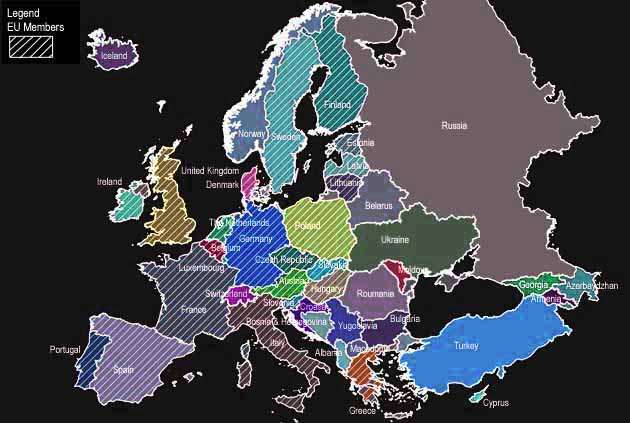
BELGRADE, Dec. 19 (IPS) - Environmentalists in Romania have secured a victory in getting genetically modified (GM) soy finally banned. "Romania was the biggest producer of GM (genetically modified) soy in Europe after it began growing it without any control a decade ago," Greenpeace coordinator Gabriel Paun told IPS on phone from Bucharest. "This is to be stopped by January, which is another victory for us." Romania, together with neighbouring Bulgaria, is joining the European Union (EU) Jan. 1. It had therefore to comply with strict regulation dealing with GM organisms, unwelcome by most environmentally conscious nations.
GM crops crept into the country a decade ago, bringing at least 130,000 hectares under modified soybean cultivation. Environmentalists rank Romania 11th among producers of GM crops. Unrestrained production of GM crops has endangered prospects of agriculture exports. Such agricultural produce, often described as "contaminated", cannot reach strictly regulated markets.
"This victory (on ban on GM soy planting) represents a great challenge for us," Paun said. "We plan to broaden the action to other EU countries such as Austria, Greece and Poland." Cultivation of GM soy in Romania included 25,000 hectares in the area of the Danube Delta, one of the largest wetlands on the planet. This area is home to at least 1,689 plant species and 3,448 species of fauna, in a unique "natural museum" of biodiversity.
GM crops, or "genetically modified organisms (GMOs)" as many experts like to call them, went into mass cultivation about ten years ago. They were at first regarded as a salvation to feed the poor. Due to laboratory-implanted characteristics at the genetic level, they gave unexpectedly high yields, were immune to the usual plant diseases, and needed little care in general. What was little known at first was that GMOs tend to make land infertile, and cannot reproduce. "It's unclear if GM crops are a danger by themselves, but they release certain substances that stimulate growth of undesired micro-organisms," expert on GM crops Mirjana Nikolic told IPS. "Due to the presence of those micro-organisms, the land can become infertile after one season in some cases." Nikolic took part in a large operation two years ago to discover fields in Serbia where smuggled GM soybeans had been planted. The operation involved police action and led to the burning down of plants on 1,000 hectares in the northern province Vojvodina. It was established then that the GM seeds had been smuggled from neighbouring Romania.
Romanian environmentalists say the most popular GM crops in the region for some time have been soybeans and maize, and also genetically modified plum trees. In August this year Greenpeace uncovered illegal experiments in plantation of such plum trees at a research and development centre in Bistri in Romania. "These new findings once more revealed that genetically modified organisms (GMOs) are totally out of control in Romania and that the research stations in Romania are playing grounds for the industry," Paun said. The plantations were destroyed, and no licence for further work was approved to project leaders, he said. GM plum trees pose a serious risk to human health because they contain a gene that is resistant to antibiotics.
Romania began some action against GM soy in February this year. It ordered cuts in the production of GM herbicide resistant soybeans, of which the EU does not approve, and introduced a monitoring and control system for GM crops. But many farmers prefer genetically engineered crops, because they mean no more fighting with weeds or bugs. Cultivation of resistant crops eases the job of combating pests of all kinds. A black market in GM seeds was flourishing in Romania for years "but things are to be improved now," Paun said. Environmentalist Dragos Dima recently told Romanian media that it will take many years to "put the agricultural house in order." Dima said "the country will have to decontaminate itself from unapproved GM varieties and put in place working systems on the release of GM organisms and on food labelling." Romania, he said, may become a test case "whether GM crop-plant decontamination is possible at all."
The complete ban now on production of GM crops is a victory for campaigners. This decision follows the victory of Romanian environmentalists, local Greenpeace among them, in securing suspension of construction of the controversial Road 66a earlier this month. The road would gravely endanger the untouched nature reserves of Retezat and Domogled parks.
Austria allowed to keep its ban on GM corn - By Andrew Bounds in Brussels - December 19 2006
A US trade victory over the European Union's import regime for genetically modified crops looked hollow last night as Austria retained its right to ban the growing of bio-engineered corn. Environment ministers yesterday threw out a European Commission proposal to force Austria to lift the bans it imposed on two authorised GM maize varieties in 1999 and 2000. They had rejected the move in 2004 but Brussels hoped that a World Trade Organisation ruling this year that the ban was illegal would tip the argument in its favour and retabled the proposal. However, in a sign of how sensitive the issue remains for European consumers, only the UK, Netherlands, Czech Republic and Sweden among the EU's 25 member states backed it. "The Commission will now have to carefully consider the legal and scientific bases that would underpin any further proposals," a spokeswoman said yesterday. It may now have to legislate.
Another case against Hungary will almost certainly be rejected by ministers next month. Greece also bans genetically modified crops. The European Food Safety Authority ruled in March 2006 there was no health risk from T25, created by Bayer of Germany, or MON810, from US company Monsanto. However, Austria pointed to the United Nation's Biosafety Protocol, which allows countries to ban genetically modified crops if there is a lack of scientific certainty over their safety. The WTO disregarded the treaty because the complainants - the US, Canada and Argentina - had not ratified it, and found against Austria because it had not conducted a proper risk assessment.
Helen Holder, of Friends of the Earth Europe, said: "Today's vote was a complete rejection of the WTO's ruling on GM foods. This is a major defeat for the biotech industry and their friends in the European Commission. "Every country must have the democratic right to protect its citizens and environment."
The Financial Times Limited 2006
EU upholds Austria's sovereign right to ban GMOs - By Jeremy Smith - 19 Dec 2006
http://www.checkbiotech.org/root/index.cfm?fuseaction=news&doc_id=14091&start=1&control=207&page_start=1&page_nr=101&pg=1
BRUSSELS - EU ministers slapped down an attempt on Monday to order Austria to drop its bans on two genetically modified (GMO) maize types, delivering a second stinging rebuff to the EU's executive European Commission. Between 1997 and 2000, five EU countries banned specific GMOs on their territory, focusing on three maize and two rapeseed types approved shortly before the start of the EU's six-year moratorium on new biotech authorisations. The Commission's draft order, proposed in response to a World Trade Organisation (WTO) ruling that attacked the various so-called national GMO safeguards for breaking international trade rules, was roundly rejected by EU environment ministers.
Only four countries supported the Commission in its attempt to overturn Austria's ban: Britain, Sweden, the Netherlands and the Czech Republic. Austria has banned two GMO maize types, one in 1997 and the other in 1999. The first ban was against MON 810 maize made by U.S. biotech giant Monsanto (MON.N) and the second against T25 maize made by German drugs and chemicals group Bayer (BAYG.DE).
In June 2005, the Commission also tried to get the bans scrapped. EUenvironment ministers rejected the proposals then as well. Observers say the Commission's latest attempt to overturn the Austrian ban was meant to demonstrate to the complainants in the WTO case - Argentina, Canada and the United States - that it was taking action to facilitate more GMO approvals. But for many years, little has changed in the split of opinion on biotech policy among the EU's governments, which are consistently unable to secure the weighted majority that is legally required to vote through a new GMO approval. European consumers are well known for their antipathy towards GMO foods but the biotech industry insists its products are safe and no different to conventional foods. Europe's hostility to GMO foods is unfounded, it says.
Problems at WTO?
The problem now for the Commission is to decide what to do next: it may decide to propose a similar order at a later date, or even the same one, or just quietly let the matter rest. Privately, Commission officials say the biggest worry is more pressure from the three WTO complainants over GMO approvals, or the two manufacturing companies themselves. "The Commission will have to consider very carefully the legal and scientific basis that would underpin any new proposals by us," EU Environment Commissioner Stavros Dimas said. Austria's Environment Minister Josef Proell was jubilant that the Commission's order was so comprehensively rejected, as were environment groups - who were quick to warn the Commission not to attempt similar action against other EU countries. "This is a very strong signal by the Environment Council (of ministers) for the Commission to reassess its policy," he said. "The Commission could save itself a lot of humiliation like today if they would provide for a common (EU legal) basis for coexistence, for example," he said, referring to rules for how farmers should separate organic, traditional and GMO crops. At present, the EU has only a set of non-binding guidelines for crop coexistence. EU governments are supposed to draft their own rules and then submit them for the Commission's approval.
"EU environment ministers should be congratulated for defending the environment and consumer protection against U.S. trade interests and commercial pressure," said Martina Holbach, GMO policy adviser at Greenpeace's European unit. "It is time the Commission did the same - it has been served a second slap in the face today and should drop plans to pursue similar action against Greece and Hungary unless it wants further humiliation," she said in a statement.
© Reuters 2006
EU VOTES TO DEFY WTO RULING ON GM FOODS - Friends of the Earth Europe - 18th December 2006
Member States support the right to ban GMOs
Brussels, 18 December - Friends of the Earth Europe has welcomed today's rejection by EU Environment Ministers of a proposal to force Austria to lift its bans on genetically modified (GM) foods and crops. [1] The proposal was tabled by the European Commission in response to a ruling by the World Trade Organisation (WTO) earlier this year, which stated that the bans broke international trade laws.
Helen Holder, GMO Campaigner at Friends of the Earth Europe said: "Today's vote was a complete rejection of the WTO's ruling on GM foods. This is a major defeat for the biotech industry and their friends in the European Commission. Every country must have the democratic right to protect its citizens and environment. Neither the European Commission nor the WTO should be allowed to force Europeans to eat genetically modified foods." "The biotech industry's tactics have backfired. It's now time for the European Commission to put the interests of the public and the environment before those of the biotech industry."
The WTO ruling did not rule against GMO bans per se but judged that Austria had not followed the risk assessments needed under the trade-friendly WTO rules. Austria, together with all EU member states, has ratified the UN's Biosafety Protocol which allows countries to ban genetically modified crops if there is a lack of scientific certainty over their safety. The WTO disregarded the Biosafety Protocol because the complainants in the trade dispute (the US, Canada and Argentina) had not ratified it.
For more information, please contact:
Helen Holder, GM Campainger at Friends of the Earth Europe: Tel : +32 2 542 0182, Mobile +32 474 857 638, Email: helen.holder@foeeurope.org
Adrian Bebb, GM Campaigner at Friends of the Earth Europe: Mobile : +49 1609 4901163, Email: adrian.bebb@foeeurope.org
Rosemary Hall, Communications Officer at Friends of the Earth Europe: Tel:+32 25 42 61 05, Mobile: +32 485 930515, Email: rosemary.hall@foeeurope.org
NOTES:
[1] Today (18th December), Environment Ministers met at an Environment Council meeting in Brussels and discussed a proposal from the European Commission to force Austria to drop its ban on two genetically modified (GM) maizes. The Austrian ban on the two maizes - one by Bayer and one by Monsanto - has been in place since June 1999. All countries rejected the proposal apart from the UK, the Netherlands, the Czech Republic and Sweden.
County Kildare becomes GMO-free zone - Cross-party support for local farmers and food producers - GM-free Ireland press release, 24 October 2006
http://www.gmfreeireland.org/press/GMFI31.pdf
DUBLIN, 24 October 2006 - Kildare County Council became the ninth county on the island of Ireland to declare itself a GMO-free zone [1]. The decision was taken by the elected County Councillors at a meeting yesterday. The Motion states "that this County Council takes all possible measures necessary to promote and maintain Kildare as a genetically modified crop-free zone, in order to protect the interests of farmers and to encourage development of our valuable agricultural industry". The motion was tabled by Mary Glennon, Independent Councillor for the Naas area, and was passed unanimously by elected representatives from all the political parties, with two abstentions. Cllr. Glennon said "The economic value of Kildare's bloodstock, farm, food and tourist sectors have great economic importance and must be protected from any contamination by GM crops [2]. Our alarm bells went off when the world largest chemicals company, BASF, attempted to conduct an experiment with 450,000 GMO potatoes in Co. Meath earlier this year. We are absolutely delighted at the cross-party support for this motion to protect current and future generations of farmers and consumers from the threat of GM crops in Co. Kildare." BASF's attempt to release the GMO potatoes led to massive opposition including a ban on GM crops in Co. Meath [3].
Eddie Punch, General Secretary of the Irish Cattle and Sheepfarmers Association (ICSA) said he welcomed Kildare's GMO-free regulation as a pragmatic response to the future of conventional agriculture in the area. "If Irish farmers are to compete, the secret must be to be able to differentiate our product - to sell a different product which has specific characteristics that are attractive to the people that want them. The vast majority of EU consumers do not want to eat food containing GM ingredients. The whole island of Ireland should become a GMO-free zone, in order to supply the consumers of Europe with the GM-free product they desire." [4] A spokesperson from the Kildare branch of the Irish Farmers Association said the local IFA was also pleased by the motion. Chef Olivier Pauloin-Valory, from Les Olives restaurant in Naas, said "This is a delicious decision. As a member of Euro-toques, which represents Europe's 3,000 leading chefs, I refuse to serve any GM food to my customers. The future of the restaurant business in this country depends on keeping our food safe and free of all GM ingredients." [5].
A survey of tourists visiting this country now underway by Fáilte Ireland found that 92 per cent of foreign visitors perceive Ireland as a "clean green" destination, 62 per cent associate Irish food products with natural and local production, and 46 per cent have negative perceptions of GM crops. Local organic farmer Nick Cullen, from Ballysax, who suggested the motion to Kildare Co. Council, said the GMO free motion will help protect his constitutional right to earn a livelihood, because he would be forced out of business if his crops became contaminated by GM pollen if anyone was stupid enough to try growing GM crops nearby [6]. Mr. Cullen also arranged for local landowners to place GMO-free zone signs along the main access road to the recent Ryder Cup which brought thousands of foreign visitors to Kildare last month [7].
Kildare Co. Council's decision came as EU member states voted yesterday to require mandatory testing of all rice imports from the United States for genetically modified material before allowing them to enter the EU. Illegal GM rice which escaped from open air field trials six years ago has since been found to have contaminated food supplies in 15 EU countries, Russia, Japan and the Middle East, leading to a collapse of American rice prices on the commodity markets, a virtual shut down of US rice exports to the EU, and massive economic losses for contaminated farmers and food exporters in the USA. [8]
Eight European countries have total or near total bans on GM seeds and crops and livestock, as do 175 regional governments, 3,500 local authorities and 1,000 smaller areas across 22 EU member states. These include most of Britain's Celtic fringe from the Highlands of Scotland through Wales and Cornwall. [9] Unlike most EU countries, the Irish and UK governments still do not recognise the right of Local Authorities to prohibit GMO crops, and are poised to allow their "co-existence" with conventional and organic farming on this island following public consultations that have been described as totally undemocratic by stakeholder groups in Ireland and the UK [10]. Evidence from contamination incidents in 40 countries shows that "co-existence" inevitably leads to contamination [11]. GM crops can not be recalled after their release, and according to the official EU report on the subject, they may cause up to 40% higher production costs for EU farmers. [12] Moreover there is no market for GM-labelled food in Europe [13].
GM-free Ireland Network spokesman Michael O'Callaghan said that since our governments are failing in their duty to protect our security from the economic, health and environmental threats of GM food and farming, it is imperative for County and Town Councils North and South of the border to specifically prohibit the release of any GMO seeds, crops, trees, fish and livestock in their areas as soon as possible [14]. GM-free Ireland also advises Local Authorities to join the Assembly of European Regions to empower the latter to lobby on their behalf for a new EU Directive that recognises the democratic legal right of local areas to have the final say on whether to allow GM crops in their areas [15]. "Ireland's best economic interest is to declare the whole of this island a GMO-free zone" he said, "but since this government is in bed with the WTO and the agbiotech corporations on this issue, its up to citizens and their local elected representatives to take the lead at the County level to protect the interests of our farmers and consumers."
Contact: Michael O'Callaghan, Coordinator, GM-free Ireland Network, Tel: + 353 (0)404 43885, Mobile: + 353 (0)87 799 4761
Email: mail@gmfreeireland.org Web: www.gmfreeireland.org
Notes to editors:
1. Irish GMO-free zones now include 9 counties (Cavan, Clare, Fermanagh, Kildare, Kerry, Meath, Roscommon, Monaghan, and Westmeath), 9 towns (Bantry, Bray, Derry, Galway City, Letterkenny, Navan, Newry, Mourne, & Clonakilty) and 1,000 smaller areas. See detailed national and county maps at http://www.gmfreeireland.org/map.
2. See proceedings of the Green Ireland Conference on branding for food, farming and tourism at http://www.gmfreeireland.org/conference.
3. See http://www.gmfreeireland.org/potato. The world's largest chemicals company BASF gave up its plans for a controversial patented GMO potato experiment in Co. Meath this year, and may cancel it altogether. BASF said it made the decision because of the conditions imposed in the provisional consent given by the Environmental Protection Agency on 8 May. These included obligations for the company to reduce the risk of cross-contamination of neighbouring farmers and wildlife, and to pay the costs of an independent monitoring of health and environmental impacts. BASF complained that such conditions had not been imposed for similar experiments in Sweden. Days later, BASF CEO Hans Kast, who also chairs the biotech lobby Europa-Bio, announced that all the European countries which oppose GM food and crops should "get out of the EU"! The cancellation may also have been influenced by nationwide opposition from more than 100 farm and food industry groups, resistance by TDs from all the parties, two motions passed unanimously by Meath Co. Council, and the threat of further legal action on planning and constitutional grounds.
4. ICSA is the first Irish conventional farmers group with a clearly defined policy to conserve Ireland's GM-free farming status. The speech by Eddie Punch at the Green Ireland Conference should be mandatory reading for all Irish farmers and food producers concerned about the competitive advantage of Ireland's green image, and the undemocratic way that farm policies are being determined by bureaucrats in the European Commission and the World Trade Organisation. See http://www.gmfreeireland.org/conference/trans/epunch.php.
5. See Euro-Toques Ireland web site: http://www.eurotoquesirl.org.
6. EU and Irish laws forbid organic farmers and food producers from using any GM ingredients.
7. See "Organic farmer seeking to raise awareness of dangers of GM food", Leinster Leader, 5 October 2006.
8. Friends of the Earth Europe has published information online about all the reported rice contamination cases over the last two months: http://www.foeeurope.org/GMOs/rice_contamination.htm.
See also GM-free Ireland press releases for September / October 2006 at http://www.gmfreeireland.org/press.
9. For maps and details of GMO-free zones in Europe see http://www.gmofree-europe.org.
10. For details of Irish plans for "co-existence" of GM crops see http://www.gmfreeireland.org/coexistence.
11. See the international GM Contamination Register at http://www.gmcontaminationregister.org.
See also "Impossible coexistence: Seven years of GMOs have contaminated organic and conventional maize: an examination of the cases in Catalonia and Aragon". Published by Greenpeace International, 4 April 2006 (928 KB PDF file): http://www.gmreeireland.org/coexistence/Greenpeace/impossible-coexistence.pdf
12. "Scenarios for co-existence of genetically modified, conventional and organic crops in European agriculture" published by the European Commission Joint Research Centre, May 2002. Download as 1 MB PDF file: http://www.gmfreeireland.org/downloads/gmcrops_coexistence.pdf
(Note that Ireland's former Chief Scientific Officer "Dr." Barry McSweeney, was accused by Greenpeace of attempting to suppress the publication of this report because of its disappointing conclusions for the biotech industry, whilst he was CEO of the Joint Research Centre.)
13. "No Market for GM-labelled Food in Europe", Greenpeace, January 2005. This detailed report shows that the EU market for GM labelled food products is virtually closed. Europe's top 30 retailers and top 30 food & drink producers have policies and non-GM commitments which reveal a massive international food industry rejection of GM ingredients. This cuts across the industry from food and drink manufacturers to retailers, and includes everything from snacks and ready meals to pet food and beer. The combined total food and drink sales of the 49 companies with a stated non-GM policy in their main market or throughout the EU (27 retailers and 22 food and drink producers) amounts to - 646 billion, more than 60% of the total - 1,069 billion European food and drink sales. Irish food companies doing business internationally need to implement a non-GM policy without delay. Download report (2MB PDF file): http://www.gmfreeireland.org/downloads/NoMarketForGMFood.pdf.
14. The GM-free Ireland Network recommends that GMO-free zone motions by Irish County, City and Town Councils be worded as follows:
(a) to protect the interests of landowners, farmers, food producers, consumers and future generations by prohibiting the release of GMO seeds, crops, trees, insects, crustaceans, fish, poultry and livestock in [insert name of county];
(b) to exclude Local Authority funding for the procurement of food containing GM ingredients in schools, hospitals, nursing homes, canteens etc.; and
(c) to prevent the transportation, storage, and use of live GMO seeds, crops, trees, insects, crustaceans, fish, poultry and livestock on its land, water, and airspace (including GMO seeds and crops approved only for animal feed or biofuel).
Because the Government will dismiss such motions, also ask your County, Town council or Regional Authority to join the Assembly of European Regions (http://www.a-e-r.org) which will lobby on your behalf for a new EC Directive that recognises the democratic right of local authorities to have the final say on whether GM crops may be grown in their area.
15. The proposed EU Directive should also include strict liability provisions for GMO contamination, and take into account not only economic but also ecological aspects of growing GM crops. See the briefing "Time to change European policy on GMOs in agriculture" issued to the EC Commissioners on 17 March 2005 by the European Environmental Bureau (EEB), European Community of Consumer Cooperatives (EURO COOP), Friends of the Earth Europe (FOEE), Greenpeace European Unit, and the International Federation of Organic Agriculture Movements (IFOAM) EU Group. Download as 924K PDF file: http://www.gmfreeireland.org/coexistence/EU/BriefingGMOs_March05.pdf.
Lazio region GMO-free, Council approves law - 25 October 2006 - http://www.gmfreeireland.org/news/index.php
Agenzia Giornalistica Italia (AGI), 25 October 2005. Special service by AGI on behalf of the Italian Prime Minister's Office.
Rome, Oct 25 - The growing and breeding of any kind of genetically modified organisms (GMO) has been banned throughout the region. An analogous ban has been imposed also for the productive cycle of the feed and fodder for livestock. The failure to respect the regulations is to be punished with fines (up to 50,000 euros) and the companies' exclusion from the concession of regional contributions. It is on these points that the law passed today by the Lazio Regional Council, chaired by Massimo Pineschi, which imposed "urgent provisions on the subject of genetically modified organisms".
The law, approved with 37 votes in favour, two abstentions and no votes against, not only prescribes the suspension of contributions in the case of the use of genetically modified organisms, but also the revoking of previously conceded contributions and the returning of the sums paid. Companies using GM goods will be denied access to certificates of quality. The use of GM goods can only be authorised for experiments and with strict limitations. The law also established the regional GMO-Free certificate, in accordance with European and national laws on traceability and labelling of GMO goods.
The law also imposes strict regulations on the retailing of GMO goods, which must be sold in a clearly marked separate area to avoid confusing and mixing up GMO and non-GMO products. At the same time, it is forbidden to use GMO products in collective catering services at kindergartens, schools, hospitals, certified resting homes, regional offices, provincial offices and communal offices, or at their respective subsidiary organisations.
The Region supports research projects for non-GMO products and establishes a Committee for the protection of the agricultural production and biodiversity from the use of GMO. Supervision and checking responsibilities have been entrusted to Arsial and fines will be incurred by those who violate the laws. The introductory report was presented by assessor for Agriculture Daniela Valentini.
GM RICE LEGAL CHALLENGE ISSUED AGAINST FOOD STANDARDS AGENCY
Friends of the Earth Press Release - Friday 27 October 2006
Friends of the Earth has filed a legal challenge against the Food Standards Agency (FSA) over its failure to take necessary action to prevent UK consumers being exposed to illegal GM rice in their food. The action comes two months after it was revealed that an experimental and unapproved GM rice had contaminated food supplies in the US and been exported to the UK and Europe. The application for Judicial Review was filed with the High Court challenging the Food Standards Agency's response to the incident.
According to the Emergency Decision issued by the European Commission shortly after the contamination incident was announced, any long grain rice imported into the EU must be certified as free of the illegal rice (BayerCropScience's LL Rice 601) [1]. Furthermore, member states must test rice products already on the market to make sure the illegal variety is not present.
Friends of the Earth claims that the FSA:
* has failed to take actions necessary to comply with the requirements of the Emergency Decision to test rice already on the market in the UK;
* to investigate or take enforcement action;
* encouraged food businesses to carry on as normal and not to worry about taking steps to test their rice for contamination or to withdraw any contaminated rice that they found.
No strains of GM rice have been approved in Europe, and no GM rice varieties are being grown commercially anywhere in the world. However, experimental trials are being carried out in a number of countries, including the US. In August, US Authorities announced that the illegal LL Rice 601, grown experimentally from 1998-2001 had contaminated commercial long grain rice supplies. Since then, over 90 incidents of illegal GM rice contamination has been detected in 15 European countries[2]. In the UK illegal GM material has been detected in long grain rice from Tesco, Sainsbury's, Morrisons, Somerfield and the Co-op.
Friends of the Earth's Head of Legal, Phil Michaels said: "The Food Standards Agency is not taking the UK's legal obligations seriously. It has failed to take necessary steps to verify that illegal GM rice is not on the market. It has effectively told business and local food authorities that no action is required. The Agency needs to take steps to check the food chain to ensure that this GM rice is not present and, where it is present, ensure that it is removed. It is failing to do so. Despite providing the FSA with repeated opportunities to reconsider its position it has failed to take the necessary steps. That is why Friends of the Earth feels it has no choice but to take urgent legal action."
On Monday, member states in the EU agreed to stricter measures requiring all long grain rice from the US to be re-tested at the point of entry into the EU, following a mix up where a number of consignments of rice that had entered Rotterdam port and were certified by the US as GM-free, were tested by Dutch authorities and subsequently found to be contaminated [3].
Notes:
[1] http://europa.eu.int/rapid/pressReleasesAction.do?reference=IP/06/1120&format=HTML&aged=0&language=EN&guiLanguage=en
[2] http://www.foeeurope.org/GMOs/rice_contamination.htm
[3] GM rice: Standing Committee backs Commission Decision on strict counter testing of US rice imports:
http://europa.eu.int/rapid/middayExpressAction.do?date=25/10/2006&direction=0&guiLanguage=en
Romania Harvests Trouble with its GM Crops - by Christine Lescu - Balkan Insight, 18 October 2006 - http://www.birn.eu.com/insight_55_2_eng.php
With its slipshod standards on GM food production, Romania may find Europe closes door to its exports.
By Christine Lescu in Bucharest - [Lescu is a journalist for Radio Romania International, RRI]
Romania may find itself excluded from the European Union markets and even have difficulties selling its genetically modified products locally, because of delays in complying with European food traceability and labelling regulations. Experts say its increasing use of genetically modified crops also hinders organic agriculture, an area in which Romania has the potential to be competitive in the EU market.
After farmers this year cultivated almost 130,000 hectares of GM soybean, Romania became the single biggest producer of this product in Europe, according to Greenpeace. The environmentalist campaigning organisation in 2004 ranked Romania 11th in a table of the world's biggest producers of GM crops. A large percentage of the GM soybean crop was also planted with non-certified seed, meaning its origins cannot be identified or traced.
Bucharest has done too little, and too late, to address Europe's concerns about the kind of food coming out of Romania. In 2002, it adopted the first measures to regulate GM products, when it told manufacturers of GM products to declare this information on packages and labels. But results have been patchy. A poor level of compliance reflects the lack of interest in the subject felt by Romanian consumers - unlike the situation in Western Europe. Local consumer groups say few Romanians feel eating GM food products is risky. "If we avoided eating everything bad, we'd die of starvation" is shoppers' stock response.
In February this year, meanwhile, the government made further moves. Until then, cultivation of GM soybeans had been totally unregulated. Now the government is trying to bring food production standards into closer harmony with EU environmental rules. It has ordered cuts in the production of GM herbicide resistant soybeans, of which the EU does not approve, and introduced a monitoring and control system for GM crops. But so far there is little sign of progress with these initiatives either. This year the production of GM soybean increased - from about 65,000 to 130,000 hectares.
Experts say the authorities are unable to cope with the growth of illegally cultivated genetically-engineered crops. The problem is that farmers have strong incentives to grow GM soybeans. Normally, combating weeds and beetles is time consuming and expensive. With the cultivation of resistant varieties, they can combat pests more easily. The Garda Nationala de Mediu (National Environmental Guard), the body put in charge of monitoring compliance with the new rules, has handed out 23 warnings and imposed 15 fines this year. But it says tracking down all the culprits is hard.
Apart from dealing with known GM crop growers, the body is struggling to halt the activities of those who buy seeds from producers and sell them on. Florian Udrea, of the Garda Nationala, says checking this activity is an almost hopeless task. "Out of carelessness or ill will, some people don't declare where the seeds from their crops came from," he said. Some farmers keep quiet about their GM crops because they do not even know they have planted GM seeds. Cases of contamination of crops with GM varieties are frequent.
Agricultural consultant Dragos Dima says Romania will pay a price for failing to put in place effective systems to test and control soybean production from cultivation to consumption and monitor the presence of GM seed. "If Romania does not adopt the traceability and labeling measures required by the EU legislation, I am afraid that starting with 2007, all its products containing soybean will be restricted from entering EU markets," Dima told Balkan Insight. This is a serious threat to farmers, he added, as most food products contain at least traces of soybean. Romania could also find its access to structural funds for agricultural projects restricted.
In a few months, Romania is about to join a club that has strict standards on the GM issue and in which public opinion is on the alert. Several EU member states, including Germany and Austria, ban the cultivation and import of GM seeds outright. EU legislation does not ban GM products altogether but it insists on strict rules concerning the release of GM seeds into the environment and the traceability and labelling of Genetically Modified Organisims, GMOs, and GMOs in food and animal feed. Only seeds approved by the European Food Safety Authority may be traded within the EU. These tight European mechanisms reflect many scientists' continuing concerns about genetic modification. Some worry that GM organisms may yet have unforseeable and unpredictable consequences on the environment and on health. Professor Gilles-Eric Seralini, of the University of Caen, voiced some of those concerns, felt especially with regard to Romanian GM products, to Romanian public radio, RRI. "The soybeans grown in Romania are treated with a very powerful pesticide named 'Roundup Ready', which has toxic effects on human placenta and embryos," he said in a recent interview. "Roundup Ready is used to destroy weeds and parasites attacking soya crops but also destroys every other plant nearby, damaging the environment.....Roundup Ready genetically engineered soya is not approved for growing in the EU."
Dragos Dima says it may take Romania many years to put its agricultural house in order. "The country will have to decontaminate itself from unapproved GM varieties and put in place working systems on the release of GM organisms and on food labeling," he said. "But the decontamination process is likely to take years. Romania may also become a test case to see whether GM crop-plant decontamination is possible at all."
[Balkan Insight is the online publication of BIRN - the Balkan Investigative Reporting Network, a close group of editors and trainers that enables journalists in the region to produce in-depth analytical and investigative journalism on complex political, economic and social themes.]
EU to test all US rice imports - By AOIFE WHITE - AP Business Writer - The Associated Press/BRUSSELS, Belgium, OCT. 23
http://www.businessweek.com/ap/financialnews/D8KUFR683.htm
European Union nations voted Monday to test all U.S. long-grain rice imports to make sure they don't contain genetically modified varieties that haven't been approved by the EU. All consignments of U.S. long-grain rice will be sampled and tested at EU entry ports before they can be distributed and sold, the European Commission said. The new rules will go into effect within a few days. The EU action stems from fears that a banned genetically modified rice strain named Liberty Link Rice 601, which was accidentally imported from the United States, could have found its way into the food supply. The Commission said it has to start mandatory tests because the EU and the U.S. failed to agree on how to check for genetically modified rice not legally allowed on sale in Europe. Talks broke down after the sides could not find a way of testing the rice to "a high level of consistency and accuracy" within a 15-day negotiation period, it said. The costs of testing will be borne by exporters.
The EU buys about 70 million euros ($90 million) worth of U.S. rice each year. The tests also will check for another unauthorized genetically modified rice, LL Rice 62, recently found in French imports of U.S. rice. Wary of public health and environmental concerns, the EU allows only genetically modified foodstuffs that have been evaluated and authorized to be placed on the EU market. While the EU's executive arm insists on a recall of the illegal imports, it has said the presence of LL 601 poses no immediate health risk to humans or animals based on a review of incomplete data provided by the U.S. government and the maker of the rice variety. Whether the rice is safe to eat or not, it is still cannot be sold in Europe because it has not been evaluated and authorized in line with EU law, the Commission said.
The EU said it was acting in response to finding LL Rice 601 in U.S. shipments four weeks ago. It first stepped up controls on U.S. rice in August after Dutch officials found an unauthorized genetically modified variety in shipments that arrived in the port of Rotterdam in August. Other shipments also were found in the Netherlands, Belgium and Italy. The LL 601 strain was developed by Aventis CropScience, which was taken over by Germany's Bayer AG in 2002 and renamed Bayer Crop Science. Bayer announced in July it had found the 601 strain in storage units in Arkansas and Missouri.
GM-RISK FOOD IMPORTS MUST BE TESTED - EU countries to vote on measures to keep contaminated rice out of Europe - 23rd October 2006
Brussels, 23rd October 2006 - EU member states must adopt tougher measures to control the spread of contaminated food imports, says Friends of the Earth Europe. Environment Ministers and national food safety experts are meeting separately today to discuss how to deal with the contamination of rice from both the United States and China with illegal genetically modified (GM) experimental strains. The national food safety experts will vote today on a new proposal for mandatory testing of all US rice imports for GM contamination. [1]
Adrian Bebb, GM Campaigner at Friends of the Earth Europe said, "Mandatory testing of all rice imports from the United States for illegal genetically modified material is absolutely vital since there have now been around eighty cases of contamination across Europe in the past six weeks." Friends of the Earth Europe has published information online about all the reported rice contamination cases over the last two months. [2]
The environmental campaign group has warned that contamination is likely not only in American rice imports, but in imports from all countries that conduct outdoor experimental GM trials. Indeed, foods imported from China have also been found to be contaminated with an illegal GM rice strain. Friends of the Earth and Greenpeace first raised the alert about contaminated Chinese rice products over six weeks ago [3], but the Commission has so far refused to introduce measures to restrict their import. The food products have now been found in four countries. [2]
Friends of the Earth Europe has called for the proposed testing of rice imports to be extended to all foods imported from countries that test genetically modified crops outdoors. "We urgently need compulsory testing of all foods imported from countries that experiment with genetically modified crops outdoors. This includes imports from China. Chinese rice has already been shown to be contaminated, although the European Commission has so far failed to take action and seems to prioritise its trading relationship with China over protecting consumers," Mr Bebb added.
In addition to the meeting of national experts, Environment Ministers from across the EU will be discussing the rice contamination at their Council meeting in Luxembourg today. Friends of the Earth Europe has written to all member states calling for the introduction of a "detection register" of all GM crops tested outdoors. Currently, biotech companies are not obligated to publicise information about the crops that they are testing. Friends of the Earth Europe believes that if a company wants to test GM crops outdoors then it must first provide a validated test for that specific crop. This would enable food authorities and food companies to test normal food supplies for contamination originating from test sites.
"It is clear that you cannot grow genetically modified crops outdoors without the risk of contaminating the whole food chain. Ideally, outdoor growing should be banned. Failing that, biotech companies must be forced to disclose details about their experiments so that we can track contamination of foods and take preventative action to protect public health," Mr Bebb said.
For more information, please contact:
Rosemary Hall, Communications Officer at Friends of the Earth Europe: Tel:+32 25 42 61 05, Mobile: +32 485 930515, Email: rosemary.hall@foeeurope.org
Adrian Bebb, GM Campaigner at Friends of the Earth Europe: Tel :+49 802 599 1951, Mobile : +49 1609 4901163, Email: adrian.bebb@foeeurope.org
Notes:
[1] The US revealed on 18th August that the US food chain has been contaminated with an illegal and untested genetically modified (GM) strain called LL601. The EU introduced an Emergency Procedure on 23rd August that required imports from the US to be certified free of LL601 rice. The European Food Safety Authority has also declared that there is insufficient data on LL601 to be able to guarantee its safety. However, discrepancies between US testing standards and the EU's stricter requirements has led to a stand-off between the two trading blocks with all imports of US rice halted. The European Commission gave the US a 15 day deadline to agree to the EU‚s testing protocols which ran out on Thursday (19th October), before introducing new measures that require mandatory testing to EU standards at all ports. European Commission press release from Thursday 19th October: http://europa.eu/rapid/pressReleasesAction.do?reference=IP/06/1437&format=HTML&aged=0&language=EN&guiLanguage=en FoEE press statement reaction: http://www.foeeurope.org/press/2006/AB_19_Oct_tougher_EC_rice_controls.html
[2] FoEE webpage compiling contamination cases: http://www.foeeurope.org/GMOs/rice_contamination.htm
[3] http://www.foeeurope.org/press/2006/AB_5_Sept_China_rice.html
Rosemary Hall, Communications Officer, Friends of the Earth Europe, Rue Blanche 15, B-1050 Bruxelles, Belgium Tel.: +32 2 542 6105 Mobile: +32 485 930515 Fax: +32 2 537 5596 rosemary.hall@foeeurope.org http://www.foeeurope.org
Three out of four Italians see GMOs as health threat - Reuters News Service, Oct 20 2006
http://today.reuters.co.uk/news/articlenews.aspx?type=healthNews&storyID=2006-10-20T134407Z_01_L20602839_RTRIDST_0_HEALTH-FOOD-ITALY-GMO DC.XML&WTmodLoc=SciHealth-C4-Health-9
CERNOBBIO, Italy (Reuters) - Three quarters of Italians see genetically modified (GMO) foods as a health hazard, according to research published on Friday. European consumers are known for being wary of GMO foods, but the biotech industry says its products are perfectly safe and no different to conventional foods. But a study conducted by Italy's major farm body Coldiretti and research center ISPO showed 74 percent of Italians believed GMOs could damage human health. That represented a 4 percent increase on a similar survey last year. The study, presented at the International Forum on Agriculture and Food organized by Coldiretti, was based on a survey of 4,093 Italians who represented the country's population breakdown by gender, age, profession and residence. More Italians are opting for organic food, with 71 percent saying they prefer products free of chemical additives, it showed.
FRIENDS OF THE EARTH EUROPE WELCOMES TOUGHER CONTROLS ON US RICE IMPORTS - Thursday 19th October - Friends of the Earth Europe
Brussels, 19th October - Friends of the Earth Europe has welcomed the European Commission‚s proposals announced today that all rice imports from the United States should be tested for genetically modified material before they are allowed into the EU.
Reacting to the European Commission‚s statement today [1], Adrian Bebb from Friends of Earth Europe said, "Friends of the Earth Europe welcomes the move by the European Commission to propose tougher controls against imports of contaminated rice from the US. This is absolutely necessary since there have now been almost eighty cases of contamination across Europe in the past six weeks."[2]
But the environmental campaign group has warned that contamination with genetically modified material is likely wherever outdoor experimental trials are conducted. Indeed, rice products imported from China have already been found to be contaminated with an illegal genetically modified variant.[3] Friends of the Earth Europe has demanded that the new strict protocols are extended to all crops imported from countries that test genetically modified crops outdoors.
"Compulsory testing of all foods imported from countries that experiment with genetically modified crops outdoors should urgently be introduced. This includes imports from China. Chinese rice has already been shown to be contaminated, although the European Commission has so far failed to take action and prioritises its trading relationship with China over protecting consumers," Mr Bebb added.
For more information, please contact: Rosemary Hall, Communications Officer at Friends of the Earth Europe: Tel:+32 25 42 61 05, Mobile: +32 485 930515, Email: rosemary.hall@foeeurope.org Adrian Bebb, GM Campaigner at Friends of the Earth Europe: Tel: +49 802 599 1951, Mobile: +49 1609 4901163, Email: adrian.bebb@foeeurope.org
Notes:
[1] http://europa.eu/rapid/pressReleasesAction.do?reference=IP/06/1437&format=HTML&aged=0&language=EN&guiLanguage=en
[2] http://www.foeeurope.org/GMOs/rice_contamination.htm
[3] http://www.foeeurope.org/press/2006/AB_5_Sept_China_rice.html
Rosemary Hall, Communications Officer, Friends of the Earth Europe, Rue Blanche 15, B-1050 Bruxelles, Belgium
Tel.: +32 2 542 6105 Mobile: +32 485 930515 Fax: +32 2 537 5596 rosemary.hall@foeeurope.org http://www.foeeurope.org
EU seeks joint testing with U.S. to prevent illegal GM rice imports - International Herald Tribune - France - The Associated Press - October 4, 2006
http://www.iht.com/articles/ap/2006/10/04/europe/EU_GEN_EU_Biotech_Rice.php
BRUSSELS, Belgium The EU will try to set up joint tests and controls with the United States to prevent genetically modified American long grain rice from entering the bloc, an official said Wednesday. The European Commission will seek negotiations to get a quick deal with U.S. agriculture authorities on setting up a joint testing operation to ensure only legally approved rice makes it to Europe, EU spokesman Philip Tod told reporters. Unless there is such an agreement with Washington, the European Commission will push for mandatory sampling and testing by the EU's 25 states of all long rice imports to ensure they do not contain genetically altered strains, Tod said. The commission would seek only a 15-day negotiating period with the U.S. "with the view to reaching an agreement on a common sampling and testing protocol to be used when carrying out the tests required to certify U.S. long grain rice," he said.
The EU action stems from fears that a banned genetically modified long grain rice strain, named Liberty Link Rice 601, which was accidentally imported from the United States, could have found its way into the food supply. Controls were reinforced after Dutch officials found an unauthorized genetically modified variety in shipments that arrived in the port of Rotterdam in August. EU officials have confirmed that one shipment had been impounded in the Netherlands, another in Belgium. Tests in Italy also found the illegal variety in imports there last month, and the EU has alerted officials in Britain, France and Germany that some of banned long-grain rice may have entered their nations. If no agreement is reached with the United States, EU governments would go ahead without Washington to boost testing and certification procedures, Tod said. Wary of public health and environmental concerns, the EU allows only genetically modified foodstuffs that have been evaluated and authorized to be placed on the EU market.
The LL 601 strain was developed by Aventis CropScience, which was taken over by Germany's Bayer AG in 2002 and renamed Bayer Crop Science. Bayer announced in July it had found the 601 strain in storage units in Arkansas and Missouri. While the EU head office insists on a recall of the illegal imports, it has said the presence of LL 601 poses no immediate health risk to humans or animals based on a review of incomplete data provided by the U.S. government and the maker of the rice variety.
EU to boost checks on U.S. rice imports after Dutch report more illegal shipments - Associated Press, September 22 2006
http://www.smh.com.au/news/Technology/EU-to-boost-checks-on-US-rice-imports-after-Dutch-report-more-illegal-shipments/2006/09/12/1157826946082.html
BRUSSELS - The European Union said Thursday it would reinforce controls on U.S. long grain rice imports, after Dutch officials found an unauthorized genetically modified variety in shipments that arrived in the port of Rotterdam last month. EU spokesman Philip Tod said the European Commission has alerted officials in Britain, France and Germany that some of the genetically modified long-grain rice may have entered their nations. He said the imports of long-grain rice were certified as genetically unmanipulated. Yet spot checks by Dutch officials found traces of Liberty Link Rice 601, a genetically modified variety developed by Bayer CropScience AG in the United States, he said. Tod said one shipment had been impounded in the Netherlands, another in Belgium. He could not say how much rice was involved or how much may have ended up in Britain, France, Germany and, possibly, other EU nations.
Wary of public health and environmental concerns, the EU allows only genetically modified foodstuffs that have been evaluated and authorized to be placed on the EU market. LLRice 601 is not among them. Bayer never asked for the authorization to market LL601 in the U.S. The onus to certify that imports comply with EU norms lies with any company that places foreign goods on the EU market. The environmental group Greenpeace urged the EU to tell Washington "no more imports of US rice will be allowed into Europe until the US authorities have established a trustworthy certification scheme and ensured that the contamination in the US has been contained."
In the last two weeks, EU officials have twice reported illegal imports of genetically modified American rice. Last week, it said 33 out of 162 samples of rice imports contained the presence of LL Rice 601. It was developed by Aventis CropScience, which was taken over by Germany's Bayer AG in 2002 and renamed Bayer Crop Science. Bayer announced in July it had found the 601 strain in storage units in Arkansas and Missouri.
Tod said the EU wants to know from Dutch authorities how rice certified as "negative for the presence of LLRICE601" could show positive in counter-tests. He also said the EU would contact U.S. authorities. "We will be following up with them as soon as the situation in the Netherlands is clarified," he said. Tod said the European Commission "intends to take further action to strengthen" the testing of imports of long grain rice for the presence of the 601 strain. He gave no details.
On Aug. 23, the Commission said that with immediate effect U.S. long grain rice imports must be tested by accredited laboratories and certified they are free of traces of LL Rice 601. While the EU head office insists on a recall of the illegal imports it has said the presence of LLRICE601 poses no immediate health risk to humans or animals based on a review of incomplete data provided by the U.S. government and the maker of the rice variety.
EFSA safety statement was issued without sight of crucial GM rice data - Press Notice from GM Free Cymru - 21st September 2006
It has been revealed today that the statement issued by the European Food Safety Authority on 15 September relating to the safety of GM contaminated rice was scientifically irresponsible. It was based only upon highly selective data provided to it by Bayer CropScience, with large sections of the key scientific documentation blanked out.
The EFSA statement (1) was carefully worded, implying that they were not satisfied that they had sufficient data for a full scientific assessment of LLRICE 601, the offending variety. They said: "According to the Statement of the Panel issued today there is insufficient data to provide a full risk assessment in accordance with EFSA's GM guidance."
Nevertheless, the GMO Panel and EFSA effectively endorsed LL601 as safe to eat, with the words: "........ on the basis of the available molecular and compositional data and on the toxicological profile of PAT proteins, EFSA considers that the consumption of imported long grain rice containing trace levels of LLRICE601 is not likely to pose an imminent safety concern to humans or animals." As EFSA must have anticipated, these latter words were flashed around the world, summarised and simplified, and built into countless press releases as a confirmation that LL601 is safe to eat.
Documentation seen today by GM Free Cymru reveals that Bayer CropScience has withheld crucial data on the molecular characterization of LL601 and on other crucial characteristics from the European regulatory bodies, while at the same time asking for the variety to be authorized retrospectively. The Bayer dossier (2) has about 30 pages blanked out on the grounds that the information is CBI or "confidential business information."
It appears that EFSA's GMO Panel might have asked Bayer for the crucial evidence prior to its meeting on 14th September, but it is now clear that it had not received it when it released its 15th September statement.
To compound the deceit, the EFSA statement cites two "positive scientific assessments" of LLRICE601 in support of its conclusion that the variety will not be harmful if consumed in small quantities. On investigation, it is clear that these assessments are both worthless. One of those was an "informal assessment" made by unnamed members of the ACNFP to the UK Food Standards Agency and never published. That off-the-record advice is entirely unacceptable from a scientific point of view. It has caused a storm of protest from NGOs, and is one of the grounds for the legal action which FoE is taking against FSA. The other "positive assessment" was submitted on 13th September by RIKILT (Institute of Food Safety, Univ of Wegeningen, Netherlands), which is the institute run by the Chairman of EFSA's GMO Panel, Prof Harry Kuiper. That is one cause for concern, but much more important is the fact (admitted by the report's authors) they they have not seen the "censored" material in the Bayer dossier either (4) (5).
Speaking for GM Free Cymru, Dr Brian John said: "We are staggered by these revelations. They show that EFSA had no scientific basis for issuing its statement on the safety of LL601 rice. Bayer has simply refused to give EFSA and the other regulatory bodies key information that might well show that LL601 is unstable and dangerous. We know already that it is failed variety that was discontinued for unspecified reasons in 2001. EFSA should NOT have issued any statement at all in the circumstances, and it should have instructed Bayer to make full release of all the scientific data in its possession. This is another example of a giant GM corporation riding roughshod through the European regulatory process, and another example of the incompetence and corruption of those who are supposed to be looking after the health of the European consumer."
Contact: Brian John - Tel 01239-820470
NOTES
(1) http://www.efsa.europa.eu/en/science/gmo/statements0/efsa_statement_gmo_LLrice601.html
(2) The Bayer petition can be accessed via EFSA:
http://www.efsa.europa.eu/etc/medialib/efsa/science/gmo/statements/gmo_llrice601.Par.0001.File.dat/efsa_statement_gmo_LLrice601.pdf
(3) The Dutch assessment is here:
http://www2.vwa.nl/portal/page?_pageid=35,1554101&_dad=portal&_schema=PORTAL&p_file_id=12446
http://www2.vwa.nl/CDL/files/1/1004/12446%20Front_Office_rijst.pdf
(4) Translation from the Dutch on page 3: "Bayer's summary points to several appendixes of which some have not been delivered due to their confidential nature".
(5) Not even the EU governments have seen the "secret" data. In the conclusion of the Dutch report it says this: "Bayer has collected seceral data, especially a molecular characterisation of the genetic modification and an analysis of the
composition of the kernels and fenotypical and agronomic features of LL601 in comparison with conventional rice. An extensive summary of these data and the judgment of these data by USDA has been spread to EU member states through the permanent committee in Brussels." NB -- a summary and not the actual data.
EU member states reject two European Commission GMO proposals - Friends of the Earth Europe, Press release - 18th September 2006
Brussels, September 18th 2006 - Friends of the Earth Europe has called on the European Commission to respect EU member states' wishes and refuse authorisation of a genetically modified (GM) oilseed rape. At an Agriculture Council meeting today, only a small minority of EU Farm Ministers voted in favour of importing the GM oilseed rape into the EU.[1] Helen Holder, GM Campaigner at Friends of the Earth Europe, said, "Most member states are not happy for this genetically modified oilseed rape to be allowed into the EU. The European Commission must listen to these national concerns and refuse to authorise the crop." Under EU decision-making rules, the European Commission makes the final decision whether the GM crop will be authorised. Friends of the Earth Europe has expressed concern because in previous cases, the pro-biotech Commission has systematically authorised genetically modified organisms (GMOs) regardless of the general voting pattern by national Ministers.[2]
The oilseed rape in question is genetically modified to be tolerant to herbicides. It is produced by the multinational Bayer - the company at the centre of the recent GM rice contamination scandal.[3] Genetically modified oilseed rape has been surrounded by controversy in the past. In Japan, there have been several cases of imported GM oilseed rape growing wild around port areas. It is suspected that seeds were spilled during unloading and transportation and then sprouted.[4] In another incident, conventional oilseed rape in Australia was found to be contaminated with a GM variant.[5] "There is a risk that oilseed rape will sprout up wherever seeds are spilled during transit. Even if we only imported the herbicide-resistant GM oilseed rape, it could end up growing on EU soil and then crossing with related native species. We would then be faced with weeds that have a resistance to herbicides." Ms Holder added.
Oilseed rape is a member of the cabbage family, which includes hundreds of different species commonly found in Europe. EU funded research has found that oilseed rape can potentially cross with a variety of wild relatives.[6] UK government research reported in 2005 on oilseed rape 'superweed' - the result of GM oilseed rape cross breeding with a common weed, called charlock.[7]
In a separate GMO meeting today, representatives from member states did not support a Commission proposal to force Hungary to lift its ban on Monsanto's MON810 maize. [8] Although the maize is approved by the EU, Hungary prohibited the use, sale, production and import of Monsanto's MON810 maize seeds in January 2005, due to safety concerns.[9] The Commission will now put the vote to EU member states at an upcoming Council meeting. Helen Holder, GM Campaigner at Friends of the Earth Europe: "It is outrageous that the European Commission should bully Hungary into dropping its ban of a genetically modified maize. This maize is designed to produce a toxin, which may well have detrimental effects on the environment. Hungary is well within its rights to act with caution and ban it at this stage."
For more information, please contact:
Helen Holder, GM Campaigner at Friends of the Earth Europe:
Tel: +32 25 42 01 82, Mobile: +32 474 857638, Email: helen.holder@foeeurope.org
Rosemary Hall, Communications Officer at Friends of the Earth Europe:
Tel: +32 25 42 61 05, Mobile: +32 485 930515, Email: rosemary.hall@foeeurope,org
NOTES
[1] The application concerns oilseed rape lines Ms8, Rf3 and Ms8xRf3. Two out of three of these lines are fertile; therefore contamination by pollen is possible. The application concerns import of oilseed rape products including kernels (seeds), for use in animal feed. The same oilseed rape is already authorized for oil (1829/2003). The oil then can be used for human consumption or animal feed material. Results of the vote in the Agriculture Council meeting, Sept 18th:
For import of GM OSR: Portugal, Germany, Finland, UK, Netherlands, Belgium
Against import of GM OSR: France, Slovenia, Austria, Estonia, Malta, Latvia, Italy, Greece, Lithuania, Cyprus, Denmark, Hungary, Poland, Luxembourg
Abstention: Spain, Sweden, Czech Republic, Slovakia, Ireland
[2] For example, in August 2005, the European Commission approved the import of a controversial genetically modified (GM) maize, MON863, for use as animal feed, even though the majority of member states had either abstained or voted against import.
[3]
http://www.foeeurope.org/press/2006/AB_21_Aug_US_rice.html
http://www.foeeurope.org/press/2006/AB_22_Aug_US_rice.html
http://www.foeeurope.org/press/2006/AB_23_Aug_US_rice.html
http://www.foeeurope.org/press/2006/CO_01_Sept_Bayer_fund_testing.htm
http://www.foeeurope.org/press/2006/HH_17_Sept_Morrisons_rice.html
[4] http://www.saveourseeds.org/downloads/oilseed_rape_in_japanese_ports_2005pdf#search=%22oilseed%20rape%20spread%20ports%22
[5] http://www.gmcontaminationregister.org/index.php?content=re_detail&gw_id=92®=0&inc=1&con=1&cof=2&year=0&handle2_page
[6] http://www.saskorganic.com/oapf/index.html
[7] http://www.foeeurope.org/GMOs/publications/Biotech_November05.pdf
[8] The result of the vote was a simple majority against the Commission's proposal to lift the ban, but there was no qualified majority.
[9] http://www.foeeurope.org/GMOs/HUban_Press_briefing_final130906.pdf
Legal challenge plan over GM rice - http://news.bbc.co.uk/1/hi/uk/5354294.stm
GM rice has been banned in the European Union. Friends of the Earth has said it will start a legal challenge against the Food Standards Agency (FSA) over the sale of GM rice in UK supermarkets. It claims the agency privately told retailers they did not need to test for contamination of rice by GM products. GM rice is banned in the EU because of fears not enough research on possible health risks has been carried out. The FSA said: "It is the responsibility of retailers to ensure the food they put on the market is in compliance."
EU measures
Friends of the Earth said it had sent a number of rice samples for testing after reports in the US that long-grain rice had been contaminated by a type of GM rice - Bayer CropScience's LLRICE 601 - grown in experimental trials in August. The European Commission then introduced emergency measures to stop it entering Europe. No GM rice has yet been approved for consumption in the EU.
Friends of the Earth said a leaked memo revealed the FSA had told food retailers and manufacturers in private it did not expect them to carry out tests to see if rice was contaminated, or remove contaminated rice from sale. GM material was found in two types of own-brand rice for sale at Morrisons, Friends of the Earth said. The supermarket said it was withdrawing from sale 500g packets of American Long Grain Rice with a best before date of May 2008 and its 1kg pack of American Long Grain Brown Rice with a best before date of July 2008. We have now resorted to legal action to force the FSA to do its job properly, said Phil Michaels, Friends of the Earth. A Morrisons spokeswoman said: "Based on information received about tests carried out by Friends of the Earth, we have withdrawn the two products implicated as a precautionary measure."
The pressure group said the FSA had said in the memo it would only be testing for contaminated rice at mills, and any which had been sold to stores or was in warehouses would not be withdrawn. The FSA says the rice poses no threat to human health.
Friends of the Earth says it has written a formal legal letter before beginning action it hopes will lead to a judicial review. Friends of the Earth's head of legal Phil Michaels said: "The Food Standards Agency's response to this GM contamination incident is scandalous and, we believe, unlawful. It has failed to act adequately to prevent illegal GM rice reaching our plates and has failed to provide accurate advice and information as it is required to do by law." The FSA's spokesman said: "We haven't told retailers not to test, but we haven't required them to test." She said research by the European Food Standards Authority "does not suggest it poses a risk to health".
FRIENDS OF THE EARTH FINDS ILLEGAL US GM RICE IN UK SUPERMARKET - EU Member States not doing enough to detect GM contamination
Friends of the Earth Europe - Press Release -17 September 2006
Brussels, 17 September 2006 - Illegal US genetically modified (GM) rice has been found on the shelves of a big UK supermarket, Friends of the Earth Europe revealed today. The environmental campaign group is calling for a full product recall and is mounting a legal challenge over the UK Food Standards Agency's woeful response to the
contamination incident. Helen Holder, GMO Campaigner at Friends of the Earth Europe said, "The discovery of GMO-contaminated rice on supermarket shelves is extremely worrying. GM rice is illegal, it has not even been properly investigated and there is no guarantee that it is safe for human consumption. Any supermarket that discovers that its rice is contaminated must take immediate action and remove the products from its shelves."
Genetically modified material has been found in two samples of rice from the store Morrisons - the fourth largest supermarket chain in the UK, with nine million customers a week.[1] Friends of the Earth sent a number of samples to be tested following August's food scandal, in which rice stocks in the US were found to be contaminated with an illegal GM strain. This GM variant is an experimental Bayer CropScience rice called LL601 that was grown at outdoor test sites in the US between 1999 and 2001. The rice has not been authorised for human consumption anywhere in the world. Indeed, the European Food Safety Authority (EFSA) admits that there is insufficient data on LL601 to be able to guarantee its safety.[3]
In response to the crisis last month, the European Commission introduced emergency measures to prevent imports of contaminated rice from the US from entering the EU, stressing that unauthorised GMOs must not enter the EU food and feed chain under any circumstances.[4] However, Friends of the Earth Europe has criticised the weak enforcement of these measures at a member state level. The European Commission advised member states to carry out controls on products already on the market, but little testing of rice already in shops has actually taken place. In the UK, the Food Standards Agency (FSA) has even advised the food industry that this is not a health and safety issue and has indicated that it does not expect the food industry to test for contaminated rice, or to remove any contaminated rice from its shelves. [5] The response of the FSA to the crisis is so inadequate that Friends of the Earth in the UK is mounting a legal challenge against it. Friends of the Earth has written a formal legal letter to the FSA, which is the first step of legal action.[6]
"National food safety authorities and food companies should be rigorously testing samples at each stage of the supply chain, in order to detect all incidences of contamination with genetically modified rice. It should not be left to civil society groups like Friends of the Earth to raise the alert." Ms Holder added. Friends of the Earth Europe would like detailed information about the exact testing that is being conducted in each member state and insists that this information should made publicly available. The environmental group also suggests that any positive contamination results should be publicised immediately. "This latest contamination incident highlights that the biotechnology industry is unable to keep its crops under control. The EU must respect the Polluter Pays principle and make industry cover the costs of testing and product recalls. It is not up to consumers and taxpayers to foot the bill for illegal contamination." Ms Holder concluded.
For more information, please contact:
Helen Holder, GMO Campaigner at Friends of the Earth Europe: Tel: 32 474 857 638, Email: Helen.holder@foeeurope.org
Rosemary Hall, Communications Officer at Friends of the Earth Europe: Tel: 32 485 930515, Email: rosemary.hall@foeeurope.org
NOTES
[1] http://www.nfuonline.com/x9464.xml , http://www.morrisons.co.uk/40.asp
[2] Testing was carried out by an independent laboratory. It reveals that two Morrisons samples are contaminated with GM traits. There is no GM rice approved in the EU, so any presence of GM rice is illegal. The test does not confirm that the GM contamination is LL601. The affected products are:
Morrisons American Long Grain Rice 500g, Best before May 2008. Morrisons American Long Grain Brown Rice 1kg, Best before: Jul 2008
[2] Letter available from Friends of the Earth
[3] http://www.efsa.europa.eu/en/press_room/press_release/llrice601.html
[4] Attention! Long link may be broken - copy and paste both lines into browser:
http://europa.eu.int/rapid/pressReleasesAction.do?reference=IP/06/1120&format=HTML&aged=0&language=EN&guiLanguage=en
[5] Statement from Tilda rice - available from Friends of the Earth Europe
[6] Letter available from Friends of the Earth Europe
LETTERKENNY A GMO FREE ZONE - Donegal Democrat, 14 September 2006
Letterkenny Town Council has passed a motion declaring that the town become a Genetically Modified Organism (GMO) free zone. Councillors passed the motion from Green Party councillor Neil Clarke by a majority at the September meeting of the council. Only Fianna Fail's Clr. Dessie Larkin did not support the motion saying he did not know enough about the subject to support the motion. Clr. Clarke called on the council to support his motion after similar pledges had been made by local authorities on both sides of the border. GMO foods are now prohibited by councils in Cavan, Clare, Meath, Fermanagh, Kerry, Monaghan, Westmeath, Bantry, Bray, Kerry, Galway Navan, Newry Mourne and Clonakilty, he said. "Large multinationals are tampering with plants and food for profit," he said. "There is no real demand for genetically modified foods because they are banned by 60 per cent of the largest food companies and 70 per cent of European homes won't eat them. I want the ministers to take our objections to this on board".
Supporting the motion Clr. Gerry McMonagle suggested that the council write to the government calling on a ban on GMO foods to become government policy. "We have a good country here that can grow good crops and we should be supporting people who organically grow their food. It is important that this issue goes to the county council as well and we should send a letter to all the councils in the State saying that we won't support GMO foods."
Clr. Larkin said that he wanted it put on the record that he was not supporting the motion saying that he did not have the authority or the knowledge to support it. "Big supermarkets have made the decision not to go forward with GM foods and I think organic foods is going to come forward as a market issue. But surely there has to be some positives." Clr. Damien Blake said that there needed to be stricter instructions on food labelling. Clr. Jean Crossan said that the public was not as aware of the issue as it should be.
French tests reveal banned GMO in US rice imports - Agence France Presse, September 14, 2006 - http://www.todayonline.com/articles/142572.asp
AFP: France has discovered traces of a banned genetically modified strain of rice in imports from the US, French market and consumer regulator DGCCRF has said. The regulator said Thursday that traces of the LL601 strain of rice, which has been banned by the 25-nation European Union, had been detected in seven out of 19 samples tested. "At this stage, the results reveal the absence of GMO in 12 samples and the presence of the LL601 strain of rice, at a level less than 0.1 percent, in seven samples," the regulator said in a statement. The results are from samples taken from French importers accounting for more than 90 percent of rice imports from the United States. The DGCCRF was alerted by the European Commission, which in turn had been informed by US authorities about the risk of a possible contamination.
Genetically modified rice hits Switzerland - Swiss Info, September 12, 2006
http://www.swissinfo.org/eng/front/detail/Genetically_modified_rice_hits_Switzerland.html?siteSect=105&sid=7058118&cKey=1158095339000
The country's largest retailer Migros has confirmed finding traces of genetically modified rice, supplied from the United States, that is banned in Switzerland. Migros says the storage silos containing the LL 601 rice have now been sealed but it is unclear whether any of the rice actually went on sale. Both Migros and rival Coop have suspended sales of long-grain rice from the US. Migros spokesman Monica Glisenti said that traces of the unapproved rice were found after laboratory tests, adding that the concentration level was 0.01 per cent. The legal tolerance permitted for genetically modified organisms is 0.9 per cent. However, no genetically modified rice is permitted in Switzerland, so the level is of no relevance.
Glisenti said that the LL 601 rice was found in a shipment of 1,500 tons. Long-grain rice from other countries is to remain on the shelves, she said. She noted that examination had only been possible this week because the tests had only just become available. As a result, it could not be ruled out that banned rice had already been sold in Switzerland. Coop, which receives its rice from the same supplier as Migros, said it had found no traces of LL 601. But it has also withdrawn long-grain rice from the US from the shelves, noting in a statement that contamination could not be excluded completely.
Advice
The two retailers are now waiting for advice from the Swiss Federal Health Office in Bern before taking further action. Decisions are also expected from the European Union, which has also been affected by the LL 601 rice. The EU Commission urged EU member states and the food industry to carry out tests following the discovery of unauthorised GM rice imports in Europe. Thirty-three out of 162 results of rice samples carried out by members of the European Federation of Rice Millers tested positive for the LL 601 strain, the European Commission said in a statement. It also said that three bargeloads within a 20,000 metric ton US rice cargo detained in Rotterdam had tested positive, while 20 other bargeloads had tested negative. The consignments which tested negative for the unauthorised GMO have now been allowed to proceed to their final destination, while those which tested positive continue to be detained in Rotterdam and will either be returned to the US or destroyed," the EC said.
Tighter rules
In August, the EC tightened requirements on US long-grain rice imports to prove the absence of biotech rice strain LL 601, which it said was marketed by the Bayer company of Germany and produced in the US. The Commission's decision followed the discovery by US authorities of trace amounts of LL 601, engineered to resist a herbicide, in long-grain samples that were targeted for commercial use. On Monday, environmental group Greenpeace International said a strain of LL 601 rice had been found in branches of discount supermarket Aldi Nord in Germany.
CONTEXT
*Swiss voters in November accepted a proposal for a five-year blanket ban on genetically modified organisms (GMOs) in Swiss agriculture.
*The result is forcing the Swiss government to put in place some of the toughest legislation on GMOs in Europe.
The European Union, of which Switzerland is not a member, ended a six-year moratorium on accepting applications for new genetically modified foods in May 2004. But Germany and France, two of Switzerland's neighbours, have both voted to uphold national bans on products they deem unsafe.
Genetically Modified Rice Found in German Supermarkets - Deutsche Welle, 12 September 2006
http://www.dw-world.de/dw/article/0,2144,2171602,00.html
The European Commission has confirmed that EU imports of long-grain rice contain traces of genetically modified material. According to Greenpeace, some of it made it to the shelves of a German supermarket chain. The European Federation of Rice Millers tested 162 shipments of rice imported from the United States. 33 of them tested positive for the genetically modified rice type known as LL-601, the European Commission said in a statement on Monday. "Any consignments which tested positive have already been recalled or withheld from the market and the Federation's members have committed to continuing such withdrawals for any positive findings," the commission said. Biotech rice is not allowed to be grown, sold or marketed in the EU.
German consumers affected
The EU confirmation followed an announcement by environmental group Greenpeace that its tests in Germany had detected traces of genetically modified rice in products sold at the Aldi Nord chain of supermarkets. Greenpeace genetics expert Ulrike Brendel said that the Aldi products, sold under the Bon-Ri brand, had been contaminated with a strain of rice developed by German industrial giant Bayer and tested in the United States. "We tested the samples at a respected and independent laboratory," Brendel said. "The results show some of the rice has been modified using a method developed and published by Bayer --there's no doubt about it."
A tainted biotech product
Rice found in eight of Aldi Nord's 35 sales areas contained traces of LL-601-- a rice strain engineered by Bayer to resist certain Bayer herbicides. Aldi Nord said documentation for the rice imports showed no signs of shipments containing genetically modified rice, but it removed the affected products from its shelves and was testing the countries of origins of other similar products. The European Commission's findings suggested GM material had been finding its way into the European market for some time. Considering that Germany imports about one quarter of its rice from the US, Brendel thought it was inevitable that a number of products and supermarket chains would be affected. "This modified strain of rice was planted in the US in 2001, but only as a test crop," Brendel said. "The fact we're finding it here in imports shows that industry isn't capable of controlling genetically modified crops. We don't know what human health or environmental risks involved. If we want to keep food sources free of genetically modified material, then we can't afford to plant GM crops."
Declaring war on biotech rice
Last month the European Commission slapped stringent testing requirements on rice imports from the US to try and stop genetically modified varieties from entering the 25 country-bloc. At the end of August, Germany's federal ministry of consumer protection ordered state-level authorities to step up their detection efforts. France and Sweden have also discovered traces of a banned genetically modified substance in imported US rice, in tests which must be confirmed by EU laboratories, a European Commission source said Tuesday. "Two member states, France and Sweden, have found, by their own methods, positive samples of GMO," the official said. "These remain to be verified by the Commission's testing methods." In France, seven samples out of 20 tested were found to include the unauthorized LL601 strain, the official said, on condition of anonymity.
EU confirms presence of tainted GMO rice - Reuters news service, 11 September 2006 - http://abcnews.go.com/US/wireStory?id=2420414
11 Sep , 2006 - BRUSSELS (Reuters) - The European Commission confirmed on Monday the presence of an unauthorized genetically modified (GMO) strain of rice. Thirty-three out of 162 results of rice samples carried out by members of the European Federation of Rice Millers tested positive for the LL601 strain, the European Commission said in a statement. "Any consignments which tested positive have already been recalled or withheld from the market and the Federation's members have committed to continuing such withdrawals for any positive findings," the European Commission said. It also said that three bargeloads within a 20,000 metric ton U.S. rice cargo detained in Rotterdam had tested positive, while 20 other bargeloads had tested negative. "The consignments which tested negative for the unauthorized GMO have now been allowed to proceed to their final destination, while those which tested positive continue to be detained in Rotterdam and will either be returned to the USA or destroyed," the European Commission said. At present, no biotech rice at all is allowed to be grown, sold or marketed in the 25 countries of the EU.
In August, the European Commission tightened requirements on U.S. long-grain rice imports to prove the absence of biotech rice strain LL601, which it said was marketed by Germany's Bayer AG and produced in the United States. The Commission's August decision followed the discovery by U.S. authorities of trace amounts of LL601, engineered to resist a herbicide, in long-grain samples that were targeted for commercial use. Earlier on Monday environmental group Greenpeace International said a strain of LL601 rice had been found in branches of discount supermarket Aldi Nord in Germany. However, Aldi said no GMO rice had yet been found at its Aldi Nord operations.
In Frankfurt, a spokeswoman for Bayer said the company did not sell or produce LL Rice 601. She said the strain was developed by Aventis CropScience, a company bought by Bayer in 2002, but that development had been discontinued in 2001.
US Illegal GE Rice Contamination Spreads Further into Europe - Bayer's illegal GE rice found in major German supermarket
11 SEPTEMBER, 2006 - http://www.commondreams.org/news2006/0911-03.htm
NEW YORK - September 11 - The scandal around illegal genetically engineered (GE) rice entering European food outlets has grown today as Greenpeace tests reveal illegal rice from the US has contaminated rice on supermarket shelves in Germany. Last week Greenpeace revealed illegal GE rice from China, which poses a potential health risk, had ended up in rice products on European shelves. The European Food Safety Committee meets today to determine the EU response to the potentially widespread contamination of rice and rice products and Greenpeace is calling on the EU to implement strong measures to stop further contamination.
Tests conducted by an independent laboratory have confirmed the presence of Bayer's Liberty Link rice in US parboiled long grain rice sold in Aldi Nord a major German supermarket chain which also has 700 outlets throughout France. Bayers LL GE rice is not approved for food or cultivation anywhere in the world except for the United States and Canada.
"The first question we are asking to both US and European authorities is how widespread is this contamination in products already on grocery store shelves?" said Doreen Stabinsky, Greenpeace GE campaigner. "The second question is what are they doing to protect consumers?" Greenpeace is demanding global testing of consumer products by the rice products industry and a European recall of contaminated US rice products.
Greenpeace is also calling on US authorities and food companies to protect US consumers. "We know that food products in Europe are contaminated. What about the rice products that US consumers are buying, like Uncle Ben's and Rice Krispies? We haven't heard a peep from the US food industry. What assurance are companies such as Kellogg's providing to consumers that their products sold in US supermarkets do not contain illegal GMOs?" added Stabinsky.
Greenpeace followed the announcement of contamination with a letter to US Agriculture Secretary Mike Johanns, calling on the agency to test all rice exports, regardless of destination. Other important export markets for US long grain rice and rice products include Mexico and the Middle East, where countries such as Saudi Arabia have strict laws regulating GE food products. Greenpeace is urging governments around the world to protect consumers in their countries and test rice products on supermarket shelves that originate from the United States.
For the past two years, US rice producers have refused to grow GE rice commercially because of lack of consumer acceptance around the world. The US rice industry, already reeling under widespread contamination and multiple lawsuits as a result of falling rice prices, is now likely to face an even larger global backlash.
"We know from experience in the Starlink case that the initial contamination finding is just the tip of the iceberg. Once illegal GE crops are in the food chain, removing them takes enormous effort and cost. It is easier to prevent contamination in the first place and stop any plans to commercialise GE rice," concluded Jeremy Tager, GE rice campaigner with Greenpeace International. "This is a clear message to the global rice industry - stay away from GE rice or you risk serious long-term economic damage to your market."
Greenpeace campaigns for GE-free crop and food production that is grounded in the principles of sustainability, protection of biodiversity and providing all people to have access to safe and nutritious food. Genetic engineering is an unnecessary and unwanted technology that contaminates the environment, threatens biodiversity and poses unacceptable risks to health.
CONTACT: Greenpeace
In the US Doreen Stabinsky, Greenpeace International GE campaigner, +1-202-285-7398
In Amsterdam Jeremy Tager, Greenpeace International GE rice campaigner +31 6 4622 1185 Suzette Jackson, Greenpeace International communications officer +31 6 4619 7324
Images are available of the contaminated rice products - Contact the Greenpeace International picture desk +31 20 718 2058
Tainted biotech rice found in Germany - Greenpeace Reuters News Service - 11th September 2006
http://today.reuters.com/news/articleinvesting.aspx?view=CN&storyID=2006-09-11T104115Z_01_L11521869_RTRIDST_0_FOOD-EU-GMO-RICE-UPDATE-1.XML&rpc=66&type=qcna
BRUSSELS - An unauthorised genetically modified (GMO) rice has found its way into the European Union's retail food sector and appeared for sale at branches of discount supermarket Aldi, environment group Greenpeace said on Monday. The biotech rice strain, known as LL Rice 601, was found in Aldi branches in Germany, Greenpeace International said in a report. At present, no biotech rice at all is allowed to be grown, sold or marketed in the 25 countries of the EU. "Tests conducted by an independent accredited laboratory have confirmed the presence of Bayer's Liberty Link rice in U.S. parboiled long grain rice sold in Aldi Nord, a major German supermarket chain," it said in a statement. Officials at Aldi Nord were not immediately available for comment.
In August, the European Commission tightened requirements on U.S. long-grain rice imports to prove the absence of LL Rice 601, which it said was marketed by Germany's Bayer AG and produced in the United States. In Frankfurt, a spokeswoman for Bayer said the company did not sell or produce LL Rice 601. She said the strain was developed by Aventis CropScience, a company bought by Bayer in 2002, but that development had been discontinued in 2001. "We are taking note of this report, evaluating it together with the rice industry as more information becomes available," the spokeswoman said. "We don't know whether Greenpeace has used testing methods validated by European authorities and whether they have used designated labs." She also said U.S., British and Canadian regulators had confirmed the food safety of the rice.
The Commission's decision followed the discovery by U.S. authorities of trace amounts of LL Rice 601, engineered to resist a herbicide, in long-grain samples that were targeted for commercial use. The only other evidence so far of the presence of LL Rice 601 in the EU-25 has been in the Netherlands, where Dutch authorities have been testing a 20,000-tonne U.S. rice cargo that was partly destined for Britain and partly for Germany. As of last Friday, two-thirds of the cargo - held in Rotterdam - had been tested but no positive trace was found, European Commission officials said. The shipment equates to one month's average EU imports of U.S. long-grain rice.
EU:Food Companies Risk Legal Action If Import Illegal GMO Crops - The Wall Street Journal, September 6 2006
http://www.truthabouttrade.org/article.asp?id=6275
Brussels - European Union food companies that import illegal genetically modified foods risk legal action by national governments, the European Commission said Tuesday after environmental groups said an illegal and potentially dangerous biotech strain has been found in Chinese food products sold in the U.K., Germany and France. Greenpeace International and Friends of the Earth Tuesday said their experts found Chinese rice-based products sold in Asian supermarkets in Germany, the U.K. and France contaminated with an experimental strain of genetically engineered rice that's not been approved for human consumption. The groups called for an immediate ban on Chinese rice.
The European Commission said the groups should submit their samples and findings to national test centers and the E.U.'s central biotechnology laboratory in Italy. "The presence of traces of unauthorized GMO food in the E.U. is illegal and it is the responsibility of food operators to ensure that they do not place on the market food that doesn't comply with E.U. law. Food operators are clearly not doing enough," E.U. food and consumer protection spokesman Philip Tod said. The Commission wrote Friday to food operators telling them "that they are not doing enough" to ensure imports are free of illegal biotech strains, Tod said. European governments should punish companies importing illegal crops. "We would expect member states to take action against any companies not complying with their obligations under E.U. food law."
The food scare is the second in as many weeks and casts doubt over the ability of biotech companies to control their crops. Late last month Europe imposed strict screeing rules on imports of U.S.-farmed long-grain rice following the discovery of an illegal biotech strain in commercial stocks there. European food safety experts - who have the power to impose import bans - are meeting in Brussels Tuesday and Wednesday. It is unclear whether the issue will be discussed. Greenpeace warned the strain "poses serious health risks" and called on European governments to "take immediate action to protect consumers." It said the rice - which is modified to resist insects - contains a protein that has reportedly induced allergic-like reactions in mice. "Five positive samples were found containing an illegal GE not approved anywhere in the world. However, this could be the tip of the iceberg with rice products included in everything from baby food to yoghurt," Greenpeace said in the statement. Countries that grow and produce biotech crops should be required to certify their exports biotech-free, Greenpeace said. Such certification "is reasonable, cost-effective, and necessary to protect Europe's consumers." Chinese seed companies have been selling the illegal strain to farmers, Greenpeace said.
Last week authorities in the Dutch port of Rotterdam stopped a shipment of U.S. rice thought to be contaminated with the illegal strain. U.S. authorities have declared the U.S. rice strain safe for human consumption.
EU says food importers should do more to keep out genetically modified products - Sidney Morning Herald, September 5 2006
http://www.smh.com.au/news/Technology/EU-says-food-importers-should-do-more-to-keep-out-geneticallymodified-products/2006/09/05/1157222128210.html
The European Commission said Tuesday food importers need to do more to keep imports of genetically modified products out of the 25-nation bloc. The EU's executive office was responding to claims by two environmental groups that some rice imports from China contained illegal genetically modified elements. Though the European Commission could not confirm the findings of Greenpeace and Friends of the Earth, spokesman Philip Tod said food "operators are clearly not doing enough" to keep the illegal products out. Greenpeace said that illegal biotech rice had been found in food products in Britain, Germany and France. It said it was an experimental variety aimed at protecting the rice from pests but might cause allergic reactions in people. Friends of the Earth demanded an immediate ban on Chinese rice imports. "The European Commission must react quickly and ban imports from China until consumers can be guaranteed that foods containing rice are safe from contamination," said spokesman Adrian Bebb. "Chinese foods already in shops should also be immediately tested and products recalled if necessary."
It was the second time environmental groups called for such a ban in a month. Two weeks ago, the EU imposed extra controls on U.S. imports after traces of a banned genetically modified rice variety were found in U.S. long-grain rice. No GM rice varieties have been cleared for sale in Europe, and EU authorities said they are taking all possible measures to avoid it hitting store shelves.
ILLEGAL GM RICE FROM CHINA FOUND IN EUROPE - Friends of the Earth Europe - Press Release - Tuesday 5 September 2006
NEW FOOD SCANDAL: ILLEGAL GM RICE FROM CHINA FOUND ACROSS EUROPE - Friends of the Earth demands ban on Chinese rice imports
Brussels, Tuesday 5 September 2006 - Friends of the Earth Europe has called for an immediate ban on rice imports from China following the discovery by environmental groups that foods on sale in Europe are contaminated with an illegal genetically modified (GM) rice from China. This is the second illegal GM rice crisis to hit Europe in three weeks. Last month the European Commission introduced emergency measures to prevent US rice, illegally contaminated with a different GM strain, from entering the food chain [1].
Friends of the Earth Europe's GM Campaigner Adrian Bebb said: "It is shocking that contamination with illegal genetically modified rice has occurred for the second time in three weeks. The European Commission must react quickly and ban imports from China until consumers can be guaranteed that foods containing rice are safe from contamination. Chinese foods already in shops should also be immediately tested and products recalled if necessary." "These incidents must be prevented from happening again. Consumers in Europe deserve better than panic measures each time the latest crisis breaks. We need a radical overhaul of food testing in the EU to stop illegal and potentially unsafe genetically modified foods from entering the food chain."
Friends of the Earth and Greenpeace tested foods in the UK, France and Germany and found rice products to be contaminated with the unauthorized GM rice [2]. The products were found in Asian specialty stores and were imported from China [3]. The illegal rice is an experimental variety genetically engineered to produce an insecticide. It is not approved for human consumption or commercial cultivation anywhere in the world. Scientific studies raise concerns about the risk to human health of eating the rice, particularly the potential to cause food allergies [4].
Both this latest incident and the contamination by Bayer's unauthorised GM rice in the US resulted from outdoor field trials of GM crops. Friends of the Earth Europe has now called for a global moratorium on field trials and a halt to the commercial development of GM rice. "This latest contamination is further proof that experimental genetically modified crops cannot be contained safely when grown in outdoor trials. Rice is one of the world‚s most important food crops and every effort should be made to protect it from contamination." Mr Bebb added.
No GM rice is approved in Europe either for import or cultivation. However, Bayer has applied to import herbicide resistant rice into the EU. And since 1991, 35 applications were made for field trials of GM rice in Europe, mainly in Spain and Italy [5].
For more information contact: Adrian Bebb, GM campaigner, Friends of the Earth Europe: Tel +49 80 25 99 19 51, Mobile +49 1609 4901 163, Email Adrian.bebb@foeeurope.org
Clare Oxborrow, GM campaigner at Friends of the Earth (London): Tel +44 207 566 1649, Mobile +44 771 2843211, Email clareo@foe.co.uk
Rosemary Hall, Communications Officer at Friends of the Earth Europe: Tel +32 25 42 61 05, Mobile +32 485 930515, Email rosemary.hall@foeeurope.org
Notes to editors
[1] http://www.foeeurope.org/press/2006/AB_23_Aug_US_rice.html
[2] The foods testing were bought from Asian stores in Germany, France and the UK. Products testing positive were: Cock Brand Rice Sticks (France), Swallow Sailing Rice Sticks (Germany), Brotherhood Rice Vermicelli (UK), Happiness Rice Vermicelli (UK), Gold Plum Rice Sticks (UK)
[3] This latest contamination incident stemmed from field trials in China. An investigation by Greenpeace in 2005 found that research institutes and seed companies in China had been illegally selling unapproved GM rice seeds to farmers. Further testing indicated that the whole food chain had been contaminated, with the most recent case being the contaminated Heinz rice cereal products in Beijing, Guangzhou and Hong Kong. The Chinese government, in the wake of the situation, reportedly punished seed companies and destroyed illegal-grown GM rice.
[4] The GM rice contains either the Cry1Ac protein, or a fusion Cry1Ab/Cry1Ac protein. A 1999 study partly sponsored by the US Environmental Protection Agency found evidence to suggest that the Bt protein Cry1Ac can elicit antibody responses consistent with allergic reactions in farm-workers and a series of studies published in 1999 and 2000 by a Cuban researcher Vasquez-Padron on Cry1Ac documented immunogenic responses to which indicate the potential for allergic reactions or other immune system responses http://www.humboldt.org.ni/transgenicos/docs/what_experts_says_human_effects.pdf
[5] http://biotech.jrc.it/deliberate/dbplants.asp
Rosemary Hall, Communications Officer, Friends of the Earth Europe, Rue Blanche 15, B-1050 Bruxelles , Belgium - Tel.: +32 2 542 6105 - Mobile: +32 485 930515 - Fax: +32 2 537 5596 - rosemary.hall@foeeurope.org - http://www.foeeurope.org
Illegal genetically engineered Chinese rice discovered in Europe - Health risks require immediate recall and import ban - PRESS RELEASE - Tuesday 5 September
Amsterdam September 5 2006 - Greenpeace International released findings today that show illegal GE (genetically engineered) rice from China has contaminated food products in France, Germany and the UK. Greenpeace International has notified authorities that the illegal GE rice poses serious health risks and calls upon European governments to take immediate actions to protect consumers.
Greenpeace offices tested samples of rice products such as vermicelli, rice sticks and other processed foods found in Asian specialty stores and Asian restaurants. Three positive samples were found containing an illegal GE not approved anywhere in the world. However this could be the tip of the iceberg with rice products included in everything from baby food to yoghurt. (1) "These findings are shocking and should trigger high-level responses", said Jeremy Tager, GE rice campaigner, Greenpeace International. "Consumers should not be left swallowing experimental GE rice that is risky to their health."
The illegal GE rice, genetically engineered to be resistant to insects, contains a protein or fused protein (Cry1Ac) that has reportedly induced allergenic-like reactions in mice.
Greenpeace International is calling for immediate recall and measures to ensure no further contaminated rice enters the EU. Additionally, we are calling for the urgent implementation of a preventative screening system for countries with high contamination risks. Demanding GE free certification for food from countries that produce GE crops is reasonable, cost effective, and necessary to protect Europe's food.
This recent rice contamination in China began with field trials; the rice is not currently approved for commercial growing because of mounting concerns over its safety. Yet an investigation by Greenpeace in 2005 shows that research institutes and seed companies in China had been illegally selling unapproved GE rice seeds to farmers. (2) "Innocent consumers again become the victims of the GE industry's 'contamination first' strategy", says Tager. "A group of rogue scientists pushing for the approval of GE rice in China leaked the illegal seeds to the market and have created major genetic contamination. Just two weeks ago, US rice was contaminated with an illegal GE rice developed by Bayer. Once illegal GE crops are in the food chain, removing them takes enormous effort and cost. It is easier to prevent contamination in the first place," concluded Tager.
For more information contact: Jeremy Tager, Greenpeace International GE rice campaigner +31 646 22 11 85. Suzette Jackson, Greenpeace International communications officer +31 6 4619 7324
Notes to editors:
(1) All tests were conducted by an accredited and independent laboratory. Details in attached background briefing.
(2) Further testing indicated that the whole food chain had been contaminated, with the most recent case being the contaminated Heinz rice cereal products in Beijing, Guangzhou and Hongkong. The Chinese government, in the wake of the situation, reportedly punished seed companies and destroyed illegally grown GE rice.
BAYER, NOT TAXPAYERS, MUST PAY FOR GM RICE TESTING IN EUROPE - Friends of the Earth Europe - PRESS RELEASE - September 1 2006
Brussels, 1 September 2006 ? Friends of the Earth Europe today demanded that biotech giant Bayer finances all European food testing for its illegal genetically modified (GM) rice. EU member states are obliged to carry out testing of foods on their shelves following contamination of the food chain in the US with Bayer's experimental GM rice [1]. The call comes as European authorities today published on the internet the official protocol for European laboratories to follow when testing foods for the illegal GM rice [2].
The European Commission has left the extent of testing to the discretion of each member state. But countries will have to pay for the testing themselves and each individual test can cost over 200 Euros. Bayer announced this week that its profits in the second quarter of 2006 have risen to over 7 million Euros [3].
Friends of the Earth's GM Campaigner, Clare Oxborrow, said: "Authorities and rice importers throughout Europe must now conduct expensive testing to prevent US rice, contaminated with an illegal GM strain, from entering our food chain. These tests are essential, but European taxpayers must not be made to pay. Instead Bayer, the biotech company responsible for this pollution, must take full responsibility for its incompetence and foot the bill." "It is clear that the GM industry cannot safely control its activities. When incidents like this happen, the industry must be forced to accept liability".
LL601 is a rice strain that was grown experimentally by Bayer CropScience between 1999 and 2001 in the US. It was not contained effectively, resulting in contamination of rice supplies in the food chain [4]. LL601 is not approved for commercial growing or human consumption, and the health and environmental impacts have not been fully investigated. Currently, no GM rice is allowed to be grown or imported into the EU. Testing of rice in the United States for the GM strain LL601 has reportedly produced a significant number of positive results [5], indicating that rice imported into the EU from the same supply chain is very likely to also be contaminated. A shipment of rice suspected of containing the illegal GM rice is being held in the Netherlands while Dutch authorities carry out testing. The multinational giant Bayer is being sued by rice farmers in Arkansas, Missouri, Mississippi, Louisiana, Texas and California, after rice prices dramatically dropped following contamination by the LL601 genetically modified variant. [6]
The protocol for testing has been validated by the EU and circulated to the European Network of GMO Laboratories [7]. Official authorities from the member states as well as private operators are expected to submit samples for testing in the next few days.
For more information, please contact: Clare Oxborrow, GM Campaigner at Friends of the Earth: Tel: +44 20 7566 1716; Mobile: +44 7712 843211; Email: clareo@foe.co.uk
Rosemary Hall, Communications Officer at Friends of the Earth Europe: Tel: +32 25 42 61 05; Mobile: +32 485 930515; Email: rosemary.hall@foeeurope.org
NOTES:
[1] http://europa.eu.int/rapid/pressReleasesAction.do?reference=IP/06/1120&format=HTML&aged=0&language=EN&guiLanguage=en
[2] http://gmo-crl.jrc.it/LLRice601update.htm
[3] http://www.news.bayer.com/BayNews/BayNews.nsf/id/D839D4CDFDAE65D4C12571D900190384
[4] http://www.foeeurope.org/press/2006/AB_21_Aug_US_rice.html
[5] http://deltafarmpress.com/news/060829-arkansas-gmo/
[6] http://today.reuters.com/news/articleinvesting.aspx?view=CN&storyID=2006-08-29T184034Z_01_N29437472_RTRIDST_0_FOOD-BAYER-RICE.XML&rpc=66&type=qcna
[7] European Network of GMO Laboratories: http://engl.jrc.it/
Unauthorised U.S. GMO rice arrived in Netherlands - REUTERS, Thu Aug 31 2006
http://today.reuters.com/stocks/QuoteCompanyNewsArticle.aspx?view=CN&storyID=2006-08-31T102437Z_01_BRU004876_RTRIDST_0_FOOD-EU-US-RICE-URGENT.XML&rpc=66
BRUSSELS, Aug 31 (Reuters) - A shipment of an unauthorised GMO rice strain from the United States arrived in the Netherlands on Saturday, the European Commission said. "We do have a suspected positive case in Rotterdam," Commission spokesman Philip Tod told a news conference on Thursday, adding that the rice had not entered the market and was being tested by Dutch authorities. "We also have been told by industry of another suspected positive case in New Orleans, but that has not left the U.S."
Last week, the EU tightened requirements on U.S. long-grain rice imports following the discovery by U.S. authorities of a genetically modified (GMO) strain known as LL Rice 601 marketed by Germany's Bayer AG and produced in the United States.
EU still anxious for details on U.S. biotech rice - By Jeremy Smith - REUTERS, Aug 30, 2006
http://today.reuters.com/stocks/QuoteCompanyNewsArticle.aspx?view=CN&storyID=2006-08-30T134816Z_01_L30836545_RTRIDST_0_FOOD-EU-USA-RICE.XML&rpc=66
BRUSSELS, Aug 30 (Reuters) - EU food safety authorities are still waiting for Washington to provide more details about an unauthorised biotech rice strain that may have crept into exports and fear the problem may be bigger than first feared. Last week, the EU tightened requirements on U.S. long grain rice imports to prove the absence of a genetically modified (GMO) strain known as LL Rice 601 marketed by Germany's Bayer AG (BAYG.DE: Quote, Profile, Research) and produced in the United States. The EU decision followed the discovery by U.S. authorities of trace amounts of LL Rice 601, engineered to resist a herbicide, in long grain samples that were targeted for commercial use - the first time this had happened.
EU food safety experts are still waiting for the United States to offer more details of how much GMO rice - at the moment, no biotech rice strains may be imported or sold in the bloc - may have entered European ports within other cargoes. "We still have no formal information about the extent of the contamination, origin or timeframe for when this happened," one EU official said, speaking on condition of anonymity. "But we have heard informally from the rice industry that their preliminary testing indicates that the contamination may be much more widespread than first thought," he said.
At present, the EU allows only imports of U.S. long grain rice tested by an accredited laboratory using a validated detection method. Shipments must be accompanied by a certificate assuring the absence of LL 601. More worrying for Brussels, the presence of the unauthorised rice strain in the U.S. commercial rice market may have been known for some time, maybe since early 2006. The European Commission, the EU's executive arm, has already complained to Washington about its information policy that caused a near three-week delay in telling Brussels that traces of the unauthorised GMO were found in the commercial rice. "We also understand, again informally, that this may have been known since January," the EU official said.
On July 31, U.S. agriculture and food safety authorities were notified that testing by Bayer CropScience, a Bayer unit, showed LL Rice 601 in rice bins in Arkansas and Missouri. The U.S. notified the European Commission on Aug. 18. The same day, U.S. farmer cooperative Riceland Foods Inc. - a major miller and exporter of U.S. rice and also a major soybean processor - issued a statement saying that one of its rice customers had discovered GMO material back in January. Bayer was contacted in early June and confirmed positive results for its herbicide-resistant trait in late July, it said. The 25-country European Union imported 300,000 tonnes of U.S. rice last year, with 85 percent being long grain.
EU tightens rules to block tainted U.S. biotech rice - By Jeremy Smith - REUTERS, August 23 2006
http://today.reuters.com/stocks/QuoteCompanyNewsArticle.aspx?view=CN&storyID=2006-08-23T173242Z_01_L23130635_RTRIDST_0_FOOD-EU-USA-RICE-UPDATE-2.XML&rpc=66
BRUSSELS, Aug 23 (Reuters) - The European Union has tightened requirements on U.S. long grain rice imports to prove there are no signs of an unauthorised genetically modified organism (GMO), the European Commission said on Wednesday. The decision follows the discovery by U.S. authorities of trace amounts of the unauthorised GMO rice strain in long grain samples that were targeted for commercial use. The rice, called LL Rice 601, is marketed by Germany's Bayer AG (BAYG.DE: Quote, Profile, Research) to withstand a weed-killing pesticide and grown in the United States. "The European Commission has today adopted a decision requiring imports of long grain rice from the USA to be certified as free of the unauthorised GMO LL Rice 601," Commission spokesman Philip Tod told a news briefing.
With immediate effect, only shipments of U.S. long grain rice tested by an accredited laboratory using a validated detection method will be able to enter EU markets. Shipments must be accompanied certificate assuring the absence of LL 601. The EU measure will be reviewed on Friday by a committee of EU-25 food safety experts, and again in six months' time. At present, no GMO rice is authorised for import or sale within the 25-country European Union, which imported 300,000 tonnes of U.S. rice last year, with 85 percent being long grain.
Biotech foods have run into strong resistance in Europe, where many consumers view them as "Frankenstein" foods. The biotech industry insists that its products are perfectly safe. Green groups, which had called for the EU to suspend all its U.S. rice imports, complained that the Commission's restrictions were a "minimal response to a serious contamination problem". "While the Commission should be congratulated for a quick response to this genetic contamination, this response is inadequate as rice is the world's most important staple food," Jeremy Tager at Greenpeace International said in a statement.
EU UNHAPPY WITH DELAY
U.S. authorities insist that the GMO strain poses no risk to public health or the environment. But the Commission, which says it needs much more data about the case, was not so sure. "We are still missing substantial amounts of information," a senior Commission official said. "For the moment, we do not share the view of the U.S. that there is no risk." The EU executive says it still has no idea about possible volumes of LL Rice 601 that may have entered Europe, nor the countries that may have received cargoes with the strain. They are also unhappy about U.S. information policy that caused a near 3-week delay in telling Brussels that traces of the unauthorised GMO were found in the commercial rice.
On July 31, U.S. agriculture and food safety authorities were notified that testing by Bayer CropScience, a Bayer unit, showed LL Rice 601 in rice bins in Arkansas and Missouri: the first time that unmarketed biotech rice had been found in rice used in the U.S. commercial market. Japan, for which the United States is the largest rice exporter, banned imports of U.S. long grain rice on Aug. 19.
For LL Rice 601, the validation test was now available and would be distributed in Europe in a few days, officials said.
EU restrictions on illegal US rice imports inadequate - Greenpeace International, Press Release
Brussels, International 23 August 2006 - Greenpeace International criticized the announcement by the European Commission (EC) today as a minimal response to a serious contamination problem. The EC stated that it would only impose testing and certification requirements on imports of long grain rice from the United States which does not address contamination from genetically engineered (GE) rice that may already be in food in the EU. The EC also relies on testing and information provided by Bayer, makes no commitment to its own assessment of the extent of the contamination problem and also imposes no penalties and costs against Bayer. The EC made this move after Commercial rice in the United States was found contaminated with genetically engineered (GE) Liberty Link (LL) rice 601, produced by agro-chemical giant Bayer and never intended for commercial release. Imports were, as a result, immediately banned in Japan. (1)
"While the Commission should be congratulated for a quick response to this genetic contamination, this response is inadequate as rice is the world's most important staple food and is contained in many food products currently on EU shelves," said Jeremy Tager, Greenpeace International GE campaigner. "It is time to move beyond case-by-case procedures as the GE industry has shown time and time again that it is unwilling or unable to prevent GE contamination." Greenpeace International calls on the EC to stop reacting to contamination 'accidents' and start preventing them instead. The EC should identify countries and products that are at high risk of contaminating our food supply with illegal or dangerous GE organisms and implement screening, preventative testing and, where there is no demonstrated capacity to prevent contamination, total bans.
Greenpeace International calls on other major importing regions such as the Americas, Africa and the Middle East to take similar steps immediately until the US can guarantee that their rice supply - and other foods - are no longer contaminated. "A message needs to be sent to the US and to agro-chemical giant Bayer that genetic contamination and 'accidents' with our food are not acceptable, and ultimately they must be held liable for cleaning it up."
Greenpeace campaigns for GE-free crop and food production grounded on the principles of sustainability, protection of biodiversity and providing all people to have access to safe and nutritious food. Genetic engineering is an unnecessary and unwanted technology that contaminates the environment, threatens biodiversity and poses unacceptable risks to health.
For more information and interviews
Jeremy Tager, Greenpeace International GE campaigner mob +31 (0) 6 4622 1185 office +31 (0) 20 718 2177
Suzette Jackson, Greenpeace International communications +31 (0) 6 4619 7324
Notes to editors
(1) http://www.easybourse.com/Website/dynamic/News.php?NewsID=44088&lang=fra&NewsRubrique=2
EU MUST ACT QUICKLY TO PREVENT CONTAMINATED GM RICE ENTERING EUROPE
Friends of the Earth Europe - Press Release - Tuesday 22 August 2006
Friends of the Earth pushes for an immediate suspension of US rice imports and a full investigation
Brussels, Tuesday 22 August 2006 - Friends of the Earth Europe has welcomed the announcement today by the EU Commission that it plans to prevent unapproved genetically modified rice from the US from entering the European food chain (1). However, the environmental campaign group warns that the measures taken (due to be announced tomorrow) must be rapid and must involve an immediate suspension of US rice imports.
Adrian Bebb, GM Food Campaigner for Friends of the Earth Europe said: "North American rice has been contaminated with a genetically modified variety that has not been properly tested and has not been authorised for human consumption. The EU rightly plans to take action to prevent it from entering the European food chain, but it must move faster. Imports of rice from the US must be suspended immediately and contaminated products must be removed from the shelves." "This disturbing incident is yet another warning of the dangers of genetically modified crops, and shows that consumer opposition to this technology is completely justified. There must be a full investigation to find out how this contamination has occurred and to ensure that it never happens again," Mr Bebb added.
Japan has already put a halt on imports on rice from the US.
The environmental campaign group is also calling on the Commission to set out its response to the incident, to clarify what steps are being taken, and to provide answers to the following specific questions:
* When was the European Commission officially notified of the contamination by the US authorities?
* Does the European Commission have the relevant reference materials to allow detection of LL601 rice in foodstuffs?
* Has a system for testing rice imports been established?
* Will the Commission make details of their plans for testing publicly available?
* Does the European Commission have any further information regarding the extent, location(s) and level of contamination of US rice, and when it occurred?
* Has the EFSA made any assessment of the safety of LL601 rice?
* Have the safety assessments from Bayer or the US authorities been made available to the European Commission?
* Will the Commission make any safety data publicly available?
For more information, please contact:
Adrian Bebb, GM Food Campaigner for Friends of the Earth Europe: Tel: +49 8025 99 1951; Mobile: +49 160 949 01163; email: adrian.bebb@foeeurope.org
Rosemary Hall, Communications Officer for Friends of the Earth Europe: Tel: +32 25 42 61 05; Mobile: +32 485 930 515; rosemary.hall@foeeurope.org
Notes
(1) Reuters: http://today.reuters.com/news/articleinvesting.aspx?view=CN&storyID=2006-08-22T102146Z_01_L22121916_RTRIDST_0_FOOD-EU-USA-RICE-UPDATE-1.XML&rpc=66&type=qcna
Rosemary Hall, Communications Officer, Friends of the Earth Europe, Rue Blanche 15, B-1050 Bruxelles, Belgium
Tel.: +32 2 542 6105 Mobile: +32 485 930515 Fax: +32 2 537 5596 rosemary.hall@foeeurope.org - http://www.foeeurope.org
EU URGED TO BAN NORTH AMERICAN RICE - Friends of the Earth Europe Press Release
US rice contaminated by illegal GM strain
Brussels, August 21, 2006 - Friends of the Earth Europe has today called on the European Commission to immediately restrict imports of American rice after the US Department for Agriculture (USDA) revealed that the US food chain has been contaminated with an illegal and untested genetically modified (GM) strain [1]. The US announcement states that conventional long-grain rice on the market has been contaminated by a GM rice that was grown at experimental test sites between 1998 and 2001. The statement does not reveal how widespread the contamination is or how the contamination occurred. Friends of the Earth Europe is calling on the European Union to follow the example of Japan, which suspended US rice imports on Saturday. [2]
Adrian Bebb, GM Food Campaigner for Friends of the Earth Europe said, "This is a complete scandal. The biotech industry has failed once again to control its experiments and lax regulations in the US have allowed consumers worldwide to be put at risk. The European Union must immediately suspend US rice imports until consumers can be guaranteed protection from untested and illegal foods."
Europe imports approximately 70 million Euros worth of US rice every year [3]. The source of the contamination is apparently an experimental GM rice called LLRICE601, produced by German-based biotechnology company Bayer. This experimental rice is engineered to withstand application of the herbicide glufosinate, but it has not been approved for human consumption anywhere in the world and has not undergone any official assessments to determine its health or environmental impact. According to Bayer the GM rice "is present in some samples of commercial rice seed at low levels" even though field-testing ended five years ago. Bayer informed the USDA of the contamination on 31 July 2006.
As well as calling for an immediate import ban, Friends of the Earth Europe has called for an investigation by authorities in the US and Europe into the full extent of the contamination and for Bayer to release all the necessary information into the public domain on the safety testing and detection methods for LLRICE601. "It is vital that Bayer is forced to reveal all information about how this contamination has occurred over such a long time scale. Contamination of the food chain is totally unacceptable and must be prevented in the future," Mr Bebb added.
This latest case of GM contamination echoes a GM maize scandal in March last year, in which the biotech company Syngenta admitted to selling an experimental and illegal GM maize variety to US farmers for four years. Maize exports to Europe were contaminated with the illegal maize, and the European Commission put in place emergency measures to prevent the import of contaminated maize into the EU. These measures are still in place [4].
For more information, please contact:
Adrian Bebb, GM Food Campaigner for Friends of the Earth Europe: Tel: +49 80 25 99 1951; Mobile: +49 160 949 01163; email: adrian.bebb@foeeurope.org
Rosemary Hall, Communications Officer for Friends of the Earth Europe: Tel: +32 25 42 61 05; Mobile: +32 485 930 515; rosemary.hall@foeeurope.org
Notes
[1] The announcement was made late on Friday 18 August in the US.
http://www.usda.gov/wps/portal/usdahome?contentidonly=true&contentid=2006/08/0307.xml
[2] http://www.chron.com/disp/story.mpl/ap/business/4128520.html
[3] UNCTAD http://r0.unctad.org/infocomm/anglais/rice/market.htm#cce
[4] http://www.foeeurope.org/press/2005/AB_15_April_maize_import.htm
The Polish Parliament has put a ban on the use of GMOs in animal fodder - From the IPCC in Poland.
After passing an act, in May this year, banning the import and trading of GMseeds, the Polish Senate and Sejm (upper and lower hoses) have now passed an Act on animal fodder. The Act, passed on July 22 2006," bans the production, the putting into circulation and the use of genetically modified fodder and genetically modified organisms destined for fodder use in animal feeding." The ban will be in force within 24 months.
This is another huge step forward in the battle against GMO in Poland. It will reverse the current reliance on GM soya and maize in pig, poultry and dairy production on the larger Polish farms and will also protect smaller farms from unwittingly purchasing GM feed. Poland is more than capable of producing all the fodder required to maintain current livestock levels and to be self sufficient in indigenous, traditional (non soya) animal feeds. Food quality and consumer health will benefit through being protected from the residual effects of feeding animals on GM products, giving Poland a leading position as a GMO free food producer.
ICPPC has consistently pressed for a ban of all GMO products in Polish agriculture with strong support from Provincial authorities, some politicians, farmers, international activists and other organisations. In the latest situation, it was possible to introduce a key 'no GMO' ammendement to the animal feed act just before it was put to the vote in the upper house/Senat of the Polish parliament and then accepted by the lower house/Sejm/. In many ways, an astonishing event.
The significance of this Polish initiative is bound to have repercussions right accross Europe and it remains to be seen what the European Commission will make of such resistance! Whatever results, we hope it will give new heart to all who continue the battle for a GMO Free Europe, often in a climate of official repression and intimidation. Two years ago it was (almost) unthinkable to believe that Poland might lead the anti-GMO way in Europe. But it is now a reality and gives all of us a great opportunity to push our respective governments to take similar actions.
With our warm wishes,
Julian and Jadwiga
ICPPC - International Coalition to Protect the Polish Countryside, Mie˛dzynarodowa Koalicja dla Ochrony Polskiej Wsi, 34-146 Stryszów 156, Poland tel./fax +48 33 8797114
biuro@icppc.pl - http://www.icppc.pl - http://www.gmo.icppc.pl - http://www.eko-cel.pl
Bt maize effects on Papilio machaon - The effects of pollen consumption of transgenic Bt maize on the common swallowtail, Papilio machaon L. (Lepidoptera, Papilionidae)
Andreas Lang (Bavarian State Research Centre for Agriculture, Institute of Plant Protection, Lange Point 10, D-85354 Freising, Germany), Eva Vojtech ( Bavarian State Research Centre for Agriculture, Institute of Plant Protection, Lange Point 10, D-85354 Freising, Germany and Institute of Environmental Sciences, University Zurich, Winterthurerstr. 190, CH-8057 Zurich, Switzerland)
Received 10 March 2005; accepted 31 October 2005
Summary
Effects of exposure to maize pollen of event Bt176 (cultivar "Navares") on the larvae of the European common swallowtail (Papilio machaon L.) were studied in the laboratory. First instar larvae were exposed to different pollen densities applied to leaf disks of Pastinaca sativa L. for 48 h. Pollen densities applied in this study were in the range recorded from the field. Larvae which were exposed to higher Bt maize pollen densities consumed more pollen and had a lower survival rate. The LD50 with regard to larvae surviving to adulthood was 13.72 pollen grains consumed by first-instar larva. Uptake of Bt maize pollen led to a reduced plant consumption, to a lower body weight, and to a longer development time of larvae. Effects on pupal weight and duration of the pupal period were present but less pronounced and smaller than effects on larvae. Larvae having consumed Bt-maize pollen as first instars had a lower body weight as adult females and smaller forewings as adult males. We conclude that possible effects of Bt maize on European butterflies and moths must be evaluated more rigorously before Bt maize should be cultivated over large areas.
EUROPEAN COMMISSION GUILTY OF WRONGLY CONCEALING GMO DOCUMENTS SAYS OMBUDSMAN
Friends of the Earth Europe - PRESS RELEASE - 18th July 2006
Friends of the Earth Europe win their argument that WTO disputes are not court cases
Brussels, 18 July 2006 - The European Commission has been ruled guilty of "maladministration" after hiding documents from Friends of the Earth Europe that reveal scientific concerns about the safety of genetically modified (GM) foods. The Commission falsely used the premise that World Trade Organisation (WTO) disputes should involve the secrecy levels of court cases. The official ruling, of "maladministration" was announced by the European Ombudsman on their website last night.[1] The documents concerned related to the European Communities dispute at the WTO, in which the US, Argentina and Canada claimed that Europe's precautionary approach on GM foods was a barrier to trade.[2] Adrian Bebb, GMO foods campaigner for Friends of the Earth Europe said, "Genetically modified foods are a sensitive issue in Europe - most people are totally against them. Keeping papers that discuss their safety secret is a disservice to the public." "What we now know is that whilst the European Commission has been telling us for years that biotech foods are safe, they were arguing behind closed doors that there are legitimate scientific concerns that warrant a more precautionary approach," Mr Bebbb added.
The European Commission initially refused to release papers to Friends of the Earth Europe in August 2004, citing that the dispute in the WTO had to be "assimilated" to court proceedings and that the publication of the papers would have damaged their case. The Ombudsman rejected this argument as "not well founded, and hence amounted to an instance of maladministration." Friends of the Earth Europe argued that the WTO is not a court as disputes are ruled by trade experts who are usually chosen by the parties involved, and not judges. Unlike a court, a WTO dispute is agreed by all 148 member countries and parties can comment on the draft final ruling. Sonja Meister, Trade Campaigner for Friends of the Earth Europe said, "This is a welcome ruling by the European Ombudsman. There is a culture of secrecy running through the European Commission and the public and groups like Friends of the Earth must fight for every piece of paper to be made public. The Commission can no longer hide behind organisations like the World Trade Organisation but needs to become an open and more transparent body."
The European Commission eventually released the documents in question in February 2005. The papers outlined scientific concerns about the long term safety of GM foods and crops. Further papers, also released to Friends of the Earth Europe earlier this year, outlined these concerns in more detail, warning that cancer and allergies caused by eating GM foods cannot be ruled out and recommending that GM crops should not be grown until their long-term effects are known. [3] The WTO has issued a final verdict in the US/European Communities dispute over GM foods but it has not yet been made public. An earlier draft leaked to Friends of the Earth Europe, showed that the WTO was critical of the method used by European countries to ban GM foods but ruled against most of the US's arguments.
For more information, please contact:
Adrian Bebb, GMO Campaigner at Friends of the Earth Europe: Tel: +49 80 25 99 19 51, Mobile: +49 1609 490 1163, Email: adrian.bebb@foeeurope.org
Sonja Meister, Trade Campaigner at Friends of the Earth Europe: Tel: +32 25 42 6100, Mobile: +32 484 975 107, Email: sonja.meister@foeeurope.org
Rosemary Hall, Communications Officer at Friends of the Earth Europe: Tel: +32 485 930515, Email: rosemary.hall@foeeurope.org
Notes
[1] http://www.ombudsman.europa.eu/decision/en/050582.htm
[2] In May 2003 the United States, together with Canada and Argentina, made a formal complaint to the World Trade Organisation (WTO) about Europe's stance on GM foods.
[3] See Hidden Uncertainties - http://www.foeeurope.org/press/2006/joint_18_April_GMOs.htm
[4] Friends of the Earth coordinates an international campaign against the WTO dispute called "Bite-back - WTO: Hands off our food!" - which is supported by 750 organisations representing some 60 million people (see www.bite-back.org ).
Two more municipalities in Bulgaria are declaring to be GMO Free - GMO free Bulgaria Coalition, Agrolink Association, Bulgaria - 26 Jun 2006
Two more municipalities in Bulgaria are declaring to be GMO Free - Kardzhali and Banite, Bulgaria, 26 June
AGROLINK Association and GMO free Bulgaria coalition and the Municipalities of Kardzhali and Banite announced the declaration of the next two GMO free municipalities in Bulgaria. The GMO free zone declaration commits the municipalities' administration to the extent of their legal and organisation powers, to cultivate no genetically modified organisms (GMOs) on municipalities land. The local authorities, together with other organisations and institutions, will use all suitable measures such as discussion and education work to convince farmers and land owners in their areas not to cultivate or set free GMOs on their given land. The two municipalities support the Bulgarian Genetically Modified Organisms Act (2005) which protects nature protected territories and their 30 km buffers zone and asks national government to ensure that in all Bulgaria no genetically changed organisms may be cultivated or released neither now nor in the future.
The Municipality of Kardzhali and the Municipality of Banite, as future part of the European Union, also believe that in order to protect their local economy, culture, environment and health of their citizens, EU law must guarantee the rights of the farmers who want to produce GM-free crops are in future legally protected and that all suitable measures are employed in order to avoid any GM contamination of their land. Kardzhali municipality is located in the eastern part of Rhodope Mountain, cross border area between Bulgaria and Greece. The population amounts to 119,978 residents in a surface area of 642 sq km. It is the biggest municipality in the East Rhrodope Mountain region. Banite municipality (with 6,555 residents) is part of the Smolyan region, west of the Kardzhali region.
The GMO campaign in Bulgaria is funded by the Grassroots Foundation, Germany. The aim of the project is to continue raising public awareness on the risks of genetic engineering, to watch on the implementation of the new law and future law amendments and to work with local authority in Rhodope Mountain to become a part of GM free Europe (1). The Bulgarian GMO law (2) is stricter than EU legislation and forbids cultivatation of GM modified crops such as tobacco, rose for oil, grapevines, vegetables and fruits, cotton and wheat, the first three crops even excluded from genetically modification in controlled environments. The law safeguards protected areas in the National Ecological Network and their 30-kilometers surrounding belt, and organic farms and their neighboring fields against GM-crops. The deliberate release into the environment and the placing on the market of any GMOs containing antibiotic resistance marker genes is hereby prohibited.
However, one year after the adaptation of the law the responsible Commission for permission for the release of GMO into environment has not been set up. The biotech companies and lobby are very active in advertising and even publicly declare that Bulgarian farmers wish to grow GMO crops. Svetla Nikolova, chairman of AGROLINK said: "We have chosen the Rhodope Mountain to start our campaign because of its amazing beauty and the traditional way of life of the local people. They decided to protect and preserve their lands. We want to protect our farmers against the global commercial interests to introduce GM crops in rural areas. We will continue our campaign to announce the whole mountain free of GMO since it is a land of great environmental and historical importance and we want to save it for the next generations."
Mr. Ismail, the mayor of the Kardzhali municipality and Mr. Danailov, the mayor of the Banite municipality, respectively on the 19th and on the 21st of June, signed the declaration expressing the will of all residents of the municipalities. Dimitar Dimitrov, an agricultural producer from Kardzhali, said: "In the region we have cultural and historical landmarks with international importance, and we want to develop the tourist industry, which is associated with good food. That's why we want a high quality agriculture, without GMO."
Contact: Svetla Nikolova, AGROLINK Association, www.agrolink.org, agrolink@bgnet.bg, gmfree@bluelink.net, + 359 2 846 6675
Notes to editors
(1) www.gmofree-europe.org
(2) http://www.moew.government.bg/index_e.html
GENET - European NGO Network on Genetic Engineering
Hartmut MEYER (Mr) - news & information - phone +49-531-5168746, fax +49-531-5168747, email news@genet-info.org, www.genet-info.org
EU ENVIRONMENT MINISTERS URGED TO INTRODUCE TOUGHER FOOD SAFETY RULES
Europe's food safety body in desperate need of tighter GM safety standards
Brussels, 26 June 2006 - Friends of the Earth Europe today urged EU Environment Ministers to introduce stricter rules to protect the public and environment from genetically modified (GM) foods and crops. Environment Ministers will discuss new proposals to improve the way that GM products are approved when they meet in Luxembourg tomorrow.(1) Adrian Bebb, GM Campaigner for Friends of the Earth Europe said, "The European Food Safety Authority plays a key role in the approval of new genetically modified foods. It should be the standard bearer for public and environmental safety. Instead, it ignores major safety concerns raised across Europe and appears to protect the biotech industry rather then the public. Environment Ministers now have the perfect opportunity to take the lead and call for tougher safety standards to be imposed on the biotech industry. It is essential that member states set the standards and not the food safety authority."
The European Commission was openly critical of the European Food Safety Authority (EFSA) in April this year and called on them to address the long term effects of GM crops on the environment and to outline the safety tests that the GM industry needs to carry out. (2) EU documents released to Friends of the Earth Europe earlier this year revealed that the Commission does not know whether GM foods will cause allergies or cancer in the long term. The documents also showed that the impacts on the environment of growing GM crops are still largely unknown. (3) Friends of the Earth Europe has evidence to suggest that EFSA is currently biased towards the biotech industry. EFSA, which assesses all new GM products, has ignored all safety concerns raised by member states in the last four years and often misquotes scientific research (4). The agency has given positive opinions to all applications by the biotechnology industry. EFSA has previously employed pro-GM scientists and has not forced their scientists to declare their connections with the biotechnology industry. (5) Friends of the Earth Europe insists that member states, and not EFSA, should set the safety standards needed to protect their environment, farming industry and public from GM foods and crops.
For more information, please contact:
Adrian Bebb, GMO Campaiger at Friends of the Earth Europe: Tel: +49 80 25 99 19 51, Mobile: +49 1609 490 12163, adrian.bebb@foeeurope.org
Helen Holder, GMO Campaigner at Friends of the Earth Europe: Tel: +32 25 42 01 82, Mobile: +32 474 857 638, helen.holder@foeeurope.org
Rosemary Hall, Communications Officer at Friends of the Earth Europe: Tel: +32 25 42 61 05, Mobile: +32 485 930515, rosemary.hall@foeeurope.org
Notes to editors:
1. The Council of Environment Ministers will discuss two questions:
a) How do member states view current developments since the Environment Council meeting on 9 March 2006, in particular the actions proposed by the Commission to improve GMO risk assessments; what further steps, if any, do they believe should be taken?
b) How do member states and the Commission see the role of the Precautionary Principle in the authorisation and risk assessment of GMOs and GMO products?
2. See the Commission press release of 12 April 2006, IP/06/498
3. See http://www.foeeurope.org/publications/2006/hidden_uncertainties.pdf
4. Friends of the Earth first drew attention to the work of EFSA on GM foods and crops in a widely acclaimed report, "Throwing Caution to the Wind" in November 2004, http://www.foeeurope.org/GMOs/publications/EFSAreport.pdf. Friends of the Earth Europe has also annotated an opinion written by the EFSA to indicate how they misquote research and ignore scientific concerns (available from Friends of the Earth upon request).
5. Earlier this month, EFSA announced a new GMO scientific panel. It is due to meet at the beginning of July, but as yet no declarations of interest have been posted on their website. Friends of the Earth Europe was critical of the previous Panel for some of their links with industry. For example, Joachim Schiemann is a supporter/member of the Public Research and Regulation, an industry-funded pressure group that campaigns for weaker biosafety legislation and campaigns against public access to information. Schiemann remains on the new EFSA GM Panel. Likewise Dartlef Bartsch was criticized for appearing on an industry film promoting GM maize. He too remains on the EFSA panel.
In addition, EFSA employs a large number of external experts to help it write its opinions. This list of experts includes Andrew Cockburn (former Director of Scientific Affairs at the US biotech corporate Monsanto) and Richard Phipps (a researcher who has worked for many GM companies including Monsanto and Germany's Bayer).
NGOs: genetically modified soy endangers Delta - Bucharest Daily News, June 9 2006 - http://www.daily-news.ro/article_detail.php?idarticle=27326
Non-government organizations Greenpeace Romania and Save the Danube and the Delta - Academia Catavencu yesterday held a conference aimed at drawing attention to the danger posed by genetically-modified soy in the Danube Delta area. The organizations brought evidence that GM soy is illegally cultivated in the Delta region, habitat to over 1,600 species of plants and over 3,400 species of animals. "Growing GM soy and using the extremely toxic herbicide Roundup Ready is a serious aggression" to the environment and people's health, said Greenpeace Romania spokeswoman Anamaria Bogdan.
A similar message was sent by the director of the Save the Danube and the Delta - Academia Catavencu, Dragos Bucurenci, who said it would not be long before cyanide is used in the Delta reserve. "Before the Ukrainians bring to an end their Bastroe canal project, Romanians compete with each other in unconsciously destroying the most valuable treasure of the country," Bucurenci said.
Starting with January 2006, a government ordinance forbade the growing of genetically-modified plants in the protected areas and across on a perimeter of 15 kilometers around these regions. However, the NGO representatives said such plants were cultivated only 9 kilometers from the protected areas in the Delta. Samples of soy from the culture were taken to a certified lab in Austria and the results said the soy was genetically modified.
The head of the Administration of the Reservation in the Delta Danube Biosphere, Grigore Baboianu, said his institution will carry out controls in the area to make sure genetically-modified plants are not cultivated illegally.
FRIENDS OF THE EARTH DEMANDS SACKING OF INDUSTRY SCIENTISTS IN EFSA SHAKE UP - Press release, For immediate release 30 May 2006
Brussels, 30 May 2006 - Friends of the Earth Europe has today warned the European Food Safety Authority (EFSA) that it will only gain public trust if it frees itself from the biotechnology industry and employs neutral scientists. EFSA is expected to announce new members of its scientific panels this week. Adrian Bebb, GM Foods Campaigner for Friends of the Earth Europe said, "Europe's food safety agency needs to be cleaner than clean if it wants to build trust with the general public. In the past it has employed industry-friendly scientists who have dismissed all safety concerns and rubber-stamped virtually every application by the biotech industry." "EFSA is now installing a new set of scientists and this time, public health and environmental safety must be put before the interests of big business," added Bebb.
Criticism of EFSA's work on genetically modified foods (GM or GMOs) has been growing over recent months with both national Environment Ministers and the European Commission calling for more transparency, and more investigation into the long term effects of GM crops and foods (1). Recent papers released by the European Commission to Friends of the Earth Europe were critical of EFSA's methods, describing one study that EFSA relied on as "scientifically flawed". The Commission papers also outline how cancer and allergies from eating GM foods cannot be ruled out and recommend that GM crops should not be grown until their long-term effects are known. (2)
Friends of the Earth Europe accuses EFSA of three major discrepancies:
- EMPLOYMENT OF INDUSTRY-FRIENDLY SCIENTISTS: EFSA's GMO Panel contains a number of influential scientists that have strong pro-GMO interests. (3)
- EMPLOYMENT OF SCIENTISTS WITH CONFLICTS OF INTEREST: A large number of EFSA scientists also sit on national food safety committees. This means that they are asked to judge opinions that they helped write in the first place.
- DECLARATION OF INTERESTS NOT LEGALLY ENFORCED: EFSA has refused to enforce EU law requiring all the scientists to declare any interests. Most scientists leave their declaration forms blank in spite of clear pro-GM interests.(4)
Friends of the Earth Europe first accused EFSA of being biased towards the biotechnology industry in a report in November 2004 (5). Since then EFSA has given positive opinions to all but one application for new GMOs and has disregarded virtually every safety concern raised by scientists working for the 25 EU member states.
Environment Ministers from almost all member states criticised EFSA's work on GMOs at the March Environment Council, forcing the European Commission to introduce new proposals in April. These called on EFSA to justify why they do not accept scientific objections from member states and to address the long-term safety effects of genetically modified foods and crops.
For more information, please contact: Adrian Bebb, GM campaigner at Friends of the Earth Europe: +49 1609 99 19 51, adrian.bebb@foeeurope.org
Helen Holder, GM campaigner at Friends of the Earth Europe: +32 474 857 638, helen.holder@foeeurope.org
Rosemary Hall, Communications Officer at Friends of the Europe: +32 485 930 515, rosemary.hall@foeeurope.org
NOTES:
1. The Commission has proposed practical improvements to the way the European GMO legislative framework is implemented. Press release IP/06/498, 12 April 2006.
2. See Hidden Uncertainties http://www.foeeurope.org/press/2006/joint_18_April_GMOs.htm
3. Examples of pro-GM scientists include:
- one scientist was until recently a consultant for a GMO investment company: Mike Gasson acted until last year as a consultant to Danisco Venture - a venture capital company that invests in biotech companies.
- three scientists are supporters of a pro-GMO pressure group: Hans-Jörg Buhk, Joachim Schiemann and George Sakalaris are supporters/members of the Public Research and Regulation, an industry-funded pressure group that campaigns for weaker biosafety legislation and campaigns against public access to information.
- two scientists who appeared on a GM industry promotional video: Jorg Buhk and Dartlef Bartsch gave interviews in a film promoting GM maize.
In addition, EFSA employs a large number of external experts to help it write its opinions. This list of experts includes Andrew Cockburn (former Director of Scientific Affairs at the US biotech corporate Monsanto) and Richard Phipps (a researcher who has worked for many GM companies including Monsanto and Germany's Bayer).
4. Buhk was on the steering group for the biggest GM conference in 2004 but failed to declare this as an interest. Both Buhk and Schiemann have not declared their support of the Public Research and Regulation as an interest
5. See Throwing Caution to the Wind, http://www.foeeurope.org/GMOs/publications/EFSAreport.pdf
EPA urged to withdraw licence for GM potato trials - Evening Echo, 24 May 2006 - http://www.eveningecho.ie/news/bstory.asp?j=183682138&p=y8368z844&n=183682898
The Environmental Protection Agency (EPA) is coming under pressure today to withdraw the licence it has granted for trials of genetically-modified potatoes in Co Meath. Reports this morning said the BASF, the German firm that secured the licence, is considering abandoning the trials due to the stringent restrictions being imposed by the EPA. The Irish Cattle and Sheepfarmers Association has claimed the move is a ploy by BASF to force the EPA into relaxing the restrictions. It is calling on the agency to withdraw the licence altogether, saying the people of Ireland do not want anything to do with GM crops. The campaign group GM-free Ireland, meanwhile, has said it cannot understand why the EPA granted the licence in the first place in the face of widespread opposition and advice from leading international scientists.German firm may abandon planned GM potato trials
German firm may abandon planned GM potato trials - IRISH EXAMINER, May 24 2006
http://www.irishexaminer.com/breaking/story.asp?j=3901740&p=39xy755&n=3901832&x=
The German chemical firm that received permission to grow genetically modified potatoes in Co Meath is reportedly considering abandoning the trials.
The Environmental Protection Agency (EPA) decided earlier this year to let the trials to ahead on a farm in Arodstown, despite intense opposition to GM food in Ireland. However, reports this morning said the firm (BASF) was now considering cancelling its plans to grow the crops due to the stringent restrictions being imposed by the EPA. The company has already decided not to go ahead with the trials this summer and says it is awaiting the outcome of discussions with the EPA before making a decision about future years.
In EU, front lines in food war - By Elisabeth Rosenthal - International Herald Tribune, MAY 24, 2006 - http://www.iht.com/articles/2006/05/23/news/gmo.php
ATHENS - In this famously fractious country, there is one thing on which almost all Greeks agree: They do not want genetically modified crops grown, sold or eaten here. In 2004, the Parliament passed a national ban, but the European Union rejected it as an illegal trade barrier. Since then, all 54 Greek prefectures have passed local bans, testing international regulations and patience. "All political parties are opposed to GMOs, which is odd because we disagree on everything else," said Theodore Koliopanos, a legislator and former deputy environment minister.
Greece and a few other EU countries that have banned genetically modified organisms, or GMOs, are on the front lines of a war over the future of such food in Europe, the only large swath of the world that does not already grow or purchase such crops. Last Friday, the Polish president signed into law a similar ban, following Austria some months back. Facing international pressure and a lawsuit at the World Trade Organization, the EU said this year that all member states must open their doors to GMOs, preparing practical and legal regulations to ensure safety for health and the environment. But five countries have imposed eight different types of ban. Many others use their votes in Europe's Council of Ministers to block the crops from entering. Furthermore, the battle pits the United States and Canada, which produce the vast majority of such seeds and crops, against their closest European allies. The United States is not shy about enlisting its diplomats to push European countries to admit GMOs, according to European politicians. European consumers and farmers generally do not want them, leaving the EU trying to steer a Solomonic course between competing and conflicting interests.
Basically, Europeans, whose food culture has developed over centuries, balk at putting genetically modified crops in their fields or in their mouths. "We think we have a good policy, but we have discovered extreme reluctance among consumers and many member states to move forward with GMOs," said Barbara Helfferich, spokeswoman for the EU's Environment Directorate. Since the EU is a common market, lawmakers in Brussels demand a unified solution - a seed that is sold in Britain has to be sold in Poland and Greece as well. But critics say that countries should be allowed to decide if they will accept a risk, however small, noting that unpasteurized milk is legal in France but not in Britain, for example. In much of Europe, genetically modified foods are so unpopular that some main stream supermarket giants will not stock them. In surveys, consumers and many experts - not just organic farmers and environmental groups - emerge unconvinced that GMOs are safe, particularly for the environment.
"The environment minister who gives in and allows GMOs into this country will never be minister again," said Nikos Lappas, head of Greece's largest farmers' union. "For farmers, forcing GMOs would be economic suicide, since our market doesn't want them." On the other hand, producers of genetically modified products are aggressively pursuing their cases at the WTO and with individual governments, spurred on by an untapped European market. "The first visit any new minister in Greece gets is from the U.S. ambassador saying you need to have GMOs," said Koliopanos. "The pressure is incredible." Arguing that GMO crops have been widely planted and consumed across the world for a decade without obvious ill effects, companies insist that GMOs must be admitted in Europe. "The EU has put systems in place to deal with GMOs and now the market has to be allowed to operate," said Simon Barber, of EuropaBio in Brussels, an industry group. "If member states are breaking EU law, we expect the commission to take action."
From 1998 to 2004, the European Union enacted a de facto moratorium on GM farming while studying the issue - above all mulling ways to keep GM crops and non-GM crops distinct. GM seeds and plants contain genes inserted in a laboratory that give them special advantages, such as resisting common pests. But pollen from GM crops can spread from field to field, intermixing with conventional crops. Once GM crops enter a country's food production, it can be difficult and costly to keep food GM free, because there is mixing of plants from various farms in milling and in production.
Greece and other EU members say that such issues make any cultivation of biotech plants impossible because they would quickly infiltrate both agriculture and the food supply. As in much of Europe, where small farms are the norm, it is hard to create "buffer zones" between fields on adjacent farms. "I would guess we may be able to keep them apart in the U.K., but it would be difficult in Greece because of the issue of size," said Julian Kinderlerer, of the University of Sheffield in England. In fact, Europe's agricultural insurers will not cover farmers for liability should their GM crops harm the environment or contaminate adjacent fields.
"I started with an open mind on this, but now I think the answers are clear," said Lappas. "If our market doesn't buy it, and insurers won't insure us, how can we grow it?" Indeed, in many areas that have blocked GMOs, such as Tuscany, small farmers survive by producing niche food, like high quality vegetables and grain; there is a premium for food that is GM free. "This is a cutthroat global market and if all we do is cultivate mass-produced GM corn, we're finished, since other nations will be able to provide that cheaper," Lappas said. In Poland, 1.5 million farms are still farmed mostly without pesticides, giving that nation the opportunity to become an important producer of natural, non-GM foods, according to the International Committee to Protect the Polish Countryside, which has lobbied for a national ban.
From the perspective of the biotech industry and major GMO producers, the issue is simple: GM corn is just corn, GM wheat is just wheat, and there is no scientific reason to differentiate. Industry groups argue that products should not even be labeled as GM or GM-free, as the EU proposes, because such labels are an unfair trade barrier. "Labeling has turned out to be a stigma because the public is so frightened, and retailers have become easy targets," said Barber. "Look at the Greenpeace Web site with its list of brands that use GMs. We're O.K. with consumers making a choice, but we're leery because they're scared." Helfferich, by contrast, insisted that shoppers should know which type of crop they are buying.
Politically, the EU's 25 members are extremely divided. Five generally vote to expand access for GMOs, about 10 generally vote against, and a number abstain - not convinced that they are safe, and unwilling to suffer certain political fallout, said Philip Tod, spokesman for the EU Directorate on Health and Consumer Protection. GM seeds are approved case by case, and once the European Commission has approved a seed for planting, the only legal reason that countries can enforce a ban is if "new scientific evidence" shows it would be harmful. But recently, each time the commission has recommended a new product, the Council of Ministers, representing the member states, has voted against it - and some countries have taken this as a "scientific exception." "They haven't provided any new evidence," said Dr. Michael Phillips, vice president of the Biotech Industries Association in Washington. "This is a technology that is as safe as - or safer than - traditional plant breeding."
The European Food Safety Advisory, or EFSA, commission of the European Union provides scientific judgments on such matters. But this agency's core mandate concerns food safety and even the EU environment commissioner, Stavros Dimas, said recently that it had not looked adequately at long-term effects of GMOs on issues like biodiversity. Critics note that EFSA has approved all 11 applications it has received and rejected all appeals. In a meeting with disgruntled member states in Brussels last week, Dr. Harry Kuiper, head of the agency's GMO panel, defended its work, noting that its experts had just six months to review each submission. "We are aware that through genetic modification there may be unforeseen and unintended environmental effects," he said. "But we think we can get a fairly good idea about these by extrapolating from available scientific evidence."
The European Union is still hoping to win over reluctant members, and so far has taken none to court. But environmental groups seek an EU-wide ban pending clearer answers to scientific questions. "The EU policy of just pushing forward with the technology is utter blindness," said Helen Holder, a spokeswoman for Friends of the Earth in Europe. "Genetic contamination is unavoidable and irreversible and will only increase over time."
Next: A look at an organic farmer in Spain whose crops became contaminated with gentically modified corn.
German CSU politician supports re-think on transgenic corn - By Christian Schneider - 24 May 2006 - Translated by Mark Hutcko and Stephan Nyeki, CheckBiotech
http://www.checkbiotech.org/root/index.cfm?fuseaction=news&doc_id=12844&start=1&control=205&page_start=1&page_nr=101&pg=1
MUNICH – According to the Bavarian Farmers Union (BBV) it now appears that the CSU party is also changing its policy regarding green transgenic technologies. For example, the CSU general secretary, Markus Soeder, recently emphasized in an interview with the „Berliner Zeitung“ newspaper his opposition to outdoor experiments with transgenic plants. Research in this field has to continue of course, said the CSU politician, “but outdoor experiments are problematic, as long as the long term environmental effects of these experiments are unforeseeable.“
With this statement, Soeder differs from his party colleague, Horst Seehofer, federal economy minister, who is currently preparing a new draft transgenic law. The amendment should be formulated in such a way as to support the research and application of transgenic technologies in Germany. This is also supported by Angela Merkel, the Federal Chancellor. On the other hand, Soeder explicitly points to widespread reservations among the public regarding transgenic technology.
Farming lobby
Just several days ago, the Bavarian Farmers Union (BFU) changed it‘s hitherto lenient position on transgenic technology. The union is urging its members to “avoid planting transgenic corn“. According to an assessment by the BBV, transgenic technology currently offers "no benefits" to farmers. This was preceded by a unanimous declaration from leaders of the farmers union in which their position on transgenic technology was likewise clearly stated. More and more farmers in Bavaria have long supported the establishment of GM-free zones similar to the Austrian model. On the other hand, the Bavarian CSU party declined to make GM-free agriculture the goal of the state’s agricultural development program. That decision led to the failure of a petition signed by fifteen thousand supporters in the state of Bavaria, which was handed in to the state parliament.
The Bavarian ministry of agriculture also pointed out to the media that “there is no change to our policy on transgenic technology“. The question of liability for the planting of transgenic crops must urgently be regulated. Despite Soeders speech, the ministry of agriculture is continuing with outdoor transgenic corn field-tests on an area of about four hectares. The field-sites are exclusively on state land. The ministry emphasized that outdoor field-tests were necessary.
© Sueddeutsche Zeitung
Polish President signs Act banning genetically modified seeds
Dear Friend
The news has just come through that President Lech Kaczynski has signed the parliamentary act introducing a ban on the trading of genetically modified seeds in Poland. The act forbids the import of GM seeds and the inclusion of genetically modified seeds/plants in the national plant record. This is a joint success of the representatives of local authorities in the provinces, non-governmental organisations, farmers, politicians and scientists! Many thanks to all those who also responded to our call to send letters to the President.
The passing of this act is a remarkable step that will set an important precedent for all EU Countries and beyond. This action now puts Poland on a collision course with the European Commission which has consistently refused to accept National or regional independent banning of GMO's. We believe that it also lends further weight to our call for a complete moratorium / ban on all GMO's in Europe and to the inherently unworkable idea of "coexistence" between GM and non-GM crops.
With kind greetings,
Jadwiga Lopata and Julian Rose
Below is a short history of ICPPC's campaign "Stop GMO's in Poland - Create GMO free zones"
ICPPC - International Coalition to Protect the Polish Countryside, Mie˛dzynarodowa Koalicja dla Ochrony Polskiej Wsi, 34-146 Stryszów 156, Poland tel./fax +48 33 8797114 biuro@icppc.pl, www.icppc.pl - www.gmo.icppc.pl - www.eko-cel.pl
History:
ICPPC has been running the campaign "Stop GMO's in Poland - Create GMO free zones" since June 2004. The first GMO free zone provinces were declared in September 2004, the last - 16th February 2006. All declarations demanding rights for provinces to create GMO free zones were signed by provincial authorities and sent to the national government.
During an international conference "GMOs, CAP, Biodiversity and European Solidarities" in the European Parliament, Brussels (30 June 2005) ICPPC launched a new 'Moratorium against all GMO's in Europe' to promote solidarity between Countries where the great majority of citizens are completely opposed to GMO's - and to push forward the objective of a GMO FREE EUROPE. We gained the support of more than 200 Polish and European organizations and VIPs as well as thousands of private citizens.
ICPPC has been cooperating with Mr Janusz Wojciechowski - Polish MEP, who started an official 'statement' for the European Parliament demanding that each country and region have the right to decide on GMOs. We were asked for advice on a draft of the statement and have been very involved in helping to collect signatures of other MEPs since this time.
In February 2006, ICPPC organized an international conference in Krakow: 'European Solidarity against GMO' with the participation of representatives from 13 countries. We re-enforced the idea of a 10 year Moratorium on all GMOs in the KRAKOW DECLARATION.
More www.gmo.icppc.pl - www.stop-gmo.info
ICPPC - International Coalition to Protect the Polish Countryside, Mie˛dzynarodowa Koalicja dla Ochrony Polskiej Wsi, 34-146 Stryszów 156, Poland tel./fax +48 33 8797114 biuro@icppc.pl, www.icppc.pl - www.gmo.icppc.pl - www.eko-cel.pl
Italian Farmers Association: We don't need GMOs
http://www.agi.it/english/news.pl?doc=200605101806-1207-RT1-CRO-0-NF51&page=0&id=agionline-eng.arab
(AGI) - Rome, May 10 - Our agriculture doesn't need GMO, said CIA (Italian farmers association) president Giuseppe Politi, reasserting the association's position on this delicate issue, speaking today in Rome at the convention on GMO "Grano o grane: Ogm alla prova di Governo". Politi said that CIA's commitment "is to focus on cornerstones such as quality, differentiated supply, tradition, food security, respect of public health norms, information, traceability, rules, safeguard of biodiversity and environment, technique innovation and a more rational use of chemistry and research. The latest EU affairs, especially the green-lighting of transgenic corn have strengthened our stance on GMO. In Italy, there is a high request of food security. We want to focus on quality and typical features of our products, whose tradition is based on a heritage of expertise, allowing our products to symbolise 'Made in Italy' worldwide. Italy has always been an avant-guarde country in the genetic enhancement of crops. The varieties of durum wheat conceived in our labs are among the most common. Now, we risk losing all this. Farmers and consumers need more warranties. We need concrete measures, and the EU must provide clear replies. There is still too much confusion at a EU level, with no clear guidelines. That's why we ask that, above all, controls be stricter. We cannot leave such an important aspect so unprotected. This, however, doesn't mean we rule out everything. We don't oppose science and research. Everything must be done abiding by the principle of precaution, safeguarding particular needs and Italian quality products. We ask that local farmers be allowed to freely plan their activities. That's the starting point to enhance our agriculture, adjusting production to market requirements. We can do that without GMOs. The key words are: security for consumers, and certainty for farmers. Today, GMOs risk ironing out our unique agricultural diversity and quality, linked to traditions and flavours".
U.S. DID NOT WIN TRANSATLANTIC GM TRADE DISPUTE - Friends of the Earth: WTO still wrong place to settle such rows
Brussels, 10 May 2006 - The United States has failed in its bid to prevent the European Union from using strict regulations to control genetically modified (GM) foods and crops. The World Trade Organisation (WTO) made a final judgement on this issue last night. Adrian Bebb, Friends of the Earth Europe's GMO campaigner, commented: "This is no victory for the United States or the biotech companies. Countries still have the right to ban or suspend genetically modified foods and crops. Europe's only failure was the way they did it and not why they did it. Public opposition around the world is solid, and neither the United States or the WTO will stop countries from protecting their citizens and the environment from the risks of genetically modified crops".
The WTO last night sent its final ruling to parties involved in the dispute. And, although the decision will not be made officially public until the autumn, media reports have confirmed that it is substantially the same as the 'draft ruling', which was leaked to Friends of the Earth Europe in February [1].
The WTO's draft ruling rejected most of the US-led coalition's complaints:
* It refused to rule against strict EU regulations to control the use of GM food and crops;
* It refused to rule on whether GM foods are safe or different to conventional foods;
* It rejected US claims that moratoria are illegal and did not question the right of countries to ban GM foods or crops.
However, the WTO did rule - on technicalities - that Europe's four year GM moratorium, which ended in 2004, broke trade rules by causing "undue delays". However, the WTO did not recommend any action against the EU and stated that moratoria were acceptable under certain circumstances. The WTO said national GM bans also broke trade rules, but only because the risk assessments did not comply with the WTO requirements; Friends of the Earth Europe also called for a fundamental overhaul of the way that trade disputes are sorted out in future. A fairer and more transparent body should be used that also takes into account international environmental treaties such as the Permanent Court of Arbitration or the International Court of Justice.
Friends of the Earth Europe's Trade Campaigner, Sonja Meister, said: "Despite today's ruling, the WTO is the wrong body for settling trade disputes. It has a long history of putting corporate interests firmly ahead of environmental protection, public safety and democracy. It is time that environment-related disputes were taken away from the WTO."
The United States, Argentina and Canada filed a trade dispute in the WTO in May 2003 against Europe's reluctance to accept genetically modified foods or crops. Europe argued that many GM crops should not be grown because of their unknown effects on the environment and that it was not yet known whether eating GM foods would cause cancer, allergies or other health effects [2].
Friends of the Earth Europe believes that the WTO is the wrong forum for dealing with environment-related trade disputes due to its long history of bias towards industry, its pro-trade agenda and its lack of transparency. In this particular case the WTO failed to consider other international environmental laws such as the Convention on Biodiversity and the Biosafety Protocol. In addition it refused to consider all submissions made by the public and held all meetings in secret. In sending the draft final ruling only to the dispute countries, it allowed the US to tell the media in February that it had won the dispute when the real result was quite different [3]. The environment group has called for such disputes to be dealt with away from the industry-friendly WTO.
Notes:
[1] The 1000 page interim report and a shorter analysis by Friends of the Earth can be downloaded from: http://www.foeeurope.org/biteback/WTO_decision.htm
The interim report showed:
* Europe's four-year moratorium on GM Organisms (GMOs) only broke trade rules because it caused "undue delay" in the approval of new GM foods. The WTO dismissed eight other complaints in relation to the moratorium, and did not recommend any further action, since the moratorium ended in 2004
* There was also an "undue delay" in the EU?s approval procedures for over 20 specified biotech products. However, eleven other claims of the complainants related to the product-specific EU measures were dismissed by the WTO Panel.
* National bans by EU member states broke trade rules only because the risk assessments used by the countries in question did not comply with the WTO requirements;
[2] Europe's scientific case has been summarised in a report by Friends of the Earth and Greenpeace. The report, Hidden Uncertainties, can be downloaded for free from http://www.foeeurope.org/publications/2006/hidden_uncertainties.pdf
[3] FOE Europe has assessed the relative merits of a range of intergovernmental institutions, in relation to their capacity to deal equitably with trade and environment disputes. The conclusion is that the WTO is in fact the least suitable of all institutions considered, and the Permanent Court of Arbitration or the International Court of Justice would be the most appropriate venue. "Is the WTO the only way?", which can be downloaded from - http://www.foeeurope.org/publications/2005/alternatives_wto.pdf
CONTACT
Adrian Bebb, Friends of the Earth Europe GMO expert: +49 1609 490 1163
Sonja Meister, Friends of the Earth Europe Trade expert: +32 4849 75107
IRISH GMO POTATO EXPERIMENT CANCELLED - NEWS RELEASE - Dublin, Tuesday 9 May 2006 - GM-free Ireland Network
www.gmfreeireland.org
Co. Council declares Meath a GMO-free zone - BASF forced to cancel GMO experiment - Press conference at European Commission Office 10am Wednesday
Meath County Council last night unanimously passed two motions that are widely expected to force the world’s largest chemicals company BASF to abandon a controversial experiment with patented genetically modified (GMO) potatoes which it hoped to launch in the area this week.
In January, the German company BASF Plant Science GmbH notified Ireland’s Environmental Protection Agency (EPA) of its plans to start a five-year experiment with 450,000 genetically modified potatoes on a farm near Summerhill, Co. Meath. Following a public consultation process and a series of probing questions by EPA staff, the regulatory body approved the GMO experiment last Friday subject to BASF agreeing to 10 conditions, including a mandatory 4 year post-release monitoring period for environmental health risks.
At an emergency community meeting in Navan on Friday night, the EPA’s provisional go-ahead was criticized as a highly controversial and premature decision that ignored the health and environmental risks warnings of independent GM scientific experts, made in the face of total opposition from stakeholders across the country. Local farmers said the release of patented GMO crops could expose them to cross-contamination, mandatory GM labeling, loss of market share, demands for patent royalties, patent infringement lawsuits, and possible loss of ownership of their crops if they became infected with the patented GMO genes. Jim Cosgrave, a farmer from Enfield, said the locals were also extremely concerned about the impact on property values. “Who would want to buy or rent contaminated farmland?” he said. An Irish Times news poll yesterday found that 72 per cent of respondents oppose GM crop trials in Ireland.
The Council’s first motion declares Meath a GMO-free zone. This makes Meath the sixth county on the island to prohibit GMO seeds and crops, along with Cavan, Clare, Fermanagh, Monaghan and Roscommon, and the towns of Galway, Navan, Newry and Clonakilty. Meath benefits from some of the most fertile soils in Ireland and is home to the country’s largest potato growers. Its official GMO-free status has symbolic importance because Co. Meath (from the Gaelic word “Midhe” which means “centre”) was the ancient royal county of Ireland during the Neolithic and Celtic periods and the seat of the country’s High Kings at the Hill of Tara.
The Council’s second motion calls on the EPA to not allow the experimental growing of any GMO seeds or crops in Ireland.
Both motions were tabled by Green Party Councillor Tom Kelly. Councillors said that the EPA’s decision would produce experimental transgenic potatoes that could not be placed on the market either as animal feed or food, and that the EPA and BASF failed to apply for the planning permission that is consequently required by law for re-zoning the farmland from agricultural to development use. They also said the legal requirement imposed by the EPA for BASF to protect the site with a high-security electrical fence does not conform with normal agricultural practice under Section 5 of the Planning Act.
Frank Corcoran, Chairman of An Taisce – the National Trust for Ireland, said the Meath Co. Council decisions will trigger a lengthy legal procedure that will effectively prevent the release of GMO crops in Meath for the foreseeable future.
Common sense and local democracy
Irish whiskey and Guinness were flowing last night as farmers, food producers, chefs and consumers celebrated the decision as a victory for common sense and local democracy. Michael O’Callaghan, co-ordinator of the GM-free Ireland Network which lobbied the Meath Co. Council extensively in advance of the EPA decision, said he was thrilled the Local Authority has taken responsibility to protect the County from an irreversible invasion of GM crops for which there is no market in Europe.
GMO crops are banned or restricted by six EU governments, and thousands of local areas across Europe.
Michael O’Callaghan said “Meath Co. Council has shown the wisdom of the subsidiarity principle, whereby political decisions on GM farming are best taken democratically at the local level by the farmers and citizens who will be affected by them, rather than by unaccountable bureaucrats in Dublin, the European Commission in Brussels, and the WTO in Geneva. My grandfather was a member of the first Dáil (Irish Government) which won independence and self-determination for the Irish people; he would be furious at our current government’s policy to introduce patented GMO seeds and crops - a new form of corporate biological colonialism that would be be impossible to reverse”.
Commenting from Berlin on Meath Co. Council’s decision, Benedikt Haerlin, who organises the annual European GMO-free Regions conference, said the EC’s policy to force member states and regions to accept contamination of agricultural seeds and crops by GMOs is fundamentally and legally flawed. “We welcome Co. Meath’s initative which is backed by 175 regions and 3,500 local authorities in 22 EU member states” he said.
Call for Ireland to conserve its GMO-free status
The GM-free Ireland Network will host a press conference at the European Commission Office in Dublin at 10 am tomorrow (Wednesday 10 May), kicking off a series of European Day debates in the Dáil, including a speech by EC Agriculture and Rural Development Commissioner Mariann Fischer-Boel. Politicians at the press conference will call for the whole island of Ireland to be declared a GMO-free biosphere reserve for the food security of other EU member states, and demand EU legislation that recognises the democratic right of member states and regions to prohibit GMO seeds and crops if they choose to do so.
Confirmed speakers include Kathy Sinnott MEP (Independent), Marian Harkin MEP (Independent), Green Party leader Trevor Sargent TD, Mary Upton TD (Labour Party spokesperson on Agriculture and Food), Michael Mulcahy TD (Fianna Fáil - Government Convener on the Joint Oireachtas Committee on European Affairs and former Lord Mayor of Dublin), Eddie Punch (General Secretary of the Irish Cattle and Sheepfarmers Association), and Michael O’Callaghan of GM-free Ireland. Senator James Bannon (Fine Gael Spokesperson on Environment, Local Government and Heritage in the Upper House and General Secretary of the Local Authority Members Association) may also attend.
ENDS
Attribution: Michael O’Callaghan, Co-ordinator, GM-free Ireland Network - tel + 353 (0)404 43885 - mobile + 353 (0)87 799 4761
email: mail@gmfreeireland.org - web: www.gmfreeireland.org
Trials of two transgenic maizes have been cancelled by the French Council of State - Europe, Apr 29, 2006
http://www.monsantowatch.org/moduleinterface.php?module=News&id=cntnt01&cntnt01action=detail&cntnt01articleid=68&cntnt01returnid=7
On April 28th, the french Council of State has recognized the argumentation of the Federation of Farmers Trade Unions (Modef) which defended that authorizations granted by the French biosafety commission on 1st of June 2004 (CGB), had followed an irregular process. The Modef had estimated that the CGB and the Minister of Agriculture had taken their decision based on an incomplete technical documentation that did not comprise enough information as regards to the location of the proposed disseminations. An argument that the french highest administrative court has validated. The French Council of State estimated: "that it is the CGB's responsibility to assess not only the effect of the dissemination on plants but also the elements that establish the overall risk assesment which must include the precise knowledge of the geographical location of each of the evaluation sites" and concluded that "Monsanto had failed to give such an important information"
Confronted to a major refusal of its technology by consumers and a large majority of farmers, Monsanto is in fact been trying to adapt the French legislation to its needs by not releasing to the public the exact location of its assesment fields as the law obliged it to do. Indeed, for the last couple of years, all over France, there has been several civil desobedience uprooting demonstrations of some of Monsanto’s evaluation sites as well as others multinationals ones. Subsequently, farmers that want to plant trasngenics maize are forced to do it in secret while Monsanto tries to hide the exact location of its trials with the complicity of the government, such an opaque process was therefore, judged unlawful. Therefore, past authorizations given by the CGB, in 2006, that followed a similar process could well be cancelled as well in the future.
Contact : Etienne Vernet. e.vernet@terra.com.br
EU authorizes Polish ban on biotech corn seeds - By The Associated Press, 8 May 2006
http://www.broadcastnewsroom.com/articles/viewarticle.jsp?id=42272
European Union officials on Monday authorized a Polish ban on the use of around 700 types of maize seed, including 16 genetically modified varieties, which had been cleared for sale throughout the EU. The European Commission said the Polish ban was justified because the corn varieties had a long growing cycle that would prevent the crop ripening in the Polish climate. The 25 EU nations unanimously voted to back the Polish ban in March. Biotech products remain controversial across Europe, where many see them as potential health and environmental risks.
In February, police removed about 30 environmental activists from the entrance of the Polish prime minister's office after some of them chained themselves to railings to call for a ban on imports of genetically modified organisms. Poland has said it would try to prevent the cultivation of all GM crops in the country, a move also being considered by Luxembourg, Greece and Austria.
Farmers ask council to ban GM trials - The Meath Chronicle, 3 May 2006. By Christina Hession.
A NUMBER of farmers in the Summerhill area are to formally request Meath County Council to pass a motion prohibiting the cultivation of genetically modified (GMO) seeds and crops in Meath. The landowners are also asking the local authority to exclude county council funding for the procurement of food containing GM ingredients and to prohibit the transportation of live GMO seeds (including rape seed approved for animal feed) on roads in its jurisdiction. At an emergency meeting in Summerhill last week, local farmers expressed concern about the economic impacts of GMO contamination on the future of Irish farming. The Environmental Protection Agency (EPA) has received 96 submissions from the public, of which all but one oppose the proposed five-year experiment with 450,000 patented genetically modified potatoes near Summerhill. The GM experiment is thought likely to get the go-ahead in coming weeks.
Jim Cosgrave, a drystock and tillage farm from Enfield, said farmers who become contaminated by GM potatoes or GM superweeds would not only face patent issues, but would also face mandatory GM labelling, loss of market share and a significant drop in the property value of their land. According to the GM-Free Ireland Network, which organised the meeting, the local community is worried about the fact that farmers who become contaminated by the patented potatoes may lose ownership of their crops. They are also worried about the scientific evidence of health and environmental risks and a threatened boycott of Irish potatoes if the experiment goes ahead.
BASF Plant Science GmbH, a subsidiary of the world's largest chemicals company, notified the EPA on 13th January last of its intention to conduct the open air experiment to test the GMO potatoes, which have been modified with DNA from viruses, bacteria and a Mexican wild potato relative to make them more blight-resistant. The experiment will take place on a farm at Arodstown from this month to October 2010. Under the EC's precautionary rules for GMO trials, the EPA has 28 days to approve or reject the application. Failure to do so provides the applicant with an automatic go ahead. The current deadline for the EPA's decision is Friday 12th May.
The GM-Free Ireland Network is hosting another meeting in the Newgrange Hotel, Navan, this Friday night at 8pm. It has indicated that over 5,000 citizens have signed a petition requesting the Government to join other EU countries with a blanket ban on GM seeds and crops. Michael O'Callaghan of the GM-Free Ireland Network said it was clearly in the economic, health and environmental interest of Meath farmers and consumers to prevent the GMO potato experiment from going ahead. "So long as this Government continues to put the interests of trans-national biotech companies before the food security of its own citizens by failing to prohibit all GMO seeds and crops, it is up to local communities and county councils to take responsibility."
Emergency meeting held in Trim over GM controversy - The Meath Chronicle, 3 May 2006.
IN THE global controversy over corporate control of agricultural seeds, crops and food, an emergency community meeting was held last week in Summerhill, Co Meath. The village is next door to the site of a proposed five-year experiment with 450,000 patented genetically modified (GMO) potatoes. The stated purpose is to test the GMO spuds, which have been modified with DNA from viruses, bacteria and a Mexican wild potato relative to make them more blight resistant - even though varieties of blight-resistant spuds are already available in Ireland. Some residents in the local community say they are worried about the fact that farmers who become contaminated by the patented potatoes may lose ownership of their crops. They are also worried about the scientific evidence of health and environmental risks, the impact on property values, and a threatened boycott of Irish potatoes if the experiment goes ahead (the EPA will decide sometime in mid-May). A single gust of wind or insect carrying pollen from the GMO spuds is all it takes for contamination that would be "impossible to reverse for thousands of years to come", say some anti-GM campaigners.
BASF Plant Science GmbH, a subsidiary of the world's largest chemicals company BASF, notified the EPA on 13th January of its intention to conduct the open-air experiment on a farm at Arodstown, next to the Teagasc Grange Research Centre in Summerhill. Teagasc denies it owns the land. The EPA refused to reveal the exact location of the site, but it is believed the land belongs to a retired Fianna Fáil councillor from Co Louth. Meanwhile, BASF wants to run the experiment from May 2006 to October 2010. Under the EC's "positive but precautionary" rules for GMO field trials, the EPA has 28 days to approve or reject the application; failure to do so provides the applicant with an automatic go ahead. But Kathryn Marsh, a member of the EPA's GMO Advisory Committee who spoke at the meeting last week, indicated the BASF notification was vague and that the EPA has already stopped the clock five times to request more information from BASF. The current deadline for the EPA's decision is 12th May.
The GM-free Ireland Network, which hosted the meeting, screened the first half of a documentary film called 'The Future of Food' as part of its national campaign to inform local communities about the risks of GMO seeds and crops. Over 5,000 citizens have signed a petition requesting the Government to join other EU countries with a blanket ban on GM seeds and crops. The petition can be signed online at http://www.gmfreeireland.org
Poland Set to Approve Gene Crop Ban Despite EU
WARSAW - Poland's upper house of parliament may ban trade and plantings of genetically modified (GMO) seeds on Thursday and put Warsaw on a collision course with Brussels for endorsing a law that breaks EU rules. The chairman of the Senate's agriculture committee said he expected senators from the ruling conservative Law and Justice party and several fringe groups to support the draft law, which has already been approved by the lower house of parliament. "Senators from Law and Justice will back the bill and I have not heard any objections from several other parties, so it should pass," Jerzy Chroscikowski told Reuters. The legislation would still have to get final approval from lower house deputies after the Senate vote. It also has to be signed by the president to become law.
Poland's plans for what is effectively a national GMO ban have drawn criticism from the European Commission, the EU executive, for threatening to break EU laws, especially those that aim to preserve the bloc's single internal market. The Commission takes the view that if a region wants to ban GMO crops, such a restriction has to be scientifically justified and crop-specific - not a blanket ban on all biotech seeds or crops. "We might have to consider excluding an individual GM product from a given area if, for scientific reasons, it genuinely could not co-exist with non-GM crops in that area," said EU Agriculture Commissioner Mariann Fischer Boel. "But...we cannot simply ban all GM crops from an entire region because of hostility to GM products per se. Where a product has been shown not to be harmful, in principle the rules of the free internal EU market apply," she told a conference in Vienna earlier this month.
The Commission's position was put to the test a few years ago by an Austrian region whose proposed regional GMO ban was slapped down by Brussels. The Court of First Instance, the EU's second highest court, upheld the Commission's view last October. Early last year Italy adopted a law imposing a ban on GMO crops until all its regions had agreed laws on how farmers should separate biotech crops from organic and traditional varieties. The Commission has already warned of legal action.
No biotech seeds have been planted in Poland and the ruling conservatives, who have long said they wanted to make Poland GMO-free, fear that potential future sowings of genetically modified crops could lead to contaminatation of other crops. So-called coexistence laws - or rules for separating biotech crops from organic and traditional varieties - have become the most controversial area in the biotech debate across the EU. Environmental groups in the bloc say no GMOs should be grown in Europe until an EU-wide coexistence law is in place. The biotech industry sees no problems in growing GMO crops next to non-GMO types.
Deputy Agriculture Minister Jan Krzysztof Ardanowski told Reuters this month the government wanted to ban sowing of GMO plants to protect Poland's image as an enviromentally friendly state and that it might seek changes to the bloc's biotech policy.
EC approved GM crops despite safety fears - The Daily Telegraph, 18/04/2006
http://www.telegraph.co.uk/news/main.jhtml?xml=/news/2006/04/18/ugm.xml&sSheet=/portal/2006/04/18/ixportaltop.html
The European Commission approved a range of GM foods and crops despite having serious doubts over their health and environmental impacts, according to new documents released by green charities. Greenpeace and Friends of the Earth said the documents revealed scientific arguments put forward behind closed doors in the European Commission's recent GM trade dispute. The groups have called for the immediate suspension in the use and sale of all GM foods and crops until the safety issues have been addressed. In the documents, the Commission argues that there were "large areas of uncertainty about the health risks posed by GM produce," and that "some issues have not yet been studied at all." The papers also say "there simply is no way of ascertaining whether the introduction of GM products has had any other effect on human health," and "no unique, absolute, scientific cut off threshold available to decide whether a GM product is safe or not." Among other revelations, the documents suggested ther were huge disagreements between the Commission and the European Food Safety Authority, the agency that is responsible for GM risk assessments.
At the same time as the Commission wrote and submitted these documents to the World Trade Organisation highlighting safety concerns it approved seven GM foods, despite a lack of support from the majority of EC member states. Clare Oxborrow, a Friends of the Earth GM Campaigner, said: "This is a political scandal. The European Commission must call a halt to the sale and growth of all genetically modified food and crops given the serious concerns over their safety that have come to light." "When the EU Commission broke the moratorium and forced GM foods into Europe, it told the public they were safe. But the Commission clearly knew this was not the case and was prepared to recognise the risk behind closed doors. The UK Government must now reveal whether it had access to these documents and whether it voted in support of GM foods while knowing the risks they posed."
The EC is accused of approving products despite safety concerns - BBC News, 17 April 2006 - http://news.bbc.co.uk/2/hi/europe/4917302.stm
Two environmental groups say they have documents which show a double standard on the safety of genetically-modified organisms in the European Commission. Friends of the Earth and Greenpeace accuse the commission of telling the public GMOs are safe but admitting to safety concerns in a report. The two groups are citing a report submitted by the commission to the World Trade Organisation. The European Commission is the EU's executive body.
'Scientific uncertainty'
Friends of the Earth Europe and Greenpeace are accusing the European Commission of approving GM crops and foods despite serious doubts over their impact on health and the environment. Using freedom of information rules, they obtained the commission's report to the World Trade Organisation, which is hearing a complaint against European bans on GMOs. The report warns that there are still large areas of scientific uncertainty and disagreement, and that based on current data there is no way to rule out the development of cancer or allergies as a result of GMOs. It raises concerns about weeds and insects becoming resistant to the toxins in GM crops, and it warns that GM plants like oilseed rape and sugar beet can easily cross with their wild relatives. Just two weeks ago the EU agriculture commissioner repeated that no GM products were approved unless they were completely safe. But those assurances are not getting through. In a recent EU poll, nearly two-thirds said they were worried about the safety of GM foods.
EU approves genetically modified foods despite serious concerns - New documents reveal EU Commission's double standards
Brussels, 18 April 2006 - New documents released to Friends of the Earth reveal that the European Commission has been approving genetically modified (GM) foods and crops despite having serious doubts over their health and environmental impacts. Both Friends of the Earth and Greenpeace have today called for a suspension in the use and sale of all GM foods and crops until the safety issues have been addressed. The documents reveal the scientific arguments put forward behind closed doors in the recent GM trade dispute (1). In them, the Commission argues that there are "large areas of uncertainty" and that "some issues have not yet been studied at all". They also reveal that:
* On human safety: "there simply is no way of ascertaining whether the introduction of GM products has had any other effect on human health
there is no unique, absolute, scientific cut off threshold available to decide whether a GM product is safe or not."
* On growing GM crops: "It is a reasonable and lawful position" that insect-resistant crops (the only GM crops being grown in the EU) should not be planted until all the effects on the soil are known.
* On the environment: a key scientific study that was used to support the environmental safety of a GM crop is "scientifically flawed".
* There are huge disagreements between the Commission and the European Food Safety Authority (EFSA), an EU agency. In one example, the Commission criticises the EFSA for not requiring further investigations after dismissing scientific evidence that showed that a certain GMO had negative effects on earthworms.
A comprehensive report on the new revelations has been written by Friends of the Earth and Greenpeace (2).
At the same time as the Commission was writing and submitting these documents to the WTO highlighting safety concerns, it:
* Pushed through the approval of seven GM foods over the past 2 years, despite a lack of support from member states;
* Required member states to vote twice on proposals to lift national bans on GM products in five countries (November 2004 and June 2005). It was defeated in both votes (3). Ironically, in the submissions to the WTO, the Commission gave scientific arguments to justify the bans.
* Commercialised 31 varieties of Monsanto's GM maize for cultivation in the EU. (4)
"The sale and growing of all genetically modified food and crops in the European Union must be halted immediately, given the serious concerns over their safety that have now come to light," Adrian Bebb, GM Campaigner for Friends of the Earth Europe, said. "This is a political scandal. When the EU Commission broke the moratorium and forced new genetically modified foods into Europe, it told the public they were safe. Now we know that behind closed doors the Commission was arguing the complete opposite," Bebb added. "These double standards of the EU Commission clearly show that public health and environmental protection are being compromised by an institution intent on promoting trade and business interests at any costs," he said.
Christoph Then, Genetic Engineering Campaigner for Greenpeace, said: "The truth is now out in the open for all to see. The released EU papers outline detailed scientific concerns about the safety of genetically modified food and crops." "These revelations are astonishing; they show contempt for humans and the environment, and prove that Europe?s safety net is not working. The European Food Safety Authority, on which the Commission depends for advice, comes out particularly badly and needs to be urgently and radically reformed."
Notes to the Editor
1. The Commission's scientific arguments at the World Trade Organisations are outlined in two documents:
Comments by the European Communities on the Scientific and Technical Advice to the Panel, Geneva, 28 January 2005; and Further scientific or technical evidence in response to the other parties' comments by the European Communities, Geneva, 10 February 2005. Both can be downloaded from http://www.foeeurope.org/biteback/EC_case.htm
2. The Friends of the Earth and Greenpeace report can be downloaded at http://www.foeeurope.org/biteback/download/hidden_uncertainties.pdf
3. http://www.foeeurope.org/press/2005/AB_24_June_vote.htm
4. The Commission put 17 varieties of Monsanto's MON810 maize on the EC Common Catalogue of seeds in September 2004. A further 14 varieties were added in December 2005.
Contacts: Friends of the Earth: Adrian Bebb +49 1609 490 1163 (mobile) - Helen Holder +32 474 857638 (mobile)
Greenpeace: Christoph Then +49 1718780832 (mobile) - Katharine Mill, media officer, tel +32 (0)2 274 1903 or +32 (0)496 156 229
Greenpeace activists occupy Monsanto seed facility - Trebes, Aude, France 13th April 2006:
Massive police presence as Greenpeace, Jose Bove from Faucheurs Volontaires and Confederation Paysanne occupied Monsanto's seed facility in Trebes, France. Over 75 activists have occupied the facility and are currently holding a citizens inspection in the search for genetically engineered (GE) maize seeds. They have demanded that Monsanto and the French authorities stop import and distribution of GE maize seed into France. "We are here to demand that the French authorities ban GE seed and in the interim corporate conglomerate Monsanto must stop hiding where these environmentally destructive maize seeds are to be grown. Farmers and consumers have the right to know where GE seeds are entering agriculture and the food-chain, so they can protect themselves against genetic contamination," said Jose Bove from Faucheurs Volontaires.
The 'GE free citizens inspection unit' consisting of over 100 conventional and organic farmers, members of the public and activists from across Europe were welcomed by over 50 policemen, including some with police dogs. But over 75 activists managed to occupy the facility affectively shutting it down. The protesters aim to stop distribution of GE maize seeds, and to influence the new GE law currently being discussed in the French parliament. The new law, if passed, would allow massive genetic contamination of both organic and conventional maize. (1)
"We are putting Monsanto on notice, along with each and every Biotech firm that is contaminating our fields and our food supply now - or has future plans to introduce GE seeds - this is the beginning, we will not stop until France is declared a GE free zone," said Olivier Keller, national secretary of the Confederation Paysanne. "GE is harming the environment and is causing genetic contamination of the food-chain and agriculture, thus threatening the right of farmers and consumers to grow and eat GE free food. Recently thousands have taken in to the streets in Vienna, France and other countries around the world to protest against these unjust practices. Governments must now listen to their people
and 'cease and desist' on the importation and growing of GE seed," said Geert Ritsema, Greenpeace International GE campaigner.
Yesterday the Slovakian inspectorate of environment published a decision that states Monsanto will not distribute their GE maize for the 2006 growing season, effectively shutting out, sales of GE maize for the next year. The halt was put in place, due in part, to pressure from Greenpeace on the Slovakian inspectorate to answer growing concerns about environmental damage and contamination caused by GE maize. (2) "Resistance against GE in our fields and food has been growing globally since its release onto the market nearly 10 years ago. In Europe alone 172 regions have declared themselves GE free, and around the world many other governments, farmers and citizens are uniting to keep their countries GE free," concluded, Geert Ritsema Greenpeace International GE campaigner.
For further information or to arrange interviews, please contact:
Geert Ritsema Greenpeace International GE campaigner in Trebes, France +31 646 197 328
Arnaud Greenpeace France GE campaigner in Trebes, France +33 6 07 57 31 60
Adelaide Colin Greenpeace France communications officer in Trebes, France +33 6 84 25 08 25
Olivier Keller, national secretary of the Confederation Paysanne in Trebes, France +33 626 451 948
Christine Thelen, coordinator of the Faucheurs Volontaires in Trebes, France +33 672 980 613
Suzette Jackson Greenpeace International communications officer in Amsterdam +31 646 197 324
Relevant Document
Greenpeace International GE Maize briefing - http://www.greenpeace.org/international/press/reports/BTMaizeBriefing2006
Notes to Editors
(1) It is expected that a draft of the genetically modified organism law will have its final reading in the French Parliament soon. The draft law would allow the presence of 0.9 percent of GE maize in all maize fields in France. According to Greenpeace and independent lawyers this will not only lead to massive genetic contamination of the French countryside, but it will also undermine freedom of choice for consumers and farmers and violate current EU legislation.
(2) On April 12th the inspectorate of environment in Slovakia published a decision halting - for the 2006 growing season - any commercial sales of genetically engineered (GE) maize seeds of the type MON810 produced by US based biotech giant Monsanto. GE maize variety MON 810 is the only genetically engineered crop that is allowed for cultivation throughout the EU.
This message was brought to you by Greenpeace International.
European Commission slaps its own food safety body as more countries ban biotech crops
Friends of the Earth Europe: Press release 12 April 2006
Friends of the Earth Europe welcomed today's statement by the European Commission calling for major improvements to the workings of the European Food Safety Authority (EFSA) on the issue of genetically modified (GM) foods and crops. (1)
The environmental organisation accuses the EFSA of being biased towards the biotech industry and believes that its work on GM foods should be halted until public and environmental safety can be guaranteed.
In a separate move, Austria has confirmed a new ban on the import of Monsanto?s GM oilseed rape, a product that was passed as safe by the EFSA. The Austrian government has banned the GM seeds on the basis that no long term safety tests have been done and that imports would likely lead to the accidental spillage of the seeds into the environment. (2)
The EFSA has also today published new opinions on bans of five GM products by Member states. They conclude, as usual, that there is no reason to believe that the GM products in question will "cause any adverse effects for human and animal health or the environment" (3)
Commenting of today's developments, Adrian Bebb, GM Campaigner for Friends of the Earth Europe, said: "The Commission should be welcomed for acknowledging a problem with their food safety authority, but it needs to go further. The Food Authority has for too long sided with the biotech industry and ignored any research or opinions that questioned the safety of genetically modified foods.
"The Commission should now suspend all new approvals until public and environmental safety can be guaranteed," he demanded.
On the new EFSA opinions, Adrian Bebb added: "Today's opinions by the European Food Safety Authority show how out of touch it is with the real world. This body once again ignored the concerns of the EU member states and seem more interested in protecting the biotech industry then protecting the public or the environment."
Notes to editors
1. Commission proposes practical improvements to the way the European GMO legislative framework is implemented, press release IP/06/498, Brussels, 12 April 2006
2. http://www.bmgf.gv.at/cms/site/detail.htm?thema=CH0255&doc=CMS1141813863564
3. http://www.efsa.eu.int/science/gmo/gmo_opinions/1439_en.html
Contact
Adrian Bebb +49 1609 490 1163 Helen Holder +32 474 857 638
Commission proposes practical improvements to the way the European GMO legislative framework is implemented
European Commission press release - IP/06/498 - Brussels, 12 April 2006
http://europa.eu.int/rapid/pressReleasesAction.do?reference=IP/06/498&format=HTML&aged=0&language=EN&guiLanguage=en
Today the European Commission gave its support to an approach proposed by Health and Consumer Protection Commissioner Markos Kyprianou and Environment Commissioner Stavros Dimas on further steps to improve the scientific consistency and transparency for Decisions on Genetically Modified Organisms (GMOs). The measures proposed aim to bring about practical improvements which will reassure Member States, stakeholders and the general public that Community decisions are based on high quality scientific assessments which deliver a high level of protection of human health and the environment. These improvements will be made within the existing legal framework, in compliance with EC and WTO law, and avoiding any undue delays in authorisation procedures.
In light of recent practical experience acquired with the placing on the market of GMOs, the Commission has decided that practical improvements could be made to the system to improve the scientific consistency and transparency for Decisions on GMOs and develop consensus between all interested parties. These improvements will be made within the existing legal framework, in compliance with EC and WTO law, and avoiding any undue delays in authorisation procedures.
The Commission proposes that the following practices be implemented:
- in the scientific evaluation phase:
to invite the European Food Safety Authority (EFSA) to liaise more fully with national scientific bodies, with a view to resolving possible diverging scientific opinions with Member States; to invite EFSA to provide more detailed justification, in its opinions on individual applications, for not accepting scientific objections raised by the national competent authorities.
The Commission will fully exercise its regulatory competences foreseen in the basic legislation to specify the legal framework in which EFSA assessment is to be carried out; to invite EFSA to clarify which specific protocols should be used by applicants to carry out scientific studies (for example regarding toxicology) demonstrating safety.
Applicants and EFSA will also be asked to address more explicitly potential long-term effects and bio-diversity issues in their risk assessments for the placing on the market of GMOs.
- in the decision-making phase:
The Commission will also address specific risks identified in the risk assessment or substantiated by Member States by introducing on a case by case basis additional proportionate risk management measures in draft decisions to place GMO products on the market, as appropriate; and where in the opinion of the Commission a Member State's observation raises important new scientific questions not properly or completely addressed by the EFSA opinion, the Commission may suspend the procedure and refer back the question for further consideration.
This development of the GMO authorisation process is not just the result of the Commission's internal reflections, but draws on discussions with Member States and stakeholders.
The Commission will discuss its proposals with the Member States in the Council, and with EFSA, in the coming months with the objective of building greater consensus and transparency in this area of Community policy.
Background
Over the past five years, the EU has put in place a stringent system to regulate the marketing and production of genetically modified food, feed and crops. The EU authorisation procedure ensures that only GMOs which are safe for human and animal consumption and for release into the environment can be placed on the European market. Clear labelling rules allow farmers, other users and consumers to choose whether or not to purchase such products and the rules also ensure that each GMO can be traced at each stage of its use.
The EU regulatory system, one of the strictest in the world, is based on the granting of individual authorisations for placing GMOs on the EU market, following scientific evaluation on a case-by-case basis. Requests for authorisations which do not fulfil all criteria have been and will continue to be rejected.
Resistance continues to GM crops - Europe: not in our fields - Le Monde diplomatique, April 2006 - http://mondediplo.com/2006/04/10gmoeurope
The European Commission and the GM seeds industry invented the idea of coexistence between GM and conventional farming to get GM crops accepted. So why are the GM companies backing a plan to set up a seed bank near the North Pole where it can't be contaminated?
By Robert Ali Brac de La Perriere and Frederic Prat
The Norwegian government has revived plans to build an artificial cave inside a frozen mountain on the island of Svalbard on the edge of the Arctic Circle. The idea is that the genetic diversity currently found in the crops we grow can be preserved by freezing their seeds in the cave. Two million sets of seeds representing all currently known varieties of crop would be put inside this end-of-the-world safe. According to Cary Fowler, head of the Global Crop Diversity Trust, which is promoting the idea: "Should the worst happen, this will allow the world to restart agriculture on this planet." The project's donors include Dupont and Syngenta, two multinational agrochemicals companies which own a significant share of the world's biotechnology patents, and produce large numbers of genetically modified crops.
So the companies that promote GM crops are among the keenest advocates of the need to safeguard the world's plant life. This should provoke concern, since it reflects compelling evidence that conventional plants are being contaminated by transgenic ones. The Consultative Group on International Agricultural Research has also raised the alarm. The group maintains a genebank containing more than half a million samples of seeds and covering most major crops. In 2004 it deemed that the probability of genebank collections becoming contaminated was high for maize and rape, medium for rice and cotton. Its report recommended immediate action (1)
Contamination also threatens sources of diversity within a single species. These specific geographical locations are known as original centres of domestication. Mexico is the original centre of domestication and source of the diversity of maize. In 2001 researchers from Berkeley, California, revealed that local Mexican maize varieties had been contaminated by commercial, transgenic varieties from the United States, even though Mexico had a moratorium on GM crops at the time (2).
Transylvania in Romania is a centre of domestication for Prunus species (plum, peach and cherry trees). In 2005 it was discovered that transgenic plum trees, resistant to the Sharka (plum pox) virus, were being cultivated experimentally at a plantation near Bistrita. For 10 years the plantation had been receiving dozens of specimens of transgenic plants from the Bordeaux branch of France's National Institute of Agronomic Research, without official authorisation from the Romanian government, as part of a programme supported by the European Commission.
In Iraq, original centre of domestication for wheat, a USAid programme created 54 sites to grow "improved" US wheat varieties, shortly after the coalition had issued Order 81, setting out the circumstances under which the re-use of seeds by farmers would constitute patent infringement. This provided Monsanto with a readymade market for its transgenic wheat. The agribusiness giant had a setback in 2004 when pressure from US and Canadian farmers, fearful they would lose markets in Europe and Japan, and from a highly mobilised Italian wheat industry, blocked its plans to sell this worldwide.
Since they were first introduced on the world market 10 years ago, GM crops have spread to cover some 90m hectares, 1.8% of all farmed land. For some industrial-scale plantations, such as soya, GM varieties are on the way to complete replacement of conventional varieties. More than 90% of soya in the US and Argentina is now transgenic. Contamination occurs at all stages of the production cycle. The genebank can become contaminated, via samples from fields or during outdoor breeding near a GM plantation. In fields, cross-pollination spreads GM varieties into neighbouring plots. After the harvest, seeds get mixed up in transit, in the warehouse, and while the crops are being processed into food.
In some areas contamination has become endemic. Brazilian soya, Canadian rape and maize in parts of Spain are examples. When it penetrates breeders' seed stocks, and even the soil, this contamination becomes permanent.
EU regulations
In 1990 the European Union introduced regulations to govern the marketing of GM crops. The risk involved in each initiative had to be evaluated on a case-by-case basis, but the assessed risks did not include the crops' wider impact on the diversity of farm produce and on ecosystems in general. In 1999 a strong popular movement against GM crops, combined with resistance from local and regional governments, won an official EU moratorium on new permits for GM crops. A new directive, 2001/18 CE, based on the precautionary principle, was issued in 2001 but the moratorium effectively remained in place until 2004.
During this period the main exporters of GM plants, the US, Canada and Argentina, lodged a complaint against the EU at the World Trade Organisation. But to widespread surprise, the WTO's expert panel did not rule against Europe in its interim report (3).
The precautionary measures in directive 2001/18 CE are limited to certain environmental and health risks, and the procedure for evaluating those risks is opaque and of questionable effectiveness. In theory, it is up to the European Council (the relevant ministers from each member state) to decide. But the council has to achieve a qualified majority decision. As that rarely happens, the European Commission deals with the cases. The commission bases its decisions on reports by experts who base their decisions on risk assessment studies produced by the GM crop companies themselves, not by independent laboratories.
The authorisation of Monsanto's 863 variety of maize is one case. Compulsory toxicity tests showed that rats fed 863 developed abnormalities in their internal organs (their kidneys got smaller) and changes in the composition of their blood. Monsanto's report said these anomalies were of no concern: they were typical of variations observed in rats, and probably due to chance. But when experts from Germany's biosecurity authority looked at the study, they noted "a long list of significant differences" between different groups of rats, and criticised the methodology. This has not prevented 863 from being authorised.
The European Parliament is not consulted when the EU deliberates the authorisation of new varieties of GM crops. Nor is the Committee of the Regions, nor the European Economic and Social Committee. So the strongest democratic opposition to transgenic produce has come from local and regional authorities that have declared themselves GM-free. It is a burgeoning movement: 172 regions and more than 4,500 local authorities have signed the Florence Charter, drawn up in February 2005, which demands "the activation of procedures to identify areas left out from growing GMO produce . . . so as to ensure that the result of such procedures are not regarded by the EU as a hindrance or barrier to the operation of the internal market at Community level" (4). The charter also stipulates that GM produce should only be marketed if it is demonstrably useful to the consumer and to society at large.
On 23 July 2003 the European Commission asked its member states to organise the coexistence of transgenic, conventional and organic farming. Regulation no 1829/2003, saying how GM food and feed should be labelled, appeared in the EU's official journal. According to these rules, a product would only have to be labelled as GM when the amount of transgenic material in it topped a tolerable level. The idea of tolerable levels is essential in labelling: without it, contaminations would lead to the declassification of products containing only a trace of the unwanted ingredient. For conventional produce, the tolerable level of GM matter is 0.9% of each ingredient, as long as this is "adventitious or technically unavoidable". Under the new rules, the same level would also apply to food labelled as organic. Until then, only entirely GM-free products could call themselves organic.
The commission backed its recommendations on coexistence with substantial financial support for research programmes that could help legitimise it. Yet opinion poll data has continued to show that a large majority of European citizens are against GM food (5). A recent report by the EU's Institute for Prospective Technological Studies is aimed at reassuring them: "If GM presence in seeds does not exceed 0.5%, coexistence in crop production is technically feasible for the target threshold of 0.9%. For maize, additional measures are needed for some specific situations" (6).
Plans for co-existence
Europe is developing sophisticated systems for farming regulation. Germany has drawn up public registers that note the precise location of GM crops. This allows local authorities to provide accurate information to residents and to mediate in compensation cases when farmers claim to have suffered economically as a result of contamination. At the European level, the Institute for the Protection and Security of the Citizen (a subsidiary of the European Commission's joint research centre) is working on a database listing all GM plots and their surroundings.
But plans for "coexistence" between GM and non-GM crops are unrealistic, not least because nearly 60% of farms in the 25-member EU cover less than five hectares. The commission claims that it wants ensure freedom of choice and democracy. But the systems it is setting up can only lead to authoritarian regulations that impose crop and seed varieties on farmers according to what the seed companies' lobby wants, where and when it wants it. The totalitarian farming that the French Peasants' Confederation denounced 10 years ago, when it attacked the first patented GM crop plantations in France, is becoming a reality.
The commission and the GM industry conjured coexistence to calm opposition to GM crops. But contamination of seeds and crops is inevitable and rising. Contamination affects all crops, but it particularly threatens landraces (an early, cultivated form of a crop species, evolved from a wild population) and to products sold and labelled according to their specific origin. The damage is immeasurable. For organic and biodynamic farming, contamination ultimately means doom. It makes it impossible to use only seeds that are wholly GM-free, removing the right to choose, today and for future generations. The title of the European Commission's conference this month, "Freedom of choice, coexistence of GM, conventional and organic crops", is hypocritical.
Contamination occurs as much via the sale of contaminated seeds as by cross-pollination between fields, so responsibility for all contamination should be laid at the door of the procurers and importers of GM products, who should have to bear the costs of effective separation of the different forms of agriculture, from seed to field to sale. Some regions, in Italy in particular, have introduced laws whereby GM crops can only be introduced once a full study into their impact on local farming and quality products, including organics, has been carried out. These procedures should be mandatory in evaluating all requests for authorisation to market GM products in the EU.
It was unsurprising that GM products, foisted on Europe by a coalition of private interests supported by the commission and most member-state governments, would be resisted by European citizens. Local government GM-free zones are one example. Another is the movement known in France as the Faucheurs Volontaires (volunteer reapers) whose supporters take direct action, destroying GM plantations. This has led to judicial proceedings against several people, including the Peasants' Confederation's former spokesman, Jose Bove. The movement (founded as a civil disobedience movement in 2003 at the counter-globalisation gathering in France's Massif Centrale) works on the principle that every participant bears responsibility for his or her own actions, without implicating any organisation. Today the Faucheurs have more than 5,000 campaigners in France and are spreading to other European countries.
Some of the Faucheurs have received heavy fines, backed by threats from bailiffs. But two recent decisions suggest that things may be changing: in December 2005 an Orleans court ruled that the destructions were legal, because of a state of necessity clause in the Environmental Charter adopted by the French government in February 2005, which enshrines the precautionary principle in the constitution. In January 2006 a Versailles court followed suit. When representative democracy no longer works and the fate of biodiversity lies with frozen seeds in a cave near the North Pole, resistance makes the law.
Translated by Gulliver Cragg
Robert Ali Brac de la Perriere is a phytogenetics specialist and administrator of Inf'OGM, a non-profit-making watchdog on the GM issue in France. Frederic Prat is an agronomist, also with Inf'OGM
(1) www.ipgri.cgiar.org/policy/GMO Works
(2) David Quist and Ignacio Chapela, "Transgenic DNA introgressed into traditional maize landraces in Oaxaca, Mexico", in Nature, no 414, 2001. The biotech lobby hotly contested this article, sparking a major controversy.
(3) According to Le Monde, 2 March 2006, media reports that the WTO had ruled against the EU were wrong: the WTO is critical of some EU's countries' decisions and of procedural delays in the issue of permits, but concludes that there is "no need to rule". The WTO will issue a final report this month.
(4) http://www.gmofree-europe.org/
(5) A BVA survey in January 2006 found that 75% of French people were opposed to GM food. For Britain in 2003, the figure stood at 56%, according to Mori.
(6) "New case studies on the co-existence of GM and non-GM crops in European agriculture", http://www.jrc.es/home/index.htm
Poland Eyes Ban on GMO Plantings - Thursday, April 06, 2006 - Story by Ewa Krukowska
WARSAW - Poland's government wants to ban sowing and curb imports of genetically modified (GMO) plants to protect its image as an environmentally-friendly state, Deputy Farm Minister Jan Krzysztof Ardanowski said on Wednesday. No biotech seeds have been planted in Poland and the biggest food producer among the 10 new states that joined the European Union in 2004 fears potential future sowings of GMO crops could lead to contaminatation of other crops. The minority ruling government party has long said it wanted to make Poland "GMO-free" and parliamentary deputies have been working on several draft bills on the issue.
"The government's stance is that planting of GMOs should not be allowed. It permits sales of GMO products provided that they are clearly labelled," Ardanowski told Reuters in a brief interview on the sidelines of a GMO seminar. Story by Ewa Krukowska. "If we allowed GMOs, our image of a country supporting organic agriculture and producing healthy food would be tarnished. And with the still scanty research on co-existence, noone can guarantee we would avoid contamination," he said.
"Coexistence" laws - or rules for biotech crops from organic and traditional crops - have become the most controversial area in the biotech debate across the European Union. Environmental groups in the bloc say no "live" GMOs should be grown in Europe until an EU-wide coexistence law is in place. The biotech industry takes a very different view, saying there are no problems with growing GMO crops next to non-GMO types. Industry experts say that Poland would face strong objections from Brussels to any attempt to ban GMO plantings, but Ardanowski said Warsaw would try to word law in line with EU rules or even seek changes to the bloc's biotech policy.
Some analysts have said one way to effectively ban GMO plantings would be to push restrictive coexistence regulations through the Polish parliament. Ardanowski also said Warsaw intended to curb imports of GMO soybean meal, an important compoment of animal feed. "The tendency is also to curb imports of GMO soybean meal, but we must start looking for an alternative source of protein for animal feed," Ardanowski said. Market talk that Poland may ban imports of soybean meal has unnerved grain traders and food producers, who fear an increase of animal feed costs. According to estimates by the Polish Institute for Agricultural Economics, more than 2 million tonnes of soybean meal were brought into the central European country last year.
© 2006 Reuters Limited.
EUROPEAN GMO CONFERENCE: A MISSED OPPORTUNITY - Environmentalists demand an immediate stop to GMO authorisations
Friends of the Earth Europe/Greenpeace - Immediate release: 6 April 2006
Vienna, 6 April 2006 - Greenpeace and Friends of the Earth Europe have today warned that Europe1s food and farming will be widely contaminated if genetically modified crops are grown in Europe. The warning came at the end of a European Commission conference which failed to resolve any of the problems of growing GM crops. Agriculture Commissioner Mariann Fischer Boel reconfirmed the Commission's position not to set EU rules that would protect consumers and European farmers from contamination, and continued to deny the right of regions to establish themselves as GMO-free zones. Meanwhile, Environment Commissioner Stavros Dimas admitted to the failures of the European Food Safety Authority in evaluating the long-term risks of GM foods and crops.
The Commission conference on the so-called coexistence between genetically modified (GM), conventional and organic farming failed to resolve the key issues of preventing widespread contamination from GM crops. Instead, a coalition of farming and environmental organisations issued a statement calling for a Europe-wide debate open to all citizens and questioned whether coexistence is possible without widespread contamination of organic and conventional food and agriculture by GMOs. Geert Ritsema, Genetic Engineering Campaigner for Greenpeace International said: "Given the failures of the risk assessment and the impact of contamination on farmers and consumers, no GM crops should be authorized for cultivation in Europe. Contamination from genetically engineered crops is now happening in Spain. The European Commission has completely failed to respond to the evidence we presented at this conference that this is harming organic and conventional farming." Helen Holder, GM Campaign Coordinator for Friends of the Earth Europe said: "The freedom of choice of all of Europe's citizens and farmers will be taken away if genetically modified crops are allowed to be grown on a large scale. This conference failed to address the issues of contamination and how to prevent it. This is a missed opportunity. The European public demands food free of genetic contamination and the European Commission must act to protect them."
New research (1) published this week revealed that there appears to be widespread contamination of crops in Spain, the only country that grows GM crops on a large scale. Approximately a quarter of crops sampled showed levels of contamination as high as 12 %.
For further information:
Geert Ritsema, Greenpeace International: +31-(0)6-46 19 73 28 - Helen Holder, Friends of the Earth Europe: +32-(0)474 85 76 38
Notes:
(1) Impossible Coexistence: Seven years of GMOs have contaminated organic and conventional maize: an examination of the cases of Catalonia and Aragon, is available for downloading at: - http://www.greenpeace.org/international/press/reports/impossible-coexistence
Statement from NGOs at the Coexistence conference, Vienna April 2006
This statement is made on behalf of a number of environmental, beekeeper, conventional and organic farming organisations present today in response to the discussions we have heard over the past two days.
We would first like to thank the organisers for making this conference happen and in particular we would like to thank the Austrian government, for not only being great hosts, but also for taking a strong political lead on the issue of GMOs. However, we have great concerns that the key issues that we have raised during this conference have not been fully addressed, in particular the Commission's position on contamination and its assumptions on how these problems can be resolved. Some of these flawed assumptions, which should be widely discussed in an open process, seem to have been conveniently ignored by the careful selection of key speakers.
GM Free Agriculture
Firstly we have heard that GMOs are here in Europe and that we need to accept that. This is not true. GM crops are grown only on a small area in Europe whereas an increasing number of regions have made it clear that they want to stay GM free. There are currently 172 regions in Europe that have made GM free declarations who, during this conference called for a moratorium on cultivation until strict and clear rules on coexistence are put in place at a European level, allowing them to set up GM free areas. The majority of Europeans expect their food to remain GMO free. This was seen clearly yesterday when thousands of people took to the streets outside this conference demanding a guarantee to their right for GMO free food and the right for farmers to GMO free agriculture.
No Contamination
We have also heard that zero contamination is not possible and we will have to live in the future with a standard contamination of 0.9%. This is totally unacceptable. There is no right to contaminate non-GMO products. But instead member states do have the right to avoid genetic contamination. The majority of foods in Europe are GM free, you will hardly find any labelled products in the supermarkets and in the vast majority of food products there are no detectable levels of GMOs.
European law allows for the adventitious or technically unavoidable presence up to 0.9% before a food or feed product needs to be labelled. The Commission?s apparent policy, reflected in their Recommendations and Communications, is to misuse this labelling threshold as a cultivation threshold and to work towards contamination in the fields. This will undermine the viability to develop sustainable farming, takes away consumer choice and also threatens our environment. Independent lawyers have concluded that this approach is fundamentally flawed and wrong in law. We do not believe that this issue has at all been addressed in this conference.
Clean Seeds
The food chain begins at the seed. Maintaining purity of seeds is key to giving consumers and farmers real choice and the prerequisite of traceability and risk management in the environment. There is a broad consensus that GMO contamination of seeds must be labelled at the practical detection level on 0.1%. Industry demands for higher thresholds are unacceptable. A half of all seed production in Europe is done by farmers and no evaluation of the impact on them has been done. As the Commissioner for the Environment stressed on the first day of the conference, coexistence is not just an economic issue but also about environmental risk management.
Liability
The Agriculture Commissioner also talked about the unsolved problems of liability. This is a key issue that again has not been addressed in this conference. Instead, the Commissions policy is to wait until 2008 at the earliest. The Commission has not given any indication that a proper framework at EU level will be presented. We have seen during the Conference that the GMO industry is trying in an aggressive way to dump the costs of GM contamination on society at large and they refuse to take responsibility for the consequences of their risky technology. Cost for preventing contamination must fall on GM operators and licence holders in accordance with the polluter pays principle.
Is Coexistence possible?
The threat of contamination is real and as we see from the evidence is Spain it is happening now. This conference, although welcome, should not be seen as an in depth consultation as presented by the Commission or of having reached agreement or consensus on the key issues. We want to see a Europe wide debate which is open to all citizens and farmers and addresses the key issues raised above. We were told that this conference is not about yes to GMOs or no to GMOs, but HOW. There also needs to be the question of whether coexistence is possible at all. Evidence suggests that it isn't.
European Environment Bureau
Friends of the Earth Europe
Greenpeace International
IFOAM EU Group
Save our Seeds
Confederation Paysanne European
Arbeitsgemeinschaft baeuerliche Landwirtschaft
GM Freeze
Genewatch UK
Coordinadora de Organizaciones Agricolas y Ganaderas, COAG (Spain)
Bioland
European Professional Beekeepers Association
Deutscher Berufs und Erwerbs Imker Bund. (DBIB)
AgroLink Association (Bulgaria)
Galway to become GMO free zone - Galway Independent, 6 April 2006. By Jo Lavelle
Councillors this week voted in favour of making Galway City a Genetically Modified Organism (GMO) free zone. Following a notice of motion given by Green Councillor Niall O’Brolchain to make the city GMO free, councillors at this week’s City Council meeting voted unanimously in favour of the motion. They will now make a submission to the Department of the Environment and Agriculture to have the city made GMO free. Speaking at the council meeting, Cllr O’Brolchain expressed his fears regarding GMOs. “It’s not appropriate to have GMOs in the area. Tourists see it as very much a clean and healthy part of the world next to the Atlantic”, he said, adding that people would not expect large industrialisation in this part of the country. Research had been done and that there was little or no commercial advantage to allowing GMOs into the West of Ireland he felt. He suggested that Galway follow in the footsteps of the Clare County Council, which has already made the county a GMO free zone. By pushing Galway as a GMO free zone to go along with Clare, it would be a very positive move for the future and we will reap the benefits from tourism, he said. The councillor said that the vast majority of people in the EU were against allowing GMOs into the environment.
Labour Councillor Catherine Connolly said she would be supporting the motion. “Clare had shown its leadership and we should follow them”, she said, adding that it was vital that we held onto our control of food, as it was one of the few things we had control over. Sinn Fein Councillor Daniel Callanan said he would be fully supportive of every council passing a similar motion. He came from a farming background himself and believed there was no drive from the farming industry for GMO crops. ”It’s not coming from the farmers because there’s no need for it. It would only suit a couple of large farmers in the country”, he said.
Safety checks on GMOs flawed: EU environment chief - By Jeremy Smith - Wed Apr 5, 2006
http://today.reuters.co.uk/news/newsArticle.aspx?type=healthNews&storyID=2006-04-05T110046Z_01_L05651737_RTRIDST_0_HEALTH-FOOD-EU-GMO-DC.XML&archived=False
VIENNA (Reuters) - Europe's environment chief attacked the EU's top food safety agency on Wednesday for flawed risk assessments of genetically modified (GMO) crops and foods, saying it relied too much on data given by the biotech industry. In a strong hint he was unwilling to process new requests for approval of GMOs for growing until their potential long-term impact was known, EU Environment Commissioner Stavros Dimas also warned against using such data as a sole information source. His comments on EFSA, Europe's Parma-based food safety agency, which conducts scientific risk assessments of GMO products awaiting EU approval, echoed similar criticisms made last month by the bloc's environment ministers. "There are questions like whether scientific opinions rendered by EFSA have relied exclusively on information provided by companies that look at short-term effects," he said. "EFSA cannot give a sound scientific opinion on long-term effects of GMOs. There are also questions on whether GMO companies are providing the right information to the European Commission," he told a news conference.
EFSA's opinions are required by law if any country objects to a company's application to authorize a new GMO product on EU territory. The agency, set up in 2002, conducts its assessments based on data given by the biotech companies that make the GMOs. At their last meeting in March, several of the EU's 25 environment ministers accused EFSA of failing to take independent and national studies into account for its GMO risk assessments and of not allowing proper access to its research. This is not the first time EFSA, set up in 2002, has drawn fire on its GMO reports, mainly by green groups that say the agency shows repeated bias in favor of the biotech industry. This view is disputed by industry, which says EFSA's independent work is undermined by a small number of countries that oppose GMO crops on political and not scientific grounds. EFSA says it is not influenced by commercial or other interests. [!]
NEW APPROVALS 'ON HOLD'?
Later, in a speech delivered to a two-day conference on GMO crop separation, Dimas gave a clear indication that longer-term studies on the potential impact of GMOs were needed before the EU could consider new applications for approval. Three such applications are now sitting in his department of the European Commission, the EU's executive arm, back in Brussels -- two modified maize types and one GMO potato variety. "Applications for cultivation of GMO products raise a whole new series of possible risks to the environment, notably potential longer-term effects that could impact on biodiversity," he told conference delegates. "No new GM varieties have as yet been approved under the new regulatory framework. And it is essential that we address such potential risks before granting approvals for their cultivation," he said. Dimas was referring to the 2001 Deliberate Release directive, the EU's main GMO law that is used for approvals of any GMO destined for growing in Europe's fields. While the EU has authorized a few GMO crops for cultivation -- the only one that is grown commercially is maize, mainly in Spain -- these approvals were granted before 1998, when the EU began a six-year unofficial ban on all new GMO authorizations.
GMOs : Commission requests information from Syngenta to confirm reliability of detection method for Bt10 maize - April 4, 2006
European Commission Media Release
http://europa.eu.int/rapid/pressReleasesAction.do?reference=MEX/06/0404&format=HTML&aged=0&language=EN&guiLanguage=en
Markos Kyprianou, European Commissioner for Health and Consumer Protection, has sent a letter to the biotechnology company Syngenta, requesting confirmation of the reliability of the detection method for genetically modified BT10 maize. The letter has been sent in light of concerns expressed by the Community Reference Laboratory for GMOs for Food and Feed, based at DG Joint Research Centre (JRC), that it could not exclude "false negative" results (i.e. negative results where Bt10 was not really absent) when the detection method in question is used to test for the presence of Bt10 in a consignment. Bt10 maize is not authorised in the EU, and following the inadvertent export of this GMO from the USA to certain Member States last year, the Commission put in place emergency measures to address the situation (see IP/05/437). Syngenta was asked to provide an event-specific method for the detection of Bt10, which was validated by the JRC based on information provided by the company, and used to test maize consignments entering the EU. However, the most recent information on the structure of Bt10 received by the JRC from Syngenta was inconsistent with earlier information provided. This has led the JRC to express doubts about the reliability of the detection method. Commissioner Kyprianou has therefore insisted that Syngenta should clarify the situation as soon as possible, and provide the Commission, in particular the Community Reference Laboratory at JRC with all the necessary information. On the basis of the material received from Syngenta, the JRC will re-evaluate the detection method and decide whether or not it needs to be adjusted in order to ensure full reliability.
EU "Coexistence" conference: Freedom of choice for whom? - Friends of the Earth condemns Commission contamination policy
Friends of the Earth press release, 3 April 2006
Brussels, April 3rd 2006 - Genetically modified (GM) crops can only be grown in Europe if contamination of organic and conventional foods are permitted, claims Friends of the Earth today in a new publication. The environmental group is scathing of the European Commission who are organizing a conference on the "co-existence" of GM and non GM farming in Vienna as part of the Austrian presidency of the EU. They claim the Commission is only listening to industry whilst ignoring European law and the majority of the public.
The Commission's policy on the "coexistence" of genetically modified (GM), conventional and organic crops [1], due to be presented this week at a conference entitled "Freedom of Choice" [2], refuses to accept that organic and conventional farming have the right to remain GMO free, and paves the way for GM crops to be grown over a larger area.
Friends of the Earth's new publication [3] "Contaminate or legislate?" claims that the Commission is pushing for "coexistence" rules to allow up to 0.9% GM contamination of conventional and organic crops, because anything containing up to 0.9% accidental GM contamination does not have to be labelled [4]. But this denies consumers and farmers a genuine choice, and if accepted will lead to genetic contamination creeping inevitable upwards.
"Freedom of choice for whom?" asked Helen Holder, GMO campaigner at Friends of the Earth Europe, "The Commission is listening to the biotech industry and not its Member States and citizens."
Opposition to GMOs continues to grow in the EU. There are 12 national bans against GMOs [5] and Member States recently strongly criticised the EU GMO authorization procedure [6] for its lack of transparency and democracy. No qualified majority has been reached by European Ministers in favour of authorizing GMOs since the ending of the EU moratorium. Furthermore, 172 regions have declared their wish to be GMO-free [7].
However, the European Commission's policy on coexistence puts industry interests before all else and threatens the very existence of ecological farming and quality food. It refuses to include environmental and health aspects in "coexistence" and also blatantly ignores legal advice from a senior international lawyer who has found its policy on acceptable contamination levels "wrong in law" [8].
According to Helen Holder, GMO campaigner at Friends of the Earth Europe: "The European Commission seems determined to allow genetically modified crops regardless of whether they contaminate our foods and countryside. They have a chance this week to listen to the concerns from across Europe. It is not too late for them to make a U-turn and put the welfare of the public before the interests of the biotech industry."
Contact:
Helen Holder, +324 74 857 638
Friends of the Earth Europe will be at the Coexistence conference in Vienna from April 4th to April 6th, and will be speaking in workshop C on April 5th(at 14h30). To contact us in Vienna:
Helen Holder, +324 74 857 638 - Adrian Bebb, +49 160 949 01163
NOTES:
[1] Communication COM(2006)104 final "Report on the implementation of national measures on the coexistence of genetically modified crops with conventional and organic farming"
[2] http://coexistenceconference.intbase.com (password: coexistence)
[3] "Contaminate or legislate? European Commission policy on "coexistence", Friends of the Earth Europe, April 2006:
http://www.foeeurope.org/publications/2006/contaminate_or_legislate.pdf
[4] Genetically Modified Food and Feed Regulation 1829/2003
[5] for list of national bans see page 5 of - http://www.foeeurope.org/publications/2006/contaminate_or_legislate.pdf
[6] EU Environment Council public debate on GMOs, March 9th 2006
[7] http://www.gmofree-europe.org/
[8] Main points in the Commission Report on Coexistence 2006:
1. Ignores Member States‚ and EU Regions‚ wishes
• 50% of Member States‚ legal proposals on coexistence rejected
• GMO-free Regions and Member States threatened with legal action
• Member States not allowed to ban GMOs in ecologically sensitive areas
• GMOs authorised under out-of-date legislation and Member State opposition ignored
2. Disregards independent legal advice
• legal advice that 0.9% threshold is "legally irrelevant" ignored, but does not threaten legal action if Member States fix lower thresholds
• legal opinion on Organic Regulation disregarded
3. Favours non mandatory measures
• non-mandatory coexistence measures are sufficient
• insurance schemes for contamination should not be mandatory
• crop segregation should not be mandatory
• case by case approval/notification procedures rejected
• EU-wide law rejected, "wait and contaminate" approach adopted
4. Rejects consideration of health and environmental issues
• only economic aspects considered
• evidence of environmental damage and from growing GMOs ignored - http://www.foeeurope.org/publications/2006/contaminate_or_legislate.pdf
Swedish Consumers do not want to eat meat produced with GM feed - new opinion poll released today
Greenpeace Press Release, Thursday, March 30, 2006
The representative opinion poll was conducted by Exquiro Market Research and commissioned by Greenpeace. It surveyed the person in each household responsible for food shopping. Questions were asked concerning genetically modified organisms (GMOs), their use in animal feed, labeling of products and the policy of Swedish Meats. 93% of those asked said that meat products coming from animals fed with GM feed should be labeled. Furthermore, 68% answered that they would not buy meat products if they knew GM feed was used.
"The survey results are clear and should send a strong message to the food industry and the government: consumers don't want their food to be produced with GMOs," says Kathleen McCaughey, GMO spokesperson for Greenpeace. Swedish Meats, owner of Scan brand products, allows GM feed to be used since January of this year. When asked, 74% of the respondents viewed as negative Swedish Meats' decision to allow the use of GM feed, while only 3% supported the decision. "Swedish Meats cannot afford to ignore such clearly expressed consumer opinion. Greenpeace and Swedish consumers demand that Swedish Meats reintroduce its earlier GMO free policy", says Kathleen McCaughey. "The survey greatly supports our work to get new labeling legislation adopted in the EU. Consumers have the right to make informed choices. It is high time for meat and dairy products made from GM feed to be labeled", concludes Kathleen McCaughey.
Contacts:
Kathleen McCaughey, GMO campaign +46 702 350886 - Alfred Skogberg, press officer +46 703 405414
Plans to grow GM spuds 'a bad idea' - Irish Independent, 23 March 2006. By Paul Melia
JUST one group has told the Environmental Protection Agency that growing genetically-modified potatoes in Co Meath is a good idea, it emerged yesterday. Of 96 submissions received by the environmental watchdog over proposed trials by German biotech firm BASF, just one - from the Irish Bioindustry Association (IBA), an arm of IBEC - was supportive. The IBA said the technology had the potential to bring 'major benefit to potato farmers', adding that crops produced through plant biotechnology had been grown commercially for a decade with 'no adverse effects to human health or the environment'. IBA's views were not shared in the 95 other submissions, with most saying that it was 'impossible to guarantee' that GM crops would not contaminate produce grown traditionally. BASF are seeking a licence from the EPA for a five-year field trial of blight- resistant GM potatoes at a farm in Arudstown, Summerhill, Co Meath. Green Party leader Trevor Sargent claimed the Irish potato industry would be damaged at news that GM crops were being grown. Submissions also came from organic farmers' groups, local residents, the Irish Doctors Environmental Association (IDEA) and GM-Free Ireland. The Irish Wildlife Trust said it was the EPA's responsibility to examine the 'growing body of damning evidence' on GM crops. The EPA will review the submissions before a decision near the end of April.
Coughlan outlines farm industry plans - RTE News, 22 March 2006.
The Minister for Agriculture has published a plan for the development of the farm and food industry over the next decade. Mary Coughlan said farming remains a bedrock of rural communities despite those who regularly predict its terminal decline. The minister set out her vision for an industry which is undergoing major change because of reforms of the EU's Common Agricultural Policy and World Trade Organisation policies. She stressed the importance of competitiveness, innovation and focus on the consumer. Ms Coughlan outlined greater roles for Teagasc and Bord Bia in achieving these aims, and she said there has to be a new relationship between farmers and the beef processing sector. She also wants to reform the school milk scheme to make it more attractive for children with more dairy products available. The minister also highlighted the economic importance of the agri-manufacturing industry. She said most farmers are not interested in growing genetically modified crops and that the organic route was a preferred option. However, Ms Coughlan would not predict how many farmers would survive into the future. Newly appointed Minister of State at the Department of Agriculture, Mary Wallace, said farmers would get good incentives to grow more trees and bio-fuels.
ICMSA 'disappointed'
One of the main farm organisations, the Irish Creamery Milk Suppliers Association, said it is very disappointed that after all the analysis, there are very few actual proposals for the business of farming. ICMSA leader Jackie Cahill said that unfortunately, the action plan is not a clear blueprint for action as claimed but will deliver increased bureaucracy, fewer farms and lower income. Another farm leader, Malcolm Thompson of the Irish Cattle and Sheep Farmers' Association, said the plan is the last chance for Irish agriculture.
Stop GM foods - By Darina Allen - The Irish Examiner, 11 March 2006
http://www.irishexaminer.com/pport/web/supplements/Full_Story/did-sgWhX0RgvUwqIsgdL11Zs5FWAE.asp
THE CONTROVERSY over Genetically Modified Organisms (GMO) was re-ignited recently in Ireland. BASF, the world's largest chemical and biotechnology company, have submitted an application to the EPA for permission to conduct open-air experimental field trials of genetically modified potatoes in Co Meath. BASF says the potatoes may provide greater resistance to late potato blight. The memory of the Great Famine of the 1840s still resonates in the nation's consciousness and potato blight is an emotive issue, so it is no surprise that the biotech industry chose a potentially blight-resistant potato as a strategic spearhead to introduce GMO crops into Ireland.
Most GMO crops are intended to be immune to weedkillers or to produce their own pesticides. But many do not perform as expected, end up requiring more chemicals and produce "superweeds". Farmers in the USA and Canada have filed lawsuits against GM companies in relation to GM crop failures.
Unless the EPA denies permission, the BASF experiment will commence this April on a farm at Arodstown, Summerhill, Co Meath for the next five years. But the GMO potatoes would have to carry a GM label, and there is no market for GM foods in Europe. The 30 largest food brands and 30 largest retailers have a GM-free policy. Moreover, the majority of EU governments, and many local authorities prohibit the cultivation of GM crops.
The most extraordinary thing about GMO crops is that they are patented. Under the WTO's trade-related intellectual property rights agreement, farmers whose crops have been contaminated - often by wind-borne pollen or seed dispersal from a neighbour's farm - no longer own their crops. Monsanto is currently pursuing 9,000 farmers for patent infringement in the USA and Canada. Most settle out of court, but Canadian farmer Percy Schmeiser, who I met last year at Slow Food's wonderful Terra Madre conference in Turin, fought his case all the way to the Supreme Court in Canada. Monsanto demanded patent royalties for every acre of his contaminated crops, plus a million dollars in court costs. The court admitted that Schmeiser had no intention of stealing the patented genes, but ruled that his crops now belong to Monsanto.
In this context, why has the Irish Government never voted against GM food and crops in a dozen votes in the European Parliament and the Council of Ministers? Why do the Irish Farmers Association, Irish Creamery Milk Suppliers Association and Macra na Feirme, appear to have no policy on GM? The Irish Cattle and Sheepfarmers Association is one of 80 farm and food organisations that are opposed to the proposed trials on the basis they would destroy this country's economically valuable clean green marketing image as Ireland - The Food Island.
Thousands of contamination incidents around the world show that GMO crops cannot possibly "co-exist" with conventional and organic farming. We've come to a fork in the road, and the time has come to choose what kind of farming future is best for Ireland. More blight-resistant potatoes are a desirable trait. But natural blight-resistant varieties are already available to Irish farmers, and non-GMO breeding techniques provide the only safe way to increase resistance. With so many independent scientists invoking the precautionary principle, and the insurance industry's refusal to provide cover for GMO crops, the EPA should not allow this experiment to go ahead.
Michael Antoniou, clinical geneticist and senior lecturer in pathology at Guys Teaching Hospital in London, says: "Once released into the environment, unlike a BSE epidemic or chemical spill, genetic mistakes cannot be contained, recalled or cleaned up, but will be passed on to all future generations." Once the genie is out of the bottle there is no putting it back in again.
Most Irish meat, poultry and dairy produce already comes from animals whose diet includes GM ingredients, but is not labelled as such because of a loophole in EU law. Whatever one's opinion on GMOs, the reality is that if we get an allergy or an inflammation or an impaired immune system, our doctors have no way of knowing if such genetically modified food was the cause, because food containing GMOs was released onto our shelves completely unlabelled. We are all guinea pigs in this corporate experiment. This is the single most important food and health threat in our lifetime.
European Commission attempts to force GM contamination blueprint on reluctant member states
GM Freeze PRESS RELEASE, 10th March 2005
Today’s EC Communication [1] on the ”coexistence” of GM and non-GM crops indicates that the Commission is prepared to plough-on with its deeply unpopular proposals to force EU Member States to adopt measures that would make GM contamination of crops routine across the whole of the EU. The EC has rejected half the “coexistence” proposals submitted by EU Member States to date because they do not fully comply with the Commissions Recommendation of 2003 [2] which set a 0.9% GM contamination threshold (identical to the labelling threshold) for growing crops including organic ones and stated that “measures should not go beyond what is necessary in order to ensure that adventitious traces of GMOs stay below the labelling threshold laid down in Regulation (EC) No 1829/2003 and Directive 2001/18/EC in order to avoid any unnecessary burden for the operators concerned”. To date, the UK has not put forward any “coexistence” proposals but recent correspondence from Margaret Beckett indicates that they will largely follow the EC recommendations to the letter. [3]
The EC’s recommendations to set a crop threshold based on the same level of contamination agreed for labelling has been described by a leading QC as “legally irrelevant”. The legal opinion [4] describes the Recommendations as “fundamentally flawed” and to have “no basis in Community legislation and are wrong in law”. The opinion makes it clear that coexistence schemes must aim to protect the environment and human health as well as dealing with economic aspects of contamination of non GM crops. The EC approach allows member states to develop their own scheme to introduce “appropriate measures to avoid the unintended presence of GMOs in other products”. However, some Member States have indicated that the 0.9% is unacceptable and want much lower thresholds and to avoid GM contamination by setting tough conditions for growing GM crops including liability.
At yesterday’s Council of Ministers meeting the EC’s approach and role in approving GM applications came under attack by several Member States including the use of their power to force through approvals despite the lack of a qualified majority in the Council for any GMO application in the last two years [5]. The demand for GMO free status is also growing fast with 172 regions and 4500 municipalities and local councils calling for the right to prevent GMO cultivation in their area [6].
Commenting Pete Riley of GM Freeze said
“Today’s EC communication shows that we are dealing with closed minds in Brussels. Faced with a legal opinion that condemns its approach, massive political support for zero contamination and the right to set up GM-free areas, the Commission just ploughs on with its blueprint for contamination which benefits biotech companies ahead of the European citizens. To make matters worse it appears to be trying to force through an EU wide set of rules without giving the European Parliament the chance to vote on it. The Commission’s approach is designed to allow GM crops to be grown not to protect the rights of people to grow and buy food free from contamination. In most of Europe “coexistence” is an impossible concept and the real choice lies between GM contamination or not growing GM crops. Politicians across Europe need to join with consumers and farmers to make sure the right to GM-free food and crops is not taken away by the GM dogma which permeates Brussels”
ENDS
Calls Pete Riley 07903 341 065.
NOTES
1. COMMUNICATION FROM THE COMMISSION TO THE COUNCIL AND THE EUROPEAN PARLIAMENT
Report on the implementation of national measures on the coexistence of genetically modified crops with conventional and organic farming {SEC (2006) 313}. Copy available on request
2. 2003/556/EC dated 23 July 2003, Commission Recommendation on guidelines for the development of national strategies and best practices to ensure the coexistence of genetically modified crops with conventional and organic farming
3. Letter dated 14th February 2006 to GM Freeze, Friends of the Earth, Greenpeace, National Federation of Women’s Institutes, GeneWatch UK and the Soil Association. Available on request.
4. Summary of Advice of Paul Lasok in relation to Coexistence, Traceability and Labelling March 2005 for Friends of the Earth (EWNI), The Soil Association, Greenpeace, Which?, GeneWatch UK and GM Freeze
5. Ministers urge more change for GM crop rules Environment Daily 2055, 09/03/06
6. http://www.gmofree-europe.org
Co-existence
European legislation gives Member States the power to introduce co-existence measures (A). The power is very broadly described, allowing member states to take “appropriate measures to avoid the unintended presence of GMOs in other products”. In July 2003 the European Commission issued a ‘Recommendation’ (B) which gave the Commission’s views on how member states should use that power. Although not having force of law the Recommendation is important because it sets out the Commission’s thinking and because it is being relied on by Member States throughout Europe, including the UK, in drawing up their co-existence strategies. The Recommendation tried significantly to narrow the power given to Member States. In particular, the Commission stated that:
1. Member States are not allowed to take into account environmental and human health matters in preparing their co-existence measures. The only issues allowed to be dealt with in coexistence measures are ‘economic issues’. This is because the Commission believes that environmental and health matters are already fully addressed during the consent process for each crop.
A Art. 26a of Directive 2001/18
B 2003/556/EC dated 23 July 2003, Commission Recommendation on guidelines for the development of national strategies and best practices to ensure the coexistence of genetically modified crops with conventional and organic farming
2. Member States are not allowed to make their co-existence measures stricter than is necessary to keep contamination below 0.9%. This is because 0.9% is the level of contamination at which products must be labelled as containing GMOs. Paul Lasok QC looked at the arguments and concluded that:
The Recommendation is ‘fundamentally flawed’ (para. 55) and that the approaches of the Commission (and the UK Government in following the Recommendation) have ‘no basis in Community legislation and are wrong in law’ (para. 20). In particular:
a. The labelling thresholds (0.9%) are ‘legally irrelevant’ to deciding how to implement co-existence measures (para. 25, 26).
b. The objectives of coexistence must not be restricted to ‘economic issues’ only. Member States must have regard to the aims of protecting human health and the environment in adopting any coexistence measures. (para. 38)
c. Any co-existence measures that were based on the labelling threshold of 0.9% would make it extremely difficult for operators to avoid labelling their products as containing GMOs even where their products contained GMOs at less than 0.9%. (para. 42-45)
d. The Organic Regulation provides that, in order to be labelled or referred to as organic, a product must not contain GMOs in any quantity. If co-existence measures were to operate to a “baseline norm” (such as the 0.9% labelling thresholds) there is a very real risk that the “organic” label could become defunct” (para 52).
Full opinion at http://www.foe.co.uk/resource/briefings/legal_opinion_in_the_matte.pdf
Carrie Stebbings, Co-ordinator, GM FREEZE CAMPAIGN, 94 White Lion Street, London, N1 9PF - Tel: 020 7837 0642 Fax: 020 7837 1141
carrie@gmfreeze.org -www.gmfreeze.org
EUROPEAN COMMISSION: CONTAMINATE, THEN LEGISLATE - New report on GMOs reveals EU Commission going for "wait-and-contaminate" policy
FRIENDS OF THE EARTH EUROPE PRESS RELEASE - March 10th 2006
Brussels, 10 March 2006 - The Commission of the European Union is avoiding EU-wide legislation on the coexistence of genetically modified (GM) and non-GM crops, a move that could lead to the irreversible contamination of Europe's food, seeds and environment. The "wait-and-contaminate" policy on genetically modified organisms (GMOs) is in a report by the European Commission, which is due to be published today (March 10). The report has been obtained in advance by Friends of the Earth Europe (1).
Whilst the Commission recommends in the report that coexistence measures be decided at country level, it has in fact objected to half of all legal proposals from EU Member States. The report lacks any clear proposals or conclusions and effectively delays any concrete decision until 2008.
*Helen Holder**,* GMO campaigner at Friends of the Earth Europe, said: "The European Commission has decided to first contaminate and then legislate, a move in line with the interests of the biotechnology industry. By adopting a 'wait-and-contaminate' policy, the Commission ignores the rights of European consumers and farmers who do not want to experiment with genetically modified foods."
The EU report on the coexistence between GM, conventional and organic crops looks at current measures by EU member states to protect farming from contamination:
* The Commission threatens countries or regions with legal action if they try to prohibit the growing of GM crops. Currently 172 European regions have expressed their desire to be GM free. (2)
* The Commission considers that a half of all the legislative coexistence proposals by EU member states "create obstacles to the free movement of goods".
* Coexistence measures that ban the growing of GM crops in "protected or ecologically sensitive regions" are not permitted, despite existing legislation which allows this for individual GMOs.
* Schemes that require GM growers to obtain insurance against contamination should not be mandatory as this type of insurance cover is not available in the EU and this would "make the cultivation of GM crops impossible."
* The Commission is not however threatening to take countries to court if they set a threshold for contamination lower than the Commission's recommended 0.9%. This confirms independent legal advice that the Commission's use of the labeling threshold for coexistence is "legally flawed" (3).
"The EU Commission approach is clearly a failure," Helen Holder said. "It must stop dodging its responsibility and introduce an EU law that prevents contamination of our food, farming and environment".
A Friends of the Earth *briefing* on the Commission report is available at: http://www.foeeurope.org/publications/2006/Media_Briefing_coexistence_10_March_2006.pdf
Contact:
Helen Holder, GMO campaign coordinator, +32 (0)474 857 638
Notes:
(1) A final draft of the Commission report obtained by Friends of the Earth can be downloaded at:
http://www.foeeurope.org/GMOs/download/commission_report.pdf
(2) http://www.gmofree-europe.org
(3) Advice - In the matter of Co-existence, traceability and labelling of GMOs. K.P.E. Lasok QC and Rebecca Haynes, 21 January 2005.
http://www.gmofree-europe.org/Summary_Lasok_Advice.pdf
Helen Holder, European GMO campaign coordinator, Friends of the Earth Europe, Rue Blanche 15, 1050 Brussels, Belgium
Tel: +322 542 01 82 Fax: +322 537 55 96 Helen.Holder@foeeurope.org - www.foeeurope.org
Big majority of EU governments demand changes to biotech crop approval system
CONSTANT BRAND Associated Press Writer, The Associated Press
A large majority of EU nations demanded changes Thursday in the way decisions are made on the approval of new biotech crops in the bloc, arguing that previous decisions to approve eight such products since the EU lifted its moratorium were done without proper research. Only three countries - Britain, the Netherlands and Ireland -- said the current system was rigorous enough to meet high public safety concerns over the use of genetically altered crops for use.
EU Environment Commissioner Stavros Dimas acknowledged the EU rules could be changed, only three years after the current ones came into force, in wake of the widespread disapproval. He said the way experts review product applications at the European Food Safety Agency could be changed. "I am aware of the criticism," Dimas said after the debate by EU environment ministers. "Certain changes may be beneficial." Dimas said while eight products have been approved since 2003, no decisions would be taken on the use of new biotech crops for cultivation until EU nations agree to new so-called coexistence guidelines, to prevent genetically altered crops from spreading to non-biotech crops nearby.
A clash over the approval procedures has been simmering since last June, when Austria, Germany, Luxembourg, France and Greece invoked national safety clauses to keep bans in place on a range of biotech crops already approved by the 25-nation EU. The call by many for even tougher testing and review of new biotech crops could further strain divisions with the United States and others that argue that the EU is violating world trade rules in restricting imports of biotech crops. A February World Trade Organization preliminary ruling on a U.S. complaint filed against the EU's biotech moratorium was unclear whether the EU violated world trade rules. Both Brussels and Washington claimed victory, ensuring the issue would remain a key trade irritant in the years ahead.
At Thursday's debate, German Environment Minister Sigmar Gabriel said the current system put EU governments in an "unacceptable position," arguing that products can still be approved under EU rules despite stalemate or opposition from a majority of EU nations. Under the biotech approval system, the European Commission has last-say to decide on clearing new biotech crops if member states reach a stalemate. The product must also be approved by the European Food Safety Agency, which is supposed to ensure it is safe to use. "There is a big majority against genetically modified organisms in public opinion, that is clear," said Stravros Kayloyannis, Greek deputy environment minister. Many EU ministers complained, however, that EFSA's scientific reviews were not open enough to scrutiny nor were they independent. Several EU nations argued that evaluations by the EU agency were too quick, ignoring national concerns and were only based on information supplied by the company applying for an EU license to sell their product in Europe.
Irish Doctors Environmental Association opposes application for genetically-engineered crops
Irish Medical Weekly, 1 March 2006. By Lloyd Mudiwa.
The Irish Doctors Environmental Association (IDEA) beat last Wednesday's deadline to oppose an application by BASF Plant Science GmbH to deliberately 'release' genetically-engineered potatoes into the environment. The IDEA said ignoring the application was akin to complicity in betraying future generations by leaving them an irreversible legacy.
Medicine Weekly established that the IDEA urged the Environmental Protection Agency (EPA) to deny the German company's application to conduct a five-year field trial to come up with a blight resistant plant and an environmental risk assessment, in the interest of the health of present and future generations. "IDEA has an ethical and moral duty to highlight our concerns in relation to this proposal," past committee member of the Association, Dr Liz Cullen, said on behalf of IDEA. "We believe there are good scientific grounds for the opinion that genetic engineering may be harmful to health." Besides, Irish farmers already had two varieties of blight resistant potatoes available to them, she submitted.
BASF Plant Science GmbH, an affiliate of the giant transnational chemicals and drugs company BASF, has notified the EPA of its intention to 'release' the potatoes into the environment 9km south of the Hill of Tara, on a two hectare plot at Arodstown in Summerhill, Co Meath. If given the go-ahead, this would be the first Irish release of GMO crops since protestors ended Monsanto's GMO beet trials in 1998. The IDEA did not think it acceptable that statutory agencies should use EU guidelines that do not reflect current health concerns. Dr Cullen requested that the precautionary principle be invoked in the light of the serious concerns the IDEA outlined in relation to the impact of genetically-engineered food on health. Containment of genetically-engineered seed was not possible as seeds would spread by wind, and by people and animals, she also said. To accurately assess any adverse health impacts, Dr Cullen explained, it was necessary to have baseline data collected prior to the introduction of the food under surveillance. She commented: "We do not have such information in Ireland. Health surveillance systems at present in Ireland are not adequate to detect adverse health effects should they arise from this planting."
She found disturbing the lack of safety testing of genetically-engineered plants, which was not required if the new plant was deemed to be 'substantially equivalent' to an existing plant. "This term has no scientific meaning", Dr Cullen argued, while calling for research to determine the safety of genetically-modified food crops." "The concept itself does not make sense, for if a genetically-engineered plant is the same as its original counterpart, there would be no need to develop it in the first place."
Results of previous research had demonstrated immune system damage, proliferation of the gastric mucosa and reductions in cellular metabolism in rats fed genetically engineered potato. The rats also sustained changes in the liver and pancreas, low-birth weight and fatalities.
Michael O’Callaghan, Co-ordinator, GM-FREE IRELAND NETWORK, Little Alders, Knockrath, Rathdrum, Co. Wicklow, Ireland
tel: + 353 404 43 885 fax: + 353 404 43 887 mobile: + 353 87 799 4761 email: mail@gmfreeireland.org website: www.gmfreeireland.org
Austria to reopen EU GM debate - Brian Johnson - EU Politix.com, 23 Feb 2006
http://www.eupolitix.com/EN/News/200602/53c2a24e-428c-40ef-896b-e59bfa0ae2cc.htm
The Austrian EU presidency is set to rekindle a heated debate on biotech food by reopening discussions on Europe's controversial GM approvals process. Writing in the latest issue of Parliament Magazine, Austrian agriculture and environment minister, Joseph Proell said he will ask national environment ministers meeting in Brussels on March 9 to take another look at the EU's GM authorisation procedures. "The Austrian presidency will initiate another debate on the longstanding practice of approving GMOs when no qualified majority is reached [by national ministers]," said Proell. EU capitals consistently fail to reach a qualified majority agreement on new GM crop approvals, leaving the European commission to rubber stamp authorisations through a default "comitology" procedure. "These procedural powers of the commission are far from ideal," said Proell. The Austrian said he will field two questions to Europe's environment ministers, one on the way the European Food Safety Authority (EFSA) deals with conflicting advice on GMOs and the second on changing the GM approvals process to accommodate a straight majority decision.
Austria heads a group of EU member states including Greece and Luxembourg that vehemently oppose GM crops, regularly blocking authorisations. Vienna also has concerns with the role of the EFSA. The European food watchdog has been accused of ignoring scientific uncertainties on GM and of being biased towards the biotech industry. Proell argues that European consumers have legitimate concerns over GM products, which Vienna takes "very seriously." "Europeans have remained very sceptical about whether GMOs are harmless, notably when it comes to growing GM crops alongside conventional ones," said Proell. The Austrian EU presidency and the commission are holding a conference on GM coexistence in April to explore the issues. "Given the fact that EU member states are currently progressing in their development of coexistence rules, I believe it is the right time to discuss these issues together and try to find workable solutions at a European level for all stakeholders involved," said Proell.
But Simon Barber, director of plant biotechnology at pro GM lobby Europabio, said he was concerned that Austria was using its EU presidency as an opportunity to push what he called "anti technology policy." "If you look at some of the statements minister Proell has made, it's clear he doesn't want anybody to use [GM] technology," said Barber. "Coexistence suggests people are going to be able to choose, to have to get on with each other, but I don't see a really objective plan to allow people to choose." But Eric Gall of Greenpeace said a debate was urgently needed. "Minister Proell raises crucial points about the lack of implementation of the EU's system. It remains untransparent, undemocratic and the EFSA has simply ignored its legal requirements to assess the long term effects of GMOs," said Gall. Gall said that he expected the commission to use the coexistence conference to justify its current position. "That position is to do nothing." The commission approves GMOs, but then leaves farmers to deal with the consequences. By refusing to change its position on cross-contamination the commission is dodging its responsibilities." said Gall. "It's time that the commission listened to the concerns of citizens and governments."
GM debate: Question Time - http://www.eupolitix.com/EN/News/200602/28fdfc3c-58b6-46e5-9307-bfcdfe4b21a0.htm
[This article by by the Austrian agriculture and environment minister, Joseph Proell, originally appeared in the February 20 edition of Parliament Magazine]
Austria takes consumer concerns about GM food very seriously argues Josef Proell as he outlines how Vienna will tackle this "very emotive subject." When people talk about GMOs one thing usually becomes clear very soon; it's a very controversial subject. Positions range from one extreme, where GMOs are described as "Frankenstein foods" to the other where some believe they are above infrastructure or distribution solutions in beating world hunger. Earlier this month another piece in this controversial picture has been added to the jigsaw, when the GMO panel of the WTO issued its confidential interim report to the European commission. And confidential or not it was quickly leaked. Now parties are invited to make their views on the interim report known to the panel in good time, ahead of the final report expected in April. In the EU's case this will be done by the European commission.
The report has 1050 pages of complex findings and is the longest panel report ever produced in a WTO dispute. Due to the very limited scope of the WTO case, nothing in the report obliges the EU, to my knowledge, to modify our regulatory framework on GMO approvals. And let's make things quite clear; the US and the other parties explicitly said that it did not challenge the EU's regulatory framework. The regulatory framework, which was negotiated between council and the European parliament, provides for strict monitoring of GM products after their initial release to market through the implementation of mandatory labelling and traceability rules. I, and here I think nobody in Europe would contest me, believe that such regulatory oversight is of the utmost importance in addressing any potential failure of the regulatory system, such as those experienced in the US in the past when non-approved GMOs such as Starlink GM maize, or Bt 10 GM maize entered the US food chain.
So what are Washington's real concerns with the EU's system? The US appears not to like the EU's authorization regime, which it considers to be too stringent, simply because it takes longer to approve a GMO in Europe than in the US. Washington appears to believe that GMOs that are considered to be safe in the US should de facto be deemed to be safe for the rest of the world. However and here I believe we can all wholeheartedly agree, I think that a sovereign body like the EU and its member states, or indeed any country in the world, has the right to enact its own regulations on the food that its citizens eat. A study produced for the International Food Information Council [a highly suspect body with astoundingly biased questionnaires] last year showed that less than 0.5 per cent of US consumers identified food biotechnology as a safety concern. In contrast, a Eurobarometer opinion poll across the EU 25 found that 54 per cent considered GM food to be dangerous.
I think it is of great importance, especially after the very clear and loudly raised concerns of European citizens, that we have to, and here all political institutions of the EU are facing a challenge to deliver on, take these concerns very seriously. Due to consumer concerns large retailers in Europe, have up to now, been very reluctant to stock GMO products on their shelves. Food that was available, notably tomato puree sold in the UK by the Sainsbury and Safeway chains in 1996, was subsequently removed from the shelves amid a wider food safety debate. One European supermarket executive said recently that it would be "almost commercial suicide" to sell GM food. Europeans have remained very sceptical about whether GMOs are harmless, notably when it comes to growing GM crops alongside conventional ones, where strains can cross-pollinate. Therefore the Austrian EU presidency has decided together with the European commission to hold a significant conference with all stakeholders involved on the issue of "Coexistence - Freedom of Choice" on April 4-6 in Vienna. This conference should bring together policy makers, scientists, and a broad range of stakeholders, such as farmers and consumer associations, NGOs, seed producers, importers, food and feed processors and more. We are expecting around 700 participants for this conference where the parliament is of course warmly invited to participate.
In the coming weeks the commission will present a report on coexistence measures in the individual member states both to the European council and parliament. It will be on that basis that we as a presidency wish to hold a broad and objective debate on this very emotive subject. Given the fact that EU member states are currently progressing in their development of coexistence rules, I believe it is the right time to discuss these issues together and try to find workable solutions at a European level for all stakeholders involved. Apart from the issue of coexistence between conventional, organic and GM crops the Austrian presidency will initiate another debate on the longstanding practice of approving GMOs when no qualified majority in favour or against is reached in the council. These procedural powers of the commission are far from ideal. During the environment council in March we will therefore submit two questions to ministers for debate. One will concern current procedures with the EFSA and the question of whether we should enhance collaboration between national bodies and the European Food Agency. The other will raise the question of whether it would not be more suitable to change the current practice of approval by the commission if there is a simple majority against the proposal.
Online petition against GM potatoes in Ireland
Sign the petition against the imminent field-testing of GM potatoes at or near the Teagasc Grange Research Centre at Arodstown, Summerhill, Co. Meath. The location is near the Hill of Tara in the Boyne Valley, one of the oldest cultivated sites in the world. Go to http://gmfreeireland.org/action/index.php
Hundreds attend anti-GM foods protest outside Dail - Unison, February 22nd 2006
Hundreds of people have mounted a demonstration outside the Dail today to protest against plans to plant genetically modified potatoes in Co Meath. The German chemical firm BASF has applied for permission to plant a crop of blight-resistant GM potatoes as part of a five-year experiment at a Teagasc research centre in Summerhill Politicians from across the political divide were in attendance at today's protest, along with farmers, consumers groups and green campaigners. Eddie Punch from the Irish Cattle and Sheep Farmers Association said he and his colleagues were taking part because they believed Ireland should be able to market its food as natural and GM-free. "If we go down the GM road, we will compromise irrevocably our ability to sell to premium European markets [and] to the maximum number of consumers," he said.
GM potato trials 'will ruin local agriculture' - Ireland Online, 22/02/2006 - http://www.unison.ie/breakingnews/index.php3?ca=9&si=87434
Trials for genetically modified potatoes in Co Meath will ruin agriculture in the area, it was claimed today. Farmers, food producers and consumers held a demo outside the Dail against the proposed five-year BASF Plant Science project in Summerhill. The picket called for the Government to ban genetically modified (GM) crops in Ireland. Today is the deadline set by the Environmental Protection Agency for public submissions on the proposal which will be sited near the Hill of Tara in the Boyne Valley. The experiment is due to begin in April and continue until October 2010. John Flynn, rural development chairman of the Irish Cattle and Sheepfarmers Association (ICSA) said today: "Ireland has a very marketable clean, green image, and it is essential to maintain and develop that......Trials like this are totally counterproductive, and very damaging to that image.....The ICSA will never allow huge commercial interests like BASF to come into Ireland and ruin the agricultural sector."
Canadian expert Prof Joe Cummins claims the GM experiment presents a clear risk of contaminating conventional and organic Irish potatoes. "The people and wildlife of Ireland should not be exposed to inadequately tested genetic constructions," said the Emeritus Professor of Genetics at the University of Western Ontario. Prof Cummins accused BASF of making specious assumptions that could also produce toxic effects on humans and wildlife.
Differences still abound in the German government over GM crops - Frankfurter Allgemeine - Translated by Mark Hucko, Checkbiotech
http://www.checkbiotech.org/root/index.cfm?fuseaction=news&doc_id=12240&start=1&control=208&page_start=1&page_nr=101&pg=1
The parties comprising the current German coalition are not united in their approach to biotechnology. The new German chancellor Angela Merkel appears to be more open to biotechnology than was the case with the previous Red-Green government coalition. There are uncertainties about the correct way to relax the rules governing the planting of genetically modified (GM) crops - despite the wide-spread German opposition. Last week, the German cabinet approved only some minor regulations, but there appears to be no change of course between this and the previous red-green government. Officially they are talking about a two-stage process. The current modifications are necessary to make sure German laws conform with the EU-laws, in order to prevent penalties. In the course of the past year, regulations for transgenic crops have been slowly shaping, especially concerning the possible liability fund stemming from the mixing of pollen from GM crops with other crops.
A recent television appearance of the Agriculture Minister, Horst Seehofer (CSU-party), left no doubts that he wants to push through the plans of Chancellor Merkel despite the opposition of many German citizens. In public opinion polls, the majority of the German citizens are against the planting of the genetically modified crops. Seehofer said that he does not want to ease the rules governing the large-scale plantation of transgenic crops, and that he wants to continue with a long-term process of discussion. However the new CDU-political leaders of the new German coalition consider it a necessity to use political pressure to make sure that the liberalization announced by Chancellor Merkel will take place. They realize that there is a risk that the passage of new and more liberal laws will end up being endlessly postponed.
On the other hand, the SPD politician responsible for German research, Ulla Burchardt, cautioned against quick decisions and said that to achieve a balance between innovation and various interests, considerable time is needed. Burchardt left open the question whether or not in the end the more liberal rules will prevail. In the meantime, biotechnology-based companies have proposed an initial financing of a liability fund. This fund will reimburse farmers' financial losses, if they have to sell their crops with a loss due to cross-pollination with genetically engineered plants.
© Frankfurter Allgemeine
Hungary to extend GMO ban - 9TH FEBRUARY 2006 - http://english.mti.hu/default.asp?menu=1&theme=2&cat=25&newsid=215038
Budapest, February 9 (MTI) - Hungary will extend its ban on growing genetically modified maize, gov't officials told the press on Thursday. Hungarian researchers have recently found evidence that maize types freely traded in the European Union represent environmental and health risks, said Environment Ministry state secretary Andras Gombos. According to the researchers, the toxic content of these types of maize in wet weather conditions can become thousands of times higher than traditional pesticides, he added. The ban was introduced in January last year. Farm minister Jozsef Graf said it was in Hungary's economic interest to keep the country GMO-free. Hungary is one of Europe's biggest grain producers. He said Hungary would try to get European ministers to uphold the ban at a meeting in the summer.
EU says WTO ruling won't change its GMO approach - 8 February, 2006 - http://www.heraldnewsdaily.com/stories/news-00138418.html
BRUSSELS - The European Commission said on Wednesday a WTO ruling that it broke trade rules by barring entry to genetically modified (GMO) crops and foods between 1999 and 2003 will not change how it deals with GMOs in the future. "This interim report is largely of historical interest, as this panel will not alter the system or framework within which the EU takes decisions on GMOs," Commission trade spokesman Peter Power said in a statement.
Europe bridles at WTO view on national biotech bans - Reuters - 8 February, 2006 - By Jeremy Smith
http://www.alertnet.org/redir/righsection_rel_art__index_htm/thenews/newsdesk/L08210482.htm
BRUSSELS - European countries bristled on Wednesday at a world trade ruling that touches on national sovereignty over genetically modified (GMO) foods, with some saying they would do their level best to keep farming GMO-free. Europe's consumers are well known for their skepticism, if not hostility, to GMO crops, often dubbed as "Frankenstein foods." The biotech industry insists their products are perfectly safe, however, and no different to conventional foods.
Late on Tuesday, a World Trade Organization panel ruled that various EU countries - Austria, France, Germany, Greece, Italy and Luxembourg -- had broken international trade rules by imposing national bans on marketing and growing specific GMOs. Some of those countries reacted angrily to the WTO ruling, saying they would defend their legal right to block EU-approved products if they wanted, since this was the will of consumers. EU law dictates that such bans must be scientifically justified. Austria, one of the EU's staunchest biotech skeptics, has banned imports of three GMO maize types and is considering a ban on growing a GMO rapeseed. Government officials say they will continue to be as restrictive as possible for the time being. "The protection of people and the environment have absolute priority, and the most recent scientific research vindicates our cautious approach in this matter," said Austrian Health Minister Maria Rauch-Kallat, responsible for national GMO policy. "We will exhaust all possibilities to keep Austria's agriculture GM-free and ensure consumers' safety."
Last June, EU governments rebuffed attempts by the European Commission to order the five countries to lift their national GMO bans: the first time that the bloc has managed to agree anything on biotech policy since 1998. The Commission didn't think the bans were justified, and nor did the WTO in its ruling on the case filed by Argentina, Canada and the United States. It also said the EU's de facto GMO moratorium between 1999 and 2003 broke world trade rules. France, home to anti-GMO and free trade firebrand Jose Bove, has a long-standing consumer opposition to biotech food. Europe's agricultural powerhouse, France bans two types of GMO rapeseed but has allowed some small-scale growing of GMO maize. French consumer and farming groups deplored the WTO ruling, insisting that a large majority of consumers were firmly opposed to GMOs and said the EU's temporary approvals ban was correct. "We think the moratorium was totally justified insofar as we need to assess GMOs' benefits for consumers as well as their potential risks," Olivier Arnault, food officer at France's largest consumer group UMC-Que Choisir, told Reuters. A poll published in France this week showed that 78 percent of those questioned would like a temporary ban on GMO products in order to evaluate their health and environmental impact.
Green groups said consumer resistance to GMOs has increased in Europe since the three major GMO growers filed their WTO complaint in 2003. The ruling will not encourage consumers to buy more GMOs, they say, and maybe make the opposition stronger. "The WTO has bluntly ruled that European safeguards (bans) should be sacrificed to benefit biotech corporations," said Adrian Bebb, GMO campaigner at Friends of the Earth Europe. "This will backfire and lead to even greater opposition to genetically modified food and crops. Consumers worldwide will not be bullied into eating GM foods."
U.S. officials regretted there was a level of misinformation in Europe about the benefits of biotech crops but hoped that the WTO ruling would let the EU open its doors more to GMO imports. "It is unfortunate the extent to which certain groups have decided to demagogue the issue and mischaracterize the quality ... and environmental implications of biotechnology," Deputy U.S. Trade Representative Susan Schwab told reporters. "The proof will be in trade flows and transparency and ease of approval processes. Time will tell," she said in Brussels.
(Additional reporting by Boris Groendahl in Vienna, Silvia Aloisi in Rome, William Schomberg in Brussels, Sybille de La Hamaide and David Evans in Paris)
THE CULTIVATION OF GM-SOY WILL BE BANNED AS OF JANUARY 1, 2007 - Press office of the Ministery of Agriculture, Romania
http://www.gene.ch/genet/2006/Feb/msg00034.html
Taking into account the numerous debates at the European level on the genetically modified organisms (GMO) and the political sensitivity of this subject (the majority of the EU member states and the majority of European consumers are opposing the cultivation and the consumption of products derived from GM plants), it it necessary to clarify the status of GM-soy in our country, because this type of soy is not approved for cultivation in the EU.
Consequently, the Romanian Ministry of Agriculture organised, in Autumn 2005, a series of debates, with the participation of specialists from institutions involved in GMO regulation (the Ministry of Agriculture - MAPDR, The Ministry of Environment MMGA, The National Sanitary - Veterinary and Food Safety Authority - ANSVSA, The National Authority for Consumers Protection - ANPC, The Ministry of Health- MS), agricultural research and education institutions (including universities) from Romania, parliamentaries, representatives of GM seeds producers, cultivators and GM soy seed processing companies, ecological agriculture associations and NGOs for environmental protection. A strict analysis of all the aspects connected to this sector was made, taking into consideration the techniqual, economic and social advantages but also the risks of GM plant cultivation for the environment, health, conventional and ecological agriculture as well as the ethical aspects of this technology.
Following discussions the representatives of the Ministry of Agriculture had with European Comission experts, the necessity of taking a clear position in this field has emerged, from the part of Romania, in the perspective of the European integration
After the Romanian Government meeting from 25.01.2006, it was decided to ban GM soy, starting with January 1st , in accordance with current EU regulations.
For the present year, the GM soy cultivation will be accepted following conditions that are to be decided in the next period, through a Governmental Decision.
Romania will continue harmonizing the national legislation with the European legislation and constituting the institutional framework to implement it, in order to enforce the inspection and control system of GMO related activities.
Greece extends ban on Monsanto biotech corn type, despite EU ruling - The Associated Press, January 30, 2006 http://news.tmcnet.com/news/2006/01/30/1325378.htm
Greece on Monday extended its ban on a variety of genetically modified corn seed developed by the U.S. biotech giant Monsanto, despite an European Union order earlier this month for Athens to lift the initial ban. Deputy Agriculture Minister Alexandros Kondos signed a decision prohibiting the sale in Greece, over the next 18 months, of 31 strains of the MON810 seed type, an Agriculture Ministry announcement said. This included 17 types listed in the initial ban, in April 2005. "This decision has much stronger legal foundations than the earlier one, as it contains new scientific data and findings," the announcement said. "It also draws attention to the need for authorities in each EU member-state to be given enough time to weigh the dangers inherent in growing genetically modified crops."
The European Commission ruled on Jan. 10 that Greece's initial prohibition of MON810 seed types was not warranted on health or safety grounds following the biotech seed's approval for sale across the EU in September 2004. But the Agriculture Ministry said cultivation of the biotech seeds "poses an immediate threat to the environment," by disturbing biodiversity and spreading genetically modified pollen to traditional corn crops. Monday's decision drew praise from Greek environmentalists. "We applaud the fact that Greece remains a pioneer in the long struggle against genetically modified crops," said a joint statement by the local Greenpeace branch and other groups." (The decision) is in tune with the sensitivities of most Greek citizens."
Plan for trial of GM potatoes arouses Irish ire - By John Murray Brown in Dublin and Fiona Harvey and Lisa Urquhart in London
Financial Times, January 27 2006 - http://news.ft.com/cms/s/a2601422-8f79-11da-b430-0000779e2340.html
A plan by BASF, the chemicals and biotechnology company, for a field trial in Ireland of genetically modified potatoes looks likely to run into trouble from protesters. BASF has submitted an application to the country's Environmental Protection Agency to conduct field trials of potatoes that have been genetically modified to resist blight and which would avoid the need for farmers to spray the crops with large amounts of pesticides. The field trials are set to take place on a farm in County Meath. BASF said that the first plot would cover 2.5 acres within a larger plot of five acres and that the trial sites would be rotated regularly about the farm. It would be the first time genetically modified potatoes have been grown in Ireland, the biggest per-capita consumer of potatoes in Europe.
BASF said if the application was successful it would begin trials as quickly as possible: "We expect to hear from the regulators in the next couple of weeks." But the Irish Green party has objected to the plan. Trevor Sargent, Green party leader, said: "I hope this will be a rallying point for people who have felt the Irish government has not given the Irish people the information we need to have a full debate on this issue. The reputation Ireland has as a place for clean, green agricultural produce for export is at stake. The food industry is far too important to Ireland to allow that to happen."
In support of the trial, BASF is expected to argue that its modified potatoes would require much less pesticide than ordinary potato varieties. The potato holds an important place in the Irish diet, having been the staple food in rural areas from the late 18th century. A famine caused by potato blight in the 1840s, during which as many as 1m people are estimated to have died and more than 1m people emigrated out of a population at the time of around 8m, still resonates in the nation's consciousness.
Martin Ferris, Sinn FEin spokesman on agriculture, said his party was also opposed to the plans. He said: "If GM crops are grown here, they will inevitably contaminate traditional and organic crops. There is no doubt about that from research that has been conducted. Given, therefore, the documented hostility of EU consumers to GM food, and given the importance of the reputation that Irish food has for being safe and of high quality, the introduction of GM here will benefit no one other than the companies which are attempting to control the food system. There is no demand from Irish farmers for GM, and no evidence that it will benefit either them or Irish consumers."
The Irish Environmental Protection Agency is expected to make a decision within a few weeks on whether to allow the trials to go ahead.
Opposition to GMOs in Europe grows: Austria bans Monsanto’s GMO oilseed rape
Friends of the Earth Europe - Press Release - Monday January 23rd 2006
Brussels, January 23rd – Friends of the Earth welcomes the Austrian Government’s decision today to ban Monsanto’s genetically modified (GM) oilseed rape, GT73. There are now twelve bans of GM foods or crops in the European Union (1). The decision by the current EU presidency follows November’s referendum in Switzerland that banned GM crops for five years.
“Opposition to genetically modified organisms (GMOs) is growing throughout Europe,” said Helen Holder, GMO campaigner at Friends of the Earth Europe, “This is a clear message from the country currently holding the EU presidency“. “Counties are overriding the EU commission and the number of national bans are increasing. This is on top of the large number of European regions who want to ban the growing of GM crops,” she added
The Austrian decision is based on the risk of genetic contamination, and the inadequate risk assessment carried out prior to the EU Commission authorizing the oilseed rape in August 2005. This authorisation came despite a majority of EU Environment Ministers blocking the authorisation of the oilseed rape in December 2004 (2) for environmental and health reasons. “The authorisation procedure for GM food and crops in the EU does not take risk assessment seriously,” said Holder. “Austria’s new ban is yet another example of the inadequate risk assessment by Europe’s Food Safety Authority, and the Commission’s unwillingness to listen to Member States’ concerns”
GMOs are now banned in seven European countries, while the number of EU regions banning GMOs is also growing:
- 172 Regions in the European Union and 4500 local authorities and other zones have now declared themselves GMO free (3) and are calling for the right of Regions to decide whether or not to grow GMOs.
- In June 2005, the EU Commission was defeated by Member States when it tried to force them to drop national GMO bans. (4)
*Contact:* Helen Holder, +322 542 01 82 (office), +324 74 857 638 (mobile)
NOTES:
(1) GMO bans in the European Union:
Germany
Syngenta's Bt176 maize (banned 31/03/2000) - Reason: effects on non-target insects + transfer of antibiotic resistance genes to humans and animals + insects could develop resistance to the Bt
France
Bayer's oilseed rape Topas 19/2 (banned 16/11/1998) - Reason: impact of genetic escape and spread of herbicide tolerance. Bayer's oilseed rape MS1xRf1 (banned 16/11/1998) - Reason: impact of genetic escape and spread of herbicide tolerance
Austria
Syngenta's Bt176 maize (banned 13/02/1997) - Reason: effects on non-target insects such as butterflies + transfer of antibiotic resistance genes to humans and animals. Bayer's T25 maize (banned 28/4/2000) - Reason: protection of sensitive areas, lack of monitoring plan and concerns about the herbicide used. Monsanto's MON810 maize (banned 10/06/1999) - Reason: Effects on non-target insects
Hungary
Monsanto’s maize MON810 seeds (banned 20/01/2005)
Luxembourg
Syngenta's Bt176 maize (banned 07/02/1997) - Reason: Transfer of antibiotic resistance genes to humans and animals
Greece
Bayer's oilseed rape Topas 19/2 (banned 08/09/1998) - Reason: impact of genetic escape Monsanto’s maize MON810 seeds (Commission ruled to overturn ban earlier this month)
Poland
Monsanto’s maize MON810 seeds
(2) Voting Results of Environment Council on 20/12/2004: *For* : SK, SE, FR, PT, FI, NL. (78 votes). *Against* : IT, GR, DK, PO, MT, BE, HU, LT, LV, CY, AT, EE et LU. (135votes). *Abstention* : IE, SI, ES, DE, CZ et UK. (108 votes)
(3) see http://www.gmofree-europe.org/ for further information
(4) see http://www.foeeurope.org/press/2005/AB_24_June_vote.htm
Helen Holder, European GMO campaign coordinator, Friends of the Earth Europe, Rue Blanche 15, 1050 Brussels, Belgium - Tel: +322 542 01 82, Fax: +322 537 55 96
Helen.Holder@foeeurope.org - www.foeeurope.org
From: Peter Einarsson - peter.einarsson@ekolantbruk.se - EKOLOGISKA LANTBRUKARNA [Swedish Association of Ecological Farmers]
3/4 of Swedish farmers reject GMOs - ATL (Swedish farm journal), 19 January 2006 - article by Jerry Simonsson: jerry.simonsson@lrfmedia.lrf.se
http://www.atl.nu/Article.jsp?article=33408
Swedish farmers remain solidly opposed to GMOs despite recent moves by major farm cooperatives to introduce GMO feed and GMO crops. In an opinion poll published 19 January in the farm journal ATL, 74% of farmers say they will not consider growing GMOs, while 68% say they will not use GMO feed. Asked whether they would eat GMO products themselves, 64% say no. The poll has been repeated a number of times over the past ten years, and acceptance of GMOs has only changed marginally over time. The figures may even underestimate GMO resistance, as the poll only covered farmers with 20 hectares or more, and smaller farmers are likely more negative.
All Swedish animal feed has been non-GMO until the end of 2005, based on voluntary agreements in the dairy, meat, and poultry sectors. After a policy change late 2005, the cooperative Swedish Meats, with 2/3 of the market, will now start to accept GMO-fed animals for slaughter. The dairy industry will however remain non-GMO, despite strong pressure from the market leader, Arla Foods, to accept GMO feed. Danish-Swedish Arla allows GMO feed in Denmark, but not in Sweden, putting them in an awkward position when products are exchanged between the two markets.
Because most Swedish beef comes from combined dairy/beef operations, GMO feed will likely not have much immediate impact in the beef sector either, while some pork and poultry producers are more likely to jump at the opportunity. Some smaller meat companies have however already confirmed that they will remain non-GMO. Likewise, the growing integrated production (IP) concept Svenskt Sigill (Swedish Seal) has no intention of changing its non-GMO policy.
Swedish plant breeder Svalof Weibull, co-owned by farm cooperative Lantmännen and German chemicals transnational BASF, has invested heavily in GMO breeding over the past ten years. A starch-modified potato is among the first candidates for EU cultivation approval, strongly supported by the Swedish government. Although the starch is intended only for industrial use, the potato pulp from processing would be used for animal feed.
The EU must resist U.S. pressure and protect consumer rights on GM foods
The TransAtlantic Consumer Dialogue (TACD) demands that the European Union and U.S. governments listen to consumers and not attempt to force genetically modified (GM) foods on to European markets. The call comes amid reports of a WTO ruling - expected in the next two weeks - in favor of the United States challenge to European delays in approving new types of genetically modified (GM) foods.
The Bush Administration claims that the EU's cautionary approach has resulted in lost markets for American farmers. Yet, consumer suspicion over the GM content in U.S. maize (corn) had already caused sales to Europe to drop by more than half, before the delay in GM crop approvals began in 1998. European consumers continue to avoid GM foods.
Jim Murray of the European consumer organization BEUC said: "The U.S. effort to force GM foods upon unwilling consumers is offensive and misguided. Consumers cannot be forced to buy and eat food that they do not want." Rhoda Karpatkin representing the US-based Consumers Union said: "A WTO ruling in favor of the U.S. will only increase consumer suspicion of GM crops and of a global trading system that subsumes the public interest to the interests of giant biotechnology firms."
TACD, which includes all the major consumer organizations on both sides of the Atlantic, supports labeling and safety testing of GMOs, and consumer choice about consuming them.
Editors Note: TACD consists of EU and U.S. consumer organizations that develop joint consumer policy recommendations for the EU and U.S. in an effort to promote the consumer interest in transatlantic policymaking. TACD's network of 65 EU and U.S. national consumer organizations has a direct paid-up membership of some 20 million consumers. For more information, please visit www.tacd.org.
For more information contact: Jean Halloran, Consumers Union of the US, hallje@consumer.org; +1 914-367-2457. Jim Murray, BEUC, jim.murray@beuc.org +32 2 743 1591
TRANSATLANTIC CONSUMER DIALOGUE STATEMENT ON WTO DECISION ON GENETICALLY MODIFIED FOODS
News reports indicate that early in 2006, the World Trade Organization (WTO) is expected to rule in favor of the United States on a Bush Administration challenge to European delays in approving new types of genetically modified (GM) foods and various European Union member state bans on specific GM varieties. The current U.S. case does not challenge present European Community (EC) regulations on Genetically Modified Organisms (GMOs), which include rules on safety testing, labeling and traceability, but concerns the EU's delay in granting new approvals of GM crops while the European-wide policies were being put into effect. The Bush Administration claims that the EU's delay in granting new GM crop approvals has resulted in lost markets for American farmers. But clearly consumers' preference for non-GM food is the true engine of the market collapse for American crops. Even before the delay in GM crop approvals began in 1998, U.S. corn sales to Europe had dropped by more than half. "The US effort to force GM foods upon unwilling consumers is offensive and misguided," said Jim Murray of the European consumer organization BEUC. "Consumers cannot be forced to buy and eat food that they do not want."
TACD has vigorously protested the United States suit and has repeatedly urged the US and the EU to resolve disputes over consumer, public health and environmental matters outside of the WTO where public interest regulations are regularly ruled against in the name of free trade. If the WTO panel rules against the right of individual governments to regulate the use of GM products, the shock waves will be global. The number of countries that regulate GM products in the public interest is growing rapidly and today half of the world?s population lives in countries that require premarket approval of these products. Even in the United States, three California counties ban growing of all GM crops. "This suit can be seen as a preemptive effort to chill the development of new policies for regulating GM crops around the globe," said Rhoda Karpatkin representing the US-based Consumers Union. "Ironically, the US may have won the battle but it is losing the war. A WTO ruling in favor of the U.S. will only increase consumer suspicion of GM crops and of a global trading system that subsumes the public interest to the interests of giant biotechnology firms."
In a similar WTO case, in 1996 the US launched a case on behalf of the US Cattlemen's Association against Europe's ban on hormone-treated beef. Yet while the U.S. "won" the beef-hormone dispute in 1999, Europe has still not opened its markets to U.S. beef, because European consumers do not want hormones in their meat. The repercussions of this case are still being felt almost ten years later as the EC continues to pay a ransom in the form of $116 million dollars worth of punitive trade sanction for the privilege of maintaining their public health policy on hormones. The EC recently counter sued in the WTO to get these sanctions lifted.
TACD, which includes all the major consumer organizations on both sides of the Atlantic, supports labeling and safety testing of GMOs, and consumer choice about consuming them.
GM CROPS IN GERMANY STALLED - By Mark Hucko, Checkbiotech
http://www.checkbiotech.org/root/index.cfm?fuseaction=news&doc_id=12071&start=1&control=169&page_start=1&page_nr=101&pg=1
Since German companies and seed producers continue to reject demands of German regulators to pay mandatory contributions to a state-regulated compensation fund, observers don't expect any large-scale planting of genetically modified (GM) crops in Germany before 2007. Until now, German farmers have avoided large-scale plantings of commercial GM crops such as corn or rapeseed, because German regulators want to require mandatory contributions to a compensation fund that would be entitled to farmers whose crops crossed with genetically engineered crops. Due to laws passed by the previous German Red-Green Coalition, farmers growing biotech crops would be liable if neighbouring non-GM fields were to become contaminated by GM crops - regardless of who caused the contamination. The theory behind the law was the presumption that crops contaminated by transgenic crops would have a lower market value and thus the affected growers of non-GM crops would suffer a financial loss - an argument that the biotech industry and some farmers reject.
Germany's new 'Grand-Coalition' government, led by Chancellor Angela Merkel, had assured to protect farmers from excessive contributions to a compensation fund. However until now, Merkel's government was unable to agree with industry and farmer organizations on ways to finance this compensation fund. During her campaign trail, Merkel had promised to provide German farmers with the option of using enhanced crops. However, observers do not expect a solution to the problem before the summer of 2006, and thus the first large-scale GM crop plantings are not expected to take place before the spring of 2007. Furthermore, it is possible, that a possible agreement between the government and farmers will be blocked by biotech seed producers, who reject any type of government-regulated liability fund. Dr. Ricardo Gent, CEO of the German Association of German Biotechnology Companies (DIB) told the press, 'We will reject any liability fund that is regulated by law'. Seed producers would prefer to make their own private insurance arrangements without the mandatory contributions to a state-regulated fund as requested by the government.
CheckBiotech
Monsanto's latest attempts to contaminate EU with GE Soya revealed - January, 11 - 2:47 PM - http://www.dominicantoday.com/app/article.aspx?id=9215
Berlin - Greenpeace today, joined by a former manager of Monsanto and Limagrain in Romania, Mr Dragos Dima, at a press conference at the International Green Week in Berlin exposed how Monsanto will contaminate EU agriculture with genetically engineered (GE) Soya. U.S. biotech giant made an application in December 2005 to the European Union to grow its genetically engineered (GE) 'Roundup Ready' soybeans across the whole of Europe once its current license - permitting the beans' import but not cultivation - expires in 2006. "Ten years after the introduction of Monsanto's GE Soya into the environment and our food, we have collected enough data from around the world to be able to say that this product should have never been approved in the first place. Recent Greenpeace research in Romania has exposed the fact that since the company has introduced GE Soya; things have gone totally out of control. European member states should avoid Romania's example, protect European agriculture and oppose Monsanto's application," says Susanne Fromwald from Greenpeace Central and Eastern Europe.
A new Greenpeace report reveals that the GE Soya crop in Romania covers more hectares than are officially registered. Due to illegal cultivation and uncontrollable contamination, conventional and organic farming is now impossible in many regions. "Transgenic seeds are a poisoned promise. Romania did not have any scientific and public debate prior to the commercial introduction. Neither the authorities, nor the companies applied the precautionary principle in assessing the impact of these crops in agriculture. Year after year, the acreage of the herbicide resistant soybeans increased uncontrollably," stated Mr Dima, who left Monsanto in 1999, when the GE soybeans were first introduced in Romania.
Romanian Government officials, reacting to Greenpeace's findings, announced that the cultivation of GE crops should be reduced in 2006 and phased out completely by 2007, when it is due to join the EU. However, Monsanto filing an application for the whole of Europe now would effectively prevent Romania ridding itself of GE crops and GE contamination.
Experience in Argentina and the United States has showed the cultivation of Monsanto's GE soybeans contaminates conventional and organic agriculture. Furthermore, it has been reported that the cultivation of these crops often leads to the increased use of pesticides. Increasing rain forest destruction, especially in Argentina, is also closely related to the expansion of GE soy planting. Recent research also shows irregularities of the introduced genetic construct, which could cause unintended effects in these crops. Some alarming health signals were reported after feeding trials with mice.
Greenpeace opposes the release of GE Soya into the environment and the food chain and is asking the European member states to reject Monsanto's application.
MONSANTO AIMS FOR EUROPEAN DOMINATION - 10 years of biotech crops fail to deliver benefits for consumers and environment
Brussels (Belgium) January 10, 2006 - US-based biotech giant, Monsanto, is aiming to genetically modify all of Europe's maize over the next 4 years, reveals a new Friends of the Earth report released today. The report also concludes that in the ten years since the introduction of genetically modified (GM) foods in Europe, the biotech industry has failed to deliver any benefits for consumers or the environment, and has not played any role in solving hunger and poverty.
The Friends of the Earth report highlights that over the past 10 years Monsanto and its trade bodies have consistently worked to weaken European laws to protect consumers, the environment and farmers and that despite overwhelming public rejection in Europe, Monsanto and the biotech industry have an unacceptable influence over many parts of European food, research and agriculture policy. [1]
The report reveals that in November 2005 Monsanto announced to its investors that it sees Europe as a "Next Opportunity". It highlighted that in the four years up to 2010 there is market potential to introduce 59 million hectares of its Roundup Ready maize and 32 million hectares of its YieldGard insect-resistant maize. In other words, it is targeting the whole of the European continent's maize production. In addition, it is aiming to introduce 1 million acres of its GM soybeans [2]. Monsanto has currently permission to grow only one type of insect-resistant maize in the EU
However, despite Monsanto's efforts, the Friends of the Earth report reveals that:
* There have been no new GM crops approved for cultivation in the EU since 1998, and despite 30 years of research and public money the industry has only delivered two GM traits: herbicide tolerance and insect resistance.
* Commercial growing on any scale in the EU is still limited to just Spain, and even there the number of GM events permitted has now been reduced to just one.
* The number of countries banning GM products has increased over recent years and the number of regions in Europe declaring themselves GM Free zones has grown to 165, with 4500 smaller areas declaring themselves also GM free. In November the Swiss voted in a referendum for a five year ban.
* Europeans continue to reject GM foods. European polls show that 70% of the public do not want to eat GM foods, and all major food manufacturers and retailers prohibit the use of GMOs in their products, in particular Monsanto's GM soya.
* GM crops have failed to tackle hunger and poverty. Most GM crops are destined for animal feed, and none have been introduced to address hunger and poverty issues. GM crops in developing countries have been grown mainly as export cash crops, sometimes at the expense of local food production. Other developing countries, such as Indonesia and India, have experienced substantial problems with Monsanto's GM crops, often leaving farmers heavily indebted. Monsanto continues to introduce aggressive royalty initiatives in South America to increase its profits.
Adrian Bebb, GM Campaigner for Friends of the Earth Europe said: "Monsanto's plans to take-over and genetically modify all maize production in Europe should be ringing alarm bells for farmers and consumers. It is crucial that Europe and its national Governments thwart Monsanto's plans to control our food and countryside." "Our report shows that in the ten years since genetically modified crops were introduced we have seen crops fail in developing countries leaving poor farmers destitute, we've seen an increase in the use of pesticides and we've seen a small number of very big corporations buy up the world's seed supply."
Paul de Clerck, Friends of the Earth Europe's corporate campaigner said: "Monsanto has been in the driver's seat as the US, Brazil and other countries developed their GM policies, and their influence has been obvious. In Paraguay and Brazil Monsanto's GM products were grown even though they were forbidden, and in Indonesia the company was reduced to bribing government officials. Governments should stop serving the interests of big companies such as Monsanto and put the interests of their citizens and the environment first."
FOR MORE INFORMATION CONTACT:
Adrian Bebb mobile +49 1609 490 1163
Paul de Clerck + 32-2-5426107
NOTES TO EDITORS:
[1] The executive summary of the report will be available on January 10
online at: www.foeeurope.org/publications/2006/who_benefits_from_gm_crops_Jan_2006.pdf The full report is available upon request from ann@foei.org
A fact sheet on GM crops is online at: www.foeeurope.org/publications/2006/key_facts_Jan_2006.pdf
[2] Brett Begemann, Executive Vice President, Monsanto Bienniel US Investor Day, 10 November 2005,
www.monsanto.com/monsanto/content/investor/financial/presentations/2005/11-10-05e.pdf
GM foods verdict unlikely to alter EU rules - By Raphael Minder in Brussels - Financial Times, January 4 2006
http://news.ft.com/cms/s/c39f43ae-7d5b-11da-875c-0000779e2340.html
A ruling expected next month by the World Trade Organisation in the transatlantic dispute over genetically modified products is likely to have more political resonance than actual impact on European food and agriculture sectors, according to officials and experts. The European Union stopped approving new types of GM products in 1998 in response to concerns about the safety of GMOs from European consumer organisations and environmental lobby groups. But the move angered biotechnology companies and some of the EU's main trading partners, whose farmers export GM products. The US eventually complained to the WTO, with the backing of Canada and Argentina, arguing that the European moratorium was an unjustifiable obstacle to trade.
In an effort to defuse the transatlantic dispute and reduce mistrust among European consumers, the EU then took steps to improve its regulatory framework for GMOs, notably by introducing stricter rules to guarantee the traceability and labelling of GM products. More significantly, the EU finally approved in May 2004 a modified sweetcorn made by Syngenta, a decision that was followed by a handful of other GM approvals. This has left EU officials insisting that the US-led complaint against a moratorium has become obsolete.
An interim ruling from the WTO arbitration panel was due this week, but has been delayed for a third time and is now expected next month. On Wednesday, the European Commission argued that, whatever the WTO ruling, it would not force further adjustments to EU approval procedures and regulations. It said: "Only products recognised as safe will be allowed and the WTO report will not influence the decision-making process in the EU. Any idea that there is going to be a flood of GMOs is simply not the case."
However, the EU approval system has remained highly divisive, triggering a profound split among the 25 member states of the EU. The Commission has also struggled to challenge tighter national restrictions in countries such as Austria and Greece that are die-hard opponents of GMOs, another issue addressed in the US-led complaint to the WTO. Helen Holder, GMO campaign co-ordinator at Friends of the Earth Europe, argued that one of the most important consequences of a WTO ruling against the EU could be that it would increase public antagonism towards the Geneva trade body, given that most European consumers remain averse to GM food.
NEW SET-BACK FOR GMO CROPS IN EUROPE - Bayer withdraws GMO oilseed rape
Brussels/London, 26 July 2005 - The German biotech giant Bayer has withdrawn its applications to grow genetically modified (GM) oilseed rape in the European Union, Friends of the Earth revealed today. The move comes as public calls for GM-free zones spreads across Europe and follows a series of research findings which have uncovered environmental damage resulting from the GM crop being grown.
Bayer is the only biotech company to have applied for permission to grow GM oilseed rape commercially in Europe, but it was revealed this week that their applications have been withdrawn [1].
Earlier this year, results from the world's biggest environmental trials confirmed that growing GM oilseed rape, which has been modified to make it resistant to a weed killer, reduced the level of wildlife in the field [2]. New research by the UK Government, revealed yesterday, showed that the GM crop had also crossed with wild plants to produce herbicide-resistant 'superweeds' in the UK [3].
While pressure to grow and import GM crops in Europe has grown, so has resistance from local authorities and communities. There are now GM-free initiatives virtually in every European country; 164 European regions and over 4500 local governments and smaller areas have declared themselves GM free or want to restrict commercial growing of GM crops [4]. Last month European countries voted to allow France and Greece to maintain their national bans on the import and cultivation of GM oilseed rape [5].
Friends of the Earth Europe's GM Campaigner, Adrian Bebb said: